The Oral Cavity: Portal to Health and Disease (Coursera)

The Oral Cavity: Portal to Health and Disease (Coursera)

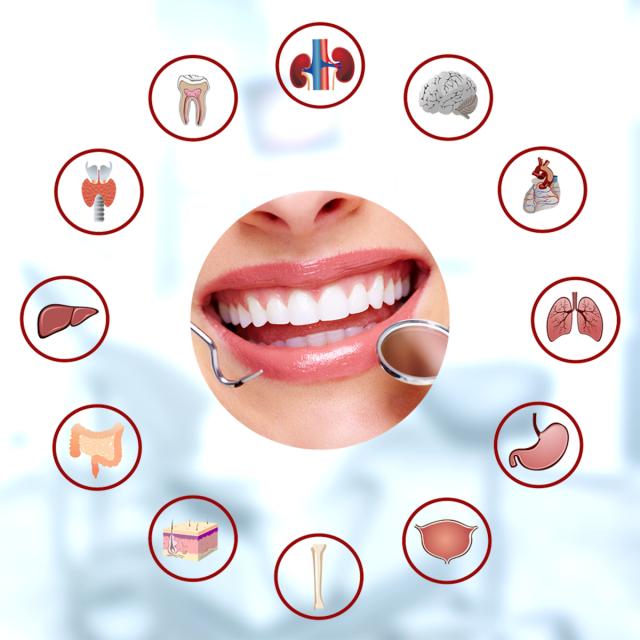
This course will focus on the interprofessional realtionship of dentistry and medicine. For each session, the medical specialist will present a broad overview of specific disease entity which will be followed by a dental educator discussing the relevant oral manifestations and implications. The final module of each session will be devoted to the interaction between the dental and other health care professionals.

Class Deals by MOOC List - Click here and see Coursera's Active Discounts, Deals, and Promo Codes.

Syllabus

WEEK 1
The Interplay Between Medicine and Dentistry
This course will use the expertise of specialists from both medicine and dentistry to provide perspectives on a wide range of topics that significantly impact both fields. By explaining each field and the ways in which dental and medical specialists work together to manage affected patients, these specialists highlight the interdisciplinary nature of health care today using a particular example each week. In our introductory videos, we introduce the importance of these topics and of the interplay between medicine and dentistry through the lens of the specialty of oral medicine.

WEEK 2
Pain management: approaches and challenges
In Week 2, we will discuss pain, both as a general concept and as it relates to certain conditions. This will include defining pain and its types, discussing multiple treatment modalities, and explaining some pains specific to the head and neck region. From both an oral medicine and pain management perspective, this difficult topic will be examined and expert diagnosis and treatment opinions will be provided.

WEEK 3
Diabetic patients and their care
Week 3 focuses on diabetes, a very prevalent, but often not well understood disease that materially impacts both medicine and dentistry. Our discussion of this topic will include an in depth description of types of diabetes, treatments and how they differ based on type, and lifestyle management of these patients. It will also deal with dental management of the diabetic patient specifically, including recommendations for how to approach treatment of patients with diabetes.

WEEK 4
Endocrine disorders: understanding thyroid cancer and osteoporosis
In week 4, we will continue our discussion of endocrine diseases by covering two other relatively common conditions, thyroid cancer and osteoporosis. Both of these diseases present significant challenges to dental management of patients as well as presenting interesting and difficult medical challenges. For both diseases, the epidemiology, diagnosis, and treatment will be covered and related to the impact of the disease on dental care and some important negative effects to be aware of in the oral cavity.

WEEK 5
Care of cardiovascular diseases and infections
This week will review management of cardiac conditions, both generally and specifically in dental medicine. This will include explanations of some of the most prevalent cardiac conditions as well as discussion on the difficulties of treating select patients. This provides a widely applicable but also specific overview of risks to patients generally and in the dental office, management and treatment, and ways that providers and patients can work together to ensure positive outcomes for all.

WEEK 6
Dermatologic conditions of the oral cavity
Week 6 presents an explanation of common dermatologic conditions that can frequently affect the oral cavity. The lectures in this module focus on the three most prevalent autoimmune reactions to occur in the mouth; lichen planus, pemphigoid, and pemphigus. The lectures in this week explain these conditions, comment on some possible treatments, and discuss the importance of co-management between the fields of dentistry and medicine, not to mention some specific examples of interdisciplinary division of treatment.

WEEK 7
Blood and bone marrow cancers
In this section, we will discuss blood and bone marrow cancers. This is a complex topic and our lectures will explain some of the differences between each type of these cancers in both disease characteristics and management. For management, we will review both traditional and cutting edge modalities used in certain cases. We will also discuss the importance of the oral cavity in both diagnosis and treatment of these cancers. Whether as the first sign of disease, an area affected by treatment, or a potential cause of complications, the oral cavity can truly in leukemia be a portal to health and disease.

WEEK 8
Understanding head and neck cancers
Our last section deals with a very serious and important topic, that of cancers of the head and neck region. Our lectures will explain some types of head and neck cancer, but will focus on oral squamous cell carcinoma, the most common of these. We will discuss diagnosis and management of these patients, paying attention to the important role of all providers in cancer while also providing a video of transoral robotic surgery for cancer. In this way, we will address all aspects of oral cancer treatment, from initial diagnosis to thorough treatment.

WEEK 9
Final Exam

Go to Class
MOOC List is learner-supported. When you buy through links on our site, we may earn an affiliate commission.

Related Courses

Sustainable Food Production Through Livestock Health Management (Coursera) Coursera
University of Illinois at Urbana-Champaign

Sustainable Food Production Through Livestock Health Management (Coursera)

Learn about the impact of infectious disease on sustainable animal-based food production by understanding the science of growth, immunity, and infection and by learning the problem-solving skills needed to advance animal health and food production through optimal management practices. In this course we will explore the effect of infectious disease on sustainable animal-based food production. The content and learning outcomes of this new course will be designed to be relevant across different food production sectors (i.e., beef, dairy, poultry, and pigs).

Oct 5th 2026
5-12 Weeks
Psychological First Aid (Coursera) Coursera
Johns Hopkins University

Psychological First Aid (Coursera)

Learn to provide psychological first aid to people in an emergency by employing the RAPID model: Reflective listening, Assessment of needs, Prioritization, Intervention, and Disposition. Utilizing the RAPID model (Reflective listening, Assessment of needs, Prioritization, Intervention, and Disposition), this specialized course provides perspectives on injuries and trauma that are beyond those physical in nature. The RAPID model is readily applicable to public health settings, the workplace, the military, faith-based organizations, mass disaster venues, and even the demands of more commonplace critical events, e.g., dealing with the psychological aftermath of accidents, robberies, suicide, homicide, or community violence.

Oct 5th 2026
5-12 Weeks
Community Awareness Course: Sexuality and Disability (Coursera) Coursera
University of Minnesota

Community Awareness Course: Sexuality and Disability (Coursera)

This community awareness course from the University of Minnesota Program on Human Sexuality will provide you with a solid introduction to human sexuality for those living with disabilities. Often there are assumptions that the disabled or differently abled people are not sexual, do not have sexual needs, or cannot be involved sexually. In this professionally produced one-hour course, you'll learn about the basics of disabilities and human sexuality.

Oct 5th 2026
5-12 Weeks
PrEParing: PrEP for Providers and Patients (Coursera) Coursera
Johns Hopkins University

PrEParing: PrEP for Providers and Patients (Coursera)

Pre-Exposure Prophylaxis (PrEP) using the antiretroviral medication emtricitibine/tenofovir approved in countries around the world is a highly effective means of reducing transmission of HIV through sexual encounters and needle sharing. This Johns Hopkins University course PrEPares you with essential information, concepts and practical advice regarding PrEP from leaders in the field. A first of its kind learning opportunity, both providers and patients learn from the same experts through content that meets the needs of both audiences, while facilitating the opportunity for a shared community space.

Oct 12th 2026
5-12 Weeks
Hacking Exercise For Health. The surprising new science of fitness. (Coursera) Coursera
McMaster University

Hacking Exercise For Health. The surprising new science of fitness. (Coursera)

Renowned exercise physiologists Martin Gibala and Stuart Phillips of McMaster University teach the surprising new science of cardio fitness and strength-building—and then provide you with hacks to get fit and strong (and healthy!) in less time than you ever thought possible. What’s the right mix of exercise between cardio and strength? How do you know if you’re working out hard enough? What’s better, heavy or light weights? These questions and more are addressed through a course designed to provide even the most inexperienced of exercisers the tools you need to design time-efficient workouts that can be done virtually anywhere, from your own home to a city park or even at your workplace.

Oct 5th 2026
4 Weeks
Understanding Medical Research: Your Facebook Friend is Wrong (Coursera) Coursera
Yale University

Understanding Medical Research: Your Facebook Friend is Wrong (Coursera)

How can you tell if the bold headlines seen on social media are truly touting the next big thing or if the article isn't worth the paper it's printed on? Understanding Medical Studies, will provide you with the tools and skills you need to critically interpret medical studies, and determine for yourself the difference between good and bad science. The course covers study-design, research methods, and statistical interpretation. It also delves into the dark side of medical research by covering fraud, biases, and common misinterpretations of data. Each lesson will highlight case-studies from real-world journal articles.

Oct 5th 2026
5-12 Weeks
Population Health: Alternative Payment Models (Coursera) Coursera
Leiden University

Population Health: Alternative Payment Models (Coursera)

The way we currently pay our care providers lead to suboptimal outcomes and unnecessary spending. Consequently, we fail to maximize the value of our health care services. We need to change provider payment models in order to keep health care systems financial sustainability. Doing nothing is not an option. But the question is, how do we do it?

Oct 5th 2026
4 Weeks
Cybersecurity in Healthcare (Hospitals & Care Centres) (Coursera) Coursera
Erasmus University Rotterdam

Cybersecurity in Healthcare (Hospitals & Care Centres) (Coursera)

The Cybersecurity in Healthcare MOOC was developed as part the SecureHospitals.eu project. This project has received funding from the European Union’s Horizon 2020 Coordination Research and Innovation Action under Grant Agreement No. 826497. The course "Cybersecurity in Healthcare" has been developed to raise awareness and understanding the role of cybersecurity in healthcare (e.g., hospitals, care centres, clinics, other medical or social care institutions and service organisations) and the challenges that surround it.

Oct 5th 2026
5-12 Weeks
Autism Spectrum Disorder (Coursera) Coursera
University of California, Davis

Autism Spectrum Disorder (Coursera)

Understanding the characteristics of autism spectrum disorder (ASD) and their implications for behavior, learning and the ability to process information is critical for anyone working or interacting with those on the spectrum -- educators, clinicians, counselors, therapists, medical staff, family and employers. This course will give you a fundamental understanding of what ASD is, how it is diagnosed, the primary areas of impairment, and why prevalence is increasing.

Oct 5th 2026
5-12 Weeks
Foundational Skills for Communicating About Health (Coursera) Coursera
University of Michigan

Foundational Skills for Communicating About Health (Coursera)

Effective communication is a core skill that nearly every health professional will need and use during their careers. Yet, few health professionals receive even basic training in how to design communications to be clear and successful. As “foundational skills,” the content in this course can be applied to both oral and written communication, within and beyond health.

Oct 5th 2026
5-12 Weeks