Extracellular Vesicles in Health and Disease (Coursera)

Extracellular Vesicles in Health and Disease (Coursera)

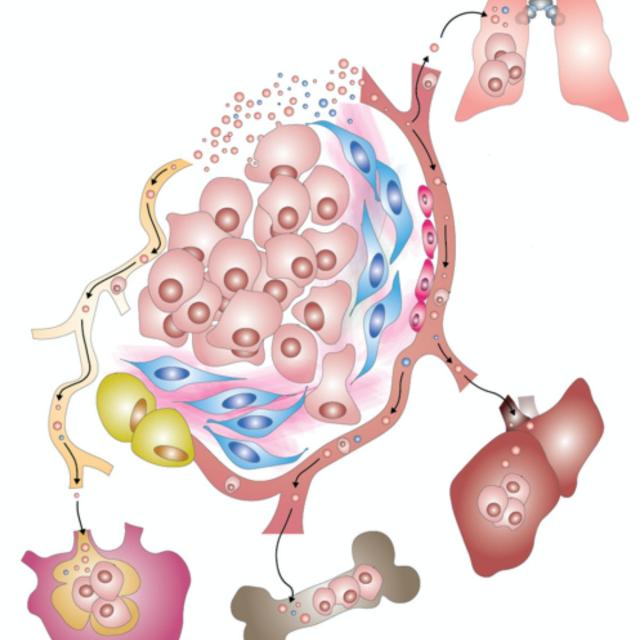
This course aims to provide current understanding about extracellular vesicles (EVs) and their role in health and diseases. The EVs are known to be involved in cell to cell communication. Apart from maintaining normal cell physiology, EVs deliver messages that can drive or influence the progression of a disease. This course discusses recent advances made in the field to give an introduction on their function in health as well as in disease.

Class Deals by MOOC List - Click here and see Coursera's Active Discounts, Deals, and Promo Codes.

This course includes four modules. Module 1 is an introduction to the course, and provides an overview of the previous MOOC on EVs “Basics of Extracellular Vesicles”. Module 2 focuses on the role of EVs in physiological conditions and gives various examples on their role in metabolism, inflammation, immunity and pregnancy and coagulation. This module also briefly covers the topic of microorganism-derived EVs such as vesicles from bacteria and discusses EVs from apoptotic and senescent cells. In Module 3, we focus on the role of EVs in cancer: how EVs can mediate communication between the tumour and its microenvironment, the functional role of immune cell-derived EVs in development of cancer, as well as the role of EVs in cancer cell proliferation, survival, metastasis and drug resistance. In Module 4, the role of EVs in diseases of the cardiovascular, haematopoietic, nervous, respiratory and urinary systems, and infectious diseases will be presented. This course is recommended for intermediate learners or anyone who is interested in the field of extracellular vesicles and their role in a particular disease including scientists, clinicians, or cell and molecular biologists who look to broaden their understanding of the field.

Syllabus

WEEK 1
Course Goals and Learning Objectives
This course aims to provide current understanding about extracellular vesicles (EVs) and their role in health and diseases. The EVs are known to be involved in cell to cell communication. Apart from maintaining normal cell physiology, EVs deliver messages that can drive or influence the progression of a disease. This course discusses recent advances made in the field to give an introduction on their function in health as well as in disease.
This course includes four modules. Module 1 is an introduction to the course, and provides an overview of the previous MOOC on EVs “Basics of Extracellular Vesicles”. Module 2 focuses on the role of EVs in physiological conditions and gives various examples on their role in metabolism, inflammation, immunity and pregnancy and coagulation. This module also briefly covers the topic of microorganism-derived EVs such as vesicles from bacteria and discusses EVs from apoptotic and senescent cells. In Module 3, we focus on the role of EVs in cancer: how EVs can mediate communication between the tumour and its microenvironment, the functional role of immune cell-derived EVs in development of cancer, as well as the role of EVs in cancer cell proliferation, survival, metastasis and drug resistance. In Module 4, the role of EVs in diseases of the cardiovascular, haematopoietic, nervous, respiratory and urinary systems, and infectious diseases will be presented. This course is recommended for intermediate learners or anyone who is interested in the field of extracellular vesicles and their role in a particular disease including scientists, clinicians, or cell and molecular biologists who look to broaden their understanding of the field.

WEEK 2
Physiological Function of EVs
In this module, we will discuss the role of extracellular vesicles in maintaining cellular homeostasis, why they are important for this process. How microorganism such as in gram positive and negative bacteria can secrete EVs, will be discussed. Altered EV secretion as a response to inflammation, stress and apoptosis or senescence will be highlighted. Furthermore, some examples will be provided on how EV cargo can influence cellular metabolism and the function of EVs in maintaining physiology of cells in pregnancy and coagulation.

WEEK 3
Pathophysiology of EVs in Cancer
This module will highlight the role of EVs in the progression of cancer and how the cargo delivered via EVs can directly influence cancer cell proliferation or metastatic properties. The communication between tumour and immune cells, stromal, and endothelial cells will be discussed. We will cover some of the considerations and guidelines that are important in utilising EVs as cancer biomarkers. Techniques that are commonly used to detect EVs, selection of biofluid for tumour EV biomarker analysis, model used in studying EVs, selection of specific EV cargo as biomarker and examples for studies on EVs as cancer biomarkers will be highlighted.

WEEK 4
Pathophysiology of EVs in Various Diseases
We will discuss the reported role of EVs in mediating the development of various diseases such as cardiovascular diseases, hematological disorders, neurological diseases, urological, respiratory diseases and infectious diseases. This module will also highlight some of the proposed EV associated biomarkers and some therapeutic strategies by utilizing EVs to deliver inhibitory molecule.
Go to Class
MOOC List is learner-supported. When you buy through links on our site, we may earn an affiliate commission.

Related Courses

HPV-Associated Oral and Throat Cancer: What You Need to Know (Coursera) Coursera
Icahn School of Medicine at Mount Sinai

HPV-Associated Oral and Throat Cancer: What You Need to Know (Coursera)

This course, offered by the Department of Otolaryngology – Head and Neck Surgery at the Icahn School of Medicine at Mount Sinai, is designed to inform primary care physicians and otolaryngologists (general and head and neck surgeons), as well as medical students, residents, nurses, physician assistants, medical assistants, about HPV-associated oral and throat cancers. It is also applicable to individuals who wish to broaden their knowledge and vernacular about this disease process, especially those who may have been diagnosed with HPV and/or HPV-associated oropharyngeal cancers.

Aug 17th 2026
5-12 Weeks
Population Health: Syndemics (Coursera) Coursera
Leiden University

Population Health: Syndemics (Coursera)

Do you wish to contribute to breaking cycles of ill-health in disadvantaged populations? And explore co-occurrence of diseases, such as substance abuse, infectious and chronic disease, and the relation with social factors (disparities)? Are you disappointed in the poor effectiveness of interventions for combined social and medical problems? Then this syndemics course might provide you with some answers.

Aug 17th 2026
4 Weeks
Feeding the World (Coursera) Coursera
University of Pennsylvania

Feeding the World (Coursera)

This course will explore the concepts driving current food production science (population growth, urbanization, emerging affluence, resource constraints, and underlying biological limits) with the main focus on livestock production. Each of the major food animal species (dairy, swine, beef, and poultry) will be covered in terms of their universal life cycles, constraints to production and emerging societal issues.

Aug 17th 2026
5-12 Weeks
Traditional herbal medicine in supportive cancer care: From alternative to integrative (Coursera) Coursera
Technion - Israel Institute of Technology

Traditional herbal medicine in supportive cancer care: From alternative to integrative (Coursera)

Please join us for an exciting and innovative journey, examining one of the most important and often overlooked aspects of the oncology setting: Traditional Herbal Medicine in Supportive Cancer Care. This course is presented with short lectures offering a wide range of issues related to the principles and practice of herbal medicine in cancer care.

Aug 17th 2026
13-24 Weeks
Childbirth: A Global Perspective (Coursera) Coursera
Emory University

Childbirth: A Global Perspective (Coursera)

This course will review challenges for maternal and newborn health in the developing world, where a great many women and babies are suffering from complications during pregnancy, childbirth, and the days following birth. Themes covered include the epidemiology of maternal and newborn mortality and morbidity, relevant issues for the global health workforce, community-based interventions to improve maternal and newborn health and survival, and sociocultural dynamics surrounding birth.

Aug 24th 2026
5-12 Weeks
Evidence-based Toxicology (Coursera) Coursera
Johns Hopkins University

Evidence-based Toxicology (Coursera)

Welcome to the Evidence-based Toxicology (EBT) course. In medicine and healthcare, evidence-based medicine has revolutionized the way that information is evaluated transparently and objectively. Over the past ten years, a movement in North America and Europe has attempted to translate this revolution to the field of toxicology.

Aug 17th 2026
5-12 Weeks
Drugs, drug use, drug policy and health (Coursera) Coursera
University of Geneva

Drugs, drug use, drug policy and health (Coursera)

This MOOC is the first of its kind, since it addresses critical issues related to drugs from a multidisciplinary, health and human rights-based approach. Throughout the course you will cover a range of questions including what are drugs and why they controlled? What are the benefits and harms of taking drugs? How public health policies can address drug use?

Aug 17th 2026
5-12 Weeks
Psychology of Popularity (Coursera) Coursera
University of North Carolina

Psychology of Popularity (Coursera)

The level of popularity you experienced in childhood and adolescence is still affecting you today in ways that you may not even realize. Learn about how psychologists study popularity and how these same concepts can be used in adulthood to be more successful at work, become better parents, and have a happier life.

Aug 17th 2026
5-12 Weeks
Training and Learning Programs for Volunteer Community Health Workers (Coursera) Coursera
Johns Hopkins University

Training and Learning Programs for Volunteer Community Health Workers (Coursera)

Volunteer community health workers (CHWs) are a major strategy for increasing access to and coverage of basic health interventions. Our village health worker training course reviews the process of training and continuing education of CHWs as an important component of involving communities in their own health service delivery. Participants will be guided through the steps of planning training and continuing education activities for village volunteers. The course draws on real-life examples from community-directed onchocerciasis control, village health worker programs, community case management efforts, peer educators programs and patent medicine vendor training programs, to name a few.

Aug 17th 2026
5-12 Weeks
Population Health: Fundamentals of Population Health Management (Coursera) Coursera
Leiden University

Population Health: Fundamentals of Population Health Management (Coursera)

What are the principles of Population Health Management as a pro-active management approach to improve health and to tackle health disparities? In this course we will discuss the basic principles of Population Health Management that will help you as (future) health care professional or policymaker to analyse current healthcare challenges and to design possible solutions using the Population Health Management Approach.

Aug 17th 2026
4 Weeks