EdX

Our Global Ocean – An Introduction Course (edX)

Offered by Smithsonian, SmithsonianX,
Our Global Ocean – An Introduction Course (edX)

Our ocean is vast, mysterious, and key to all life on our planet. This short course will introduce you to the basics of our ocean, marine life, and the connection between humans and our ocean. In the Sant Ocean Hall at the Smithsonian National Museum of Natural History, our goal is to teach the public that that the ocean is a global system essential to all life on our planet, including yours. In this course, we will explore the ocean from the coast to the deep sea, and from our planet’s beginnings to its function today.

Class Deals by MOOC List - Click here and see EdX's Active Discounts, Deals, and Promo Codes.

Though this course, you will discover why we truly live on an “ocean planet,” as well as your role in our shared responsibility to protect our global ocean and all of the life it supports.
This short course was developed by Smithsonian National Museum of Natural History educators and reviewed by scientists at the Smithsonian and National Oceanic and Atmospheric Administration.

What you'll learn

  • The basics of oceanography - including currents, circulation, abiotic conditions, ecosystems, and zonation
  • An introduction to paleoceanography and the evolutionary history of marine life
  • An overview of marine biodiversity – including marine species, classification systems, and how biodiversity is represented in museum collections
  • Examples of how humans are impacting the health of the ocean and steps being taken to address these impacts
Go to Class
MOOC List is learner-supported. When you buy through links on our site, we may earn an affiliate commission.

Related Courses

Ecology: Ecosystem Dynamics and Conservation (Coursera) Coursera
American Museum of Natural History,Howard Hughes Medical Institute

Ecology: Ecosystem Dynamics and Conservation (Coursera)

This course is an introduction to ecology and ecosystem dynamics using a systems thinking lens. Through a case study on Mozambique's Gorongosa National Park, learners will explore how scientists study ecosystems, and investigate the complex array of factors that inform management efforts.

Aug 17th 2026
5-12 Weeks
Principios ecológicos para la comprensión de la sostenibilidad ambiental (edX) EdX
The Pontificia Universidad Javeriana,JaverianaX

Principios ecológicos para la comprensión de la sostenibilidad ambiental (edX)

Tendencias de la Ecología y la Conservación de la Biodiversidad para generar acción colectiva desde el conocimiento técnico y científico. Hablar del cuidado del medio ambiente y la sostenibilidad parece tarea de todos, pero difícilmente en nuestras acciones cotidianas demostramos estar realmente conscientes de la importancia de conocer nuestra casa común para cuidar de ella.

No sessions available
4 Weeks
Evolution Today (Coursera) Coursera
Leiden University,Naturalis Biodiversity Center

Evolution Today (Coursera)

In this course you will learn how evolution works. You will develop an understanding of evolutionary processes and their formative power. You will see how evolution has shaped biodiversity, and continuously influences our daily life. Evolution impacts human endeavors as varied as medicine, agriculture, psychology, economy, and culture. It is the major unifying principle for biology and a fundamental natural law.

Aug 10th 2026
5-12 Weeks
One Planet, One Ocean (edX) EdX
SDGAcademyX,SDG Academy

One Planet, One Ocean (edX)

A holistic view of how the ocean functions, how human interactions with the ocean can be understood, and what solutions are available to support both sustainable use and stewardship of our blue planet. Is the ocean the real final frontier? Humans have a greater understanding of the surface of the moon than they do of the depths of these waters.

Self Paced
Self-Paced
Environmental Protection and Sustainability (edX) EdX
IsraelX

Environmental Protection and Sustainability (edX)

Uncover better solutions to help manage a wide range of environmental problems and challenges facing our world today. Do you want to understand more about the environmental problems we currently face? Do you want to learn ways we can reduce the negative effects of these problems, and keep our environment more sustainable? If so, this course is for you.

Self Paced
Self-Paced
Tropical Coastal Ecosystems (edX) EdX
University of Queensland,UQx

Tropical Coastal Ecosystems (edX)

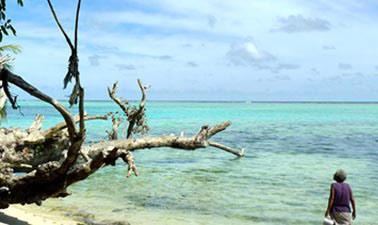
Take the challenge and understand problems and solutions to managing tropical coastal ecosystems. Do you want to develop the skills and knowledge needed to help preserve tropical coastal ecosystems? These habitats provide goods and services for hundreds of millions of people but human activities have led to their global decline.

Self Paced
Self-Paced
Animal Behaviour in Conservation (edX) EdX
Wageningen University,WageningenX

Animal Behaviour in Conservation (edX)

How can we coexist with wildlife in our rapidly changing human-dominated world? The instructors behind Wageningen University & Research’s high ranking ‘Introduction to Animal Behaviour’ have created a sequel. Equip yourself with the skills to assess human-caused impact on diverse species. Learn to apply behavioural principles to design more effective conservation actions. Enrol now.

Self Paced
Self-Paced
Biosphere 2 Science for the Future of Our Planet (Coursera) Coursera
University of Arizona

Biosphere 2 Science for the Future of Our Planet (Coursera)

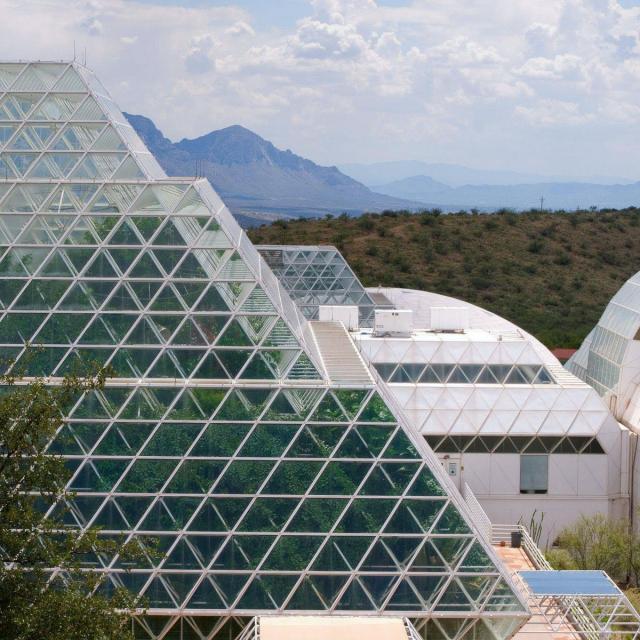
Are you ready to take an incredible journey around Planet Earth and beyond? In this course, you will delve into a world of innovative science and learn from a team of Biosphere 2 and University of Arizona researchers. From plants and soils, to oceans and rainforests, the Moon, Mars, and more, this course is an exciting opportunity for anyone interested in science and Earth stewardship.

Aug 17th 2026
5-12 Weeks
Our Earth's Future (Coursera) Coursera
American Museum of Natural History

Our Earth's Future (Coursera)

Our Earth’s Future is about the science of climate change and how to talk about it. You will learn from scientists in the fields of climatology, oceanography, Earth science, and anthropology who study how climate change is affecting people, populations, and ways of life. Explore the multiple lines of evidence for the human-induced climate change that is happening today, and consider what that means for the future of our planet. At the end of this course you will be able to understand key scientific principles, identify and address misconceptions, and contribute confidently to conversations about climate change.

Aug 10th 2026
5-12 Weeks