Climate Adaptation in Africa (Coursera)

Climate Adaptation in Africa (Coursera)

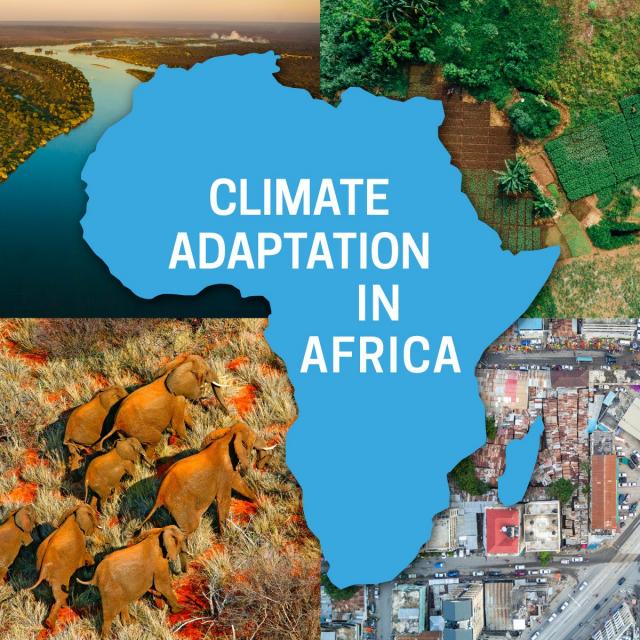
This course explores why climate change adaptation is important in the African context. Africa is considered one to be one of the most vulnerable regions to climate change. Historically, climate-related hazards such as drought, flooding, pest and disease outbreaks, coastal storms and heat waves have had devastating impacts on people and the environment in which they live.

Class Deals by MOOC List - Click here and see Coursera's Active Discounts, Deals, and Promo Codes.

Often the damage knocks back progress that has been made in social and economic development, slowing down the achievement of development goals. Climate models suggest that many of these climatic hazards will intensify as the global climate warms. Building resilience to climate risks, through adaptation, is critically important for future development in Africa.
The course will examine adaptation in theory and in practice, through a focus on four sectors that are critically important for climate resilient development in Africa: Water Security, Agriculture and Food Security, Ecosystems and Ecosystem Services and Resilient Cities.

Syllabus

Week 1
Climate, Vulnerability and Development in Africa
We start by exploring the linkages between social and economic development in Africa and climate change. We look at the anticipated changes in the future climate of the region and how this could impact on the development trajectory. I cover both contemporary climate risks and future climate change and how those interact with development. I also introduce the key concepts around climate adaptation that this course in based on.

Week 2
Water Security
We'll start by examining the nature of risks to water security and the approaches to adaptation to changes in water supply - whether it is dealing with greater scarcity or more extreme weather events such as flooding. Water security is a key factor in social and economic development. Responding involves investigating climate adaptation strategies, especially at a regional level, not just at a global scale. The cases this week, presented by experts working on water security issues, are from Lesotho and South Africa.

Week 3
Agriculture and Food Security
We’ll start off looking at the nature of agriculture across regions in Africa and the current situation of food security. Eradicating poverty through creating food security is a key sustainable development goal. We will analyse food security in terms of availability, access and utilisation - and how each of these aspects can be affected by climate change. I’ll be providing some information about the projected impacts of climate change on agriculture before moving onto look at adaptative strategies. The cases this week offer a rich variety of contextual examples from smart agriculture in Mauritius to changes being made by Namibian livestock farmers.

Week 4
Ecosystems and Ecosystem Services
This week we’ll examine the mechanisms which make ecosystems vulnerable to climate change and other human-driven impacts. Ecosystems and the services they provide play a significant role for the livelihoods of people living across Africa. We will also look at the observed and projected impacts of the changing climate. We look at adaptation strategies from Tanzania as cases that illustrate some of the important issues.

Week 5
Cities and the Urban Environment
With the higher concentrations of population in cities, comes a higher exposure to risk from climate change impacts. In African cities, many people live in informal settlements, which make them particularly at risk. Cities have many assets - such as transport, telecommunications, building and critical infrastructure - that are vulnerable to damage from extreme weather events. As cities serve as economic and political hubs, damage or disruption in cities can often have a larger impact on the region or even entire country. Adaptation measures for cities is a complex as there are intersecting issues. Our cases this week look at three cities - Maputo, Cape Town and Durban - which illustrate the adaptations being adopted.

Week 6
Planning for Climate Change
In this final week, we move from assessing risk to making adaptation plans. There are adaptation planning tools which are especially helpful for identifying the key steps in making an adaptation plan. An early stage of such processes is to assess the current vulnerabilities which for African contexts means we look at the deficits and begin implementing adaptation right away. This can have both an immediate valuable outcome as well as an anticipated positive impact in the future. Later adaptation planning stages involve identifying key stakeholders and building partnerships, as well as mobilising resources to make it happen. Having the resources and organisational capacity is key as seen in our cases from across a variety of socio-political contexts, resources and levels of governance.

Go to Class
MOOC List is learner-supported. When you buy through links on our site, we may earn an affiliate commission.

Related Courses

The Changing Arctic: Present, Past, & Future (Coursera) Coursera
University of Colorado Boulder

The Changing Arctic: Present, Past, & Future (Coursera)

This course takes a detailed look at the remarkable changes unfolding in the Arctic environment, including the shrinking Arctic sea ice cover, shrinking land ice, thawing permafrost and cascading impacts on Arctic ecosystems. After a review of Arctic climates of the past, attention turns to the possible future of the Arctic’s climate and environment.

Jun 8th 2026
5-12 Weeks
Large Marine Ecosystems: Assessment and Management (Coursera) Coursera
United Nations Environment Programme - UNEP,University of Cape Town,United Nations Development Programme - UNDP,National Oceanic and Atmospheric Administration - NOAA,IW:LEARN,Global Environment Facility - GEF,UNESCO-IOC

Large Marine Ecosystems: Assessment and Management (Coursera)

Focusing on the Large Marine Ecosystems (LMEs) of the world, this course will introduce the concept and practice of ecosystem-based management. LMEs occupy areas of coastal ocean at least 200 000 km² or greater in size. These coastal waters produce 12.6 trillion USD in ecosystem goods and services annually and are vitally important for billions of people around the globe.

Jun 1st 2026
5-12 Weeks
Global Warming I: The Science and Modeling of Climate Change (Coursera) Coursera
University of Chicago

Global Warming I: The Science and Modeling of Climate Change (Coursera)

This class describes the science of global warming and the forecast for humans’ impact on Earth’s climate. Intended for an audience without much scientific background but a healthy sense of curiosity, the class brings together insights and perspectives from physics, chemistry, biology, earth and atmospheric sciences, and even some economics—all based on a foundation of simple mathematics (algebra).

Jun 1st 2026
5-12 Weeks
Global Energy and Climate Policy (Coursera) Coursera
University of London,SOAS University of London

Global Energy and Climate Policy (Coursera)

The Global Energy and Climate Policy course offers an introduction to the theoretical and practical understanding of how energy and climate change policies are designed, shaped, advocated and implemented. As energy markets go truly global, domestic energy policies are becoming more and more entangled with wider issues of international governance. Concurrently, the urgent need to mitigate and adapt to climate change and transition to a low-carbon future is adding a further layer of complexity.

Jun 1st 2026
5-12 Weeks
Sustainability and the Circular Economy (Coursera) Coursera
University of Colorado Boulder,Siemens

Sustainability and the Circular Economy (Coursera)

As the world’s population continues to rise toward an expected 10 billion citizens by 2050, it is imperative that business practices change to ensure a high quality of life is possible for all of us, both human and non-human. Today’s learners are very aware of this. Moreover, they are highly motivated and have the extraordinary capacity to create a future that provides both economic success and a more enduring, resilient, and sustainable planet. If you are one of these learners, then Sustainability and the Circular Economy is a course for you.

Jun 8th 2026
5-12 Weeks
Global Postharvest Loss Prevention: Fundamentals, Technologies, and Actors (Coursera) Coursera
University of Illinois at Urbana-Champaign

Global Postharvest Loss Prevention: Fundamentals, Technologies, and Actors (Coursera)

This course provides an overview of the issue of postharvest loss of grains by exploring essential physical, technical, and social dimensions of postharvest supply chains and loss prevention methods globally. Each year, estimates suggest that 1/3 of all food produced is lost or wasted, making postharvest loss a critical global food security and sustainability issue of today. Key knowledge areas are presented including: an overview of postharvest loss; supply chain activities such as harvesting, drying, and storage; economics and markets; an introduction to the network of actors working in this field.

Jun 1st 2026
4 Weeks
Cities, Climate and Change: Pathways and Opportunities (Coursera) Coursera
Lund University

Cities, Climate and Change: Pathways and Opportunities (Coursera)

How can we develop transformative skills and capacities to achieve climate neutral and sustainable cities? This course explores how we can design, create and achieve climate neutral and sustainable cities. We embrace the “mission to the moon” approach for tackling greenhouse emissions from cities putting an emphasis on pathways and opportunities. We utilise insights and inspiration from Sweden, Europe and around the world.

Jun 8th 2026
5-12 Weeks
Our Energy Future (Coursera) Coursera
University of California, San Diego

Our Energy Future (Coursera)

This course is designed to introduce students to the issues of energy in the 21st century – including food and fuels – which are inseparably linked – and will discuss energy production and utilization from the biology, engineering, economics, climate science, and social science perspectives. This course will cover the current production and utilization of energy, as well as the consequences of this use, examining finite fossil energy reserves, how food and energy are linked, impacts on the environment and climate, and the social and economic impacts of our present energy and food production and use.

Jun 1st 2026
5-12 Weeks
Climate change and Indigenous People and local communities (Coursera) Coursera
Universitat Autònoma de Barcelona

Climate change and Indigenous People and local communities (Coursera)

Climate change is a global phenomenon, but its impacts vary among different social groups, who perceive and adapt to climate change impacts in different ways. In this course, you will: a) understand the different debates around climate change impacts on Indigenous Peoples and local communities (IPLC); b) familiarize yourself with different impacts of climate change on IPLC, with the IPLC understanding of climate change impacts and with their strategies to adapt to climate change; and c) learn about different strategies to incorporate Indigenous peoples and local communities in climate change research and policy.

Jun 8th 2026
5-12 Weeks
Qualitative and Quantitative Analysis of Disaster Risk (Coursera) Coursera
Inter-American Development Bank - IDB

Qualitative and Quantitative Analysis of Disaster Risk (Coursera)

This course will teach you how to identify and analyze the risks of natural disasters in infrastructure projects. You will learn about different types of qualitative and quantitative analysis, as well as the methodologies and tools used to conduct these analyses in order to apply the knowledge. You will review risk models and comprehensive risk management.

Jun 8th 2026
2 Weeks