Greening the Economy: Lessons from Scandinavia (Coursera)

Offered by Lund University,
Greening the Economy: Lessons from Scandinavia (Coursera)

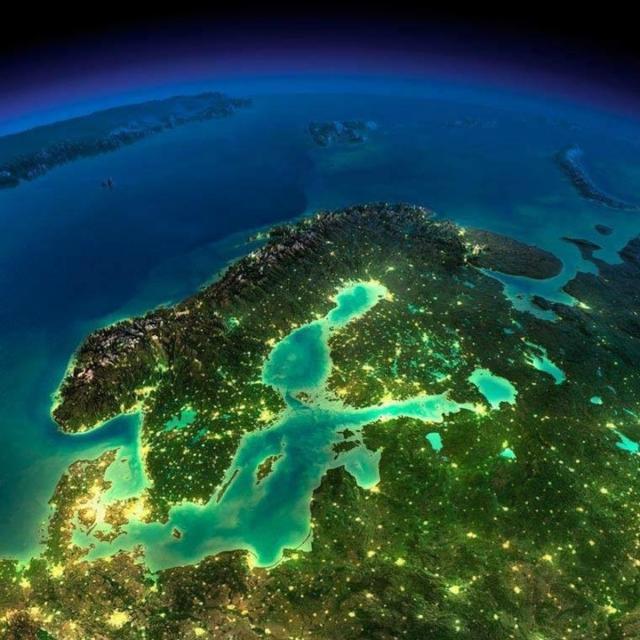
How can we live a good life on one planet with over seven billion people? This course will explore greening the economy on four levels – individual, business, city, and nation. We will look at the relationships between these levels and give many practical examples of the complexities and solutions across the levels. Scandinavia, a pioneering place advancing sustainability and combating climate change, is a unique starting point for learning about greening the economy. We will learn from many initiatives attempted in Scandinavia since the 1970s, which are all potentially helpful and useful for other countries and contexts.

Class Deals by MOOC List - Click here and see Coursera's Active Discounts, Deals, and Promo Codes.

The International Institute for Industrial Environmental Economics (IIIEE) at Lund University is an international centre of excellence on strategies for sustainable solutions. The IIIEE is ideally suited to understand and explain the interdisciplinary issues in green economies utilising the diverse disciplinary backgrounds of its international staff. The IIIEE has been researching and teaching on sustainability and greener economies since the 1990s and it has extensive international networks connecting with a variety of organizations.

Syllabus

WEEK 1
Introduction: what is a green economy and why is it important?
We start the course by looking at the key issues that a green economy seeks to address and the underlying concepts and definitions of a greener economy. In this module, we will describe problems arising from the interaction of the economy and the environment; we will state some of the aims of greening the economy and look into the multitude of definitions; we will use tools to measure and assess a green economy; and we will discuss concepts and indicators related to the green economy.

WEEK 2
Individual choices
Here in Module 2 we look at the individual level and how individual choices can help or hinder progress towards a green economy. This module offers an increased understanding of patterns and levels of consumption; we will look at the drivers and theories of consumer behaviour and the limitations of working with consumer choice in isolation (e.g. rebound effect); and develop an understanding of how to measure the impact of consumption (e.g. carbon footprint).

WEEK 3
Business strategies
In the third module, we look at the business level, focusing on how companies and organisations choose strategies that can help transitions to a green economy. In this module, the aim is to understand the changes relevant to the business level for a greener economy. You will be presented to some solutions and concepts that companies use to deal with complex problems encountered in their sustainability work. We will discuss the challenges facing companies that want to take a lead in the transition to a greener economy, and reflect on strategies for green business in different contexts.

WEEK 4
Sustainable cities
In Module 4, we look at how planning and designing cities can help achieve a green economy and underpin sustainable development. The aim this week is to understand the role of cities for experimentation, planning, collaboration and providing visions for a greener economy. We will use tools to measure and critically assess green economy indicators at the city level and discuss whether city level policies and actions in Scandinavia can work around the world.

WEEK 5
National policies
Finally, in the fifth module, we look at how national governments can establish policies to promote green economy across the different levels (individual, business, city, national) discussed in this course. In this module, we discuss how national level policies affect cities, business, and individuals, as well as the challenges for national level policies to influence other levels, including the international sphere. Finally, we will discuss whether national policies from Scandinavia can work in other contexts.
Go to Class
MOOC List is learner-supported. When you buy through links on our site, we may earn an affiliate commission.

Related Courses

Sustentabilidad y Economías Sociales (Coursera) Coursera
Universidad de Chile

Sustentabilidad y Economías Sociales (Coursera)

En los últimos años el fenómeno del Emprendimiento con Sentido, la Innovación Social y la relevancia de la Sustentabilidad dan cuenta de la imperiosa necesidad de modernizar los esquemas de gestión de empresas y adaptarlos a una realidad cambiante, modificando paradigmas hacia las nuevas economías enfocadas en un desarrollo sustentable.

Aug 24th 2026
5-12 Weeks
Surviving Disruptive Technologies (On Demand) (Coursera) Coursera
University of Maryland, College Park

Surviving Disruptive Technologies (On Demand) (Coursera)

The purpose of this course is to help individuals and organizations survive when confronted with disruptive technologies that threaten their current way of life. We will look at a general model of survival and use it to analyze companies and industries that have failed or are close to failing. Examples of companies that have not survived include Kodak, a firm over 100 years old, Blockbuster and Borders.

Aug 24th 2026
4 Weeks
Climate change and Indigenous People and local communities (Coursera) Coursera
Universitat Autònoma de Barcelona

Climate change and Indigenous People and local communities (Coursera)

Climate change is a global phenomenon, but its impacts vary among different social groups, who perceive and adapt to climate change impacts in different ways. In this course, you will: a) understand the different debates around climate change impacts on Indigenous Peoples and local communities (IPLC); b) familiarize yourself with different impacts of climate change on IPLC, with the IPLC understanding of climate change impacts and with their strategies to adapt to climate change; and c) learn about different strategies to incorporate Indigenous peoples and local communities in climate change research and policy.

Aug 31st 2026
5-12 Weeks
ODS y sostenibilidad: una mirada desde los colegios (Coursera) Coursera
Universidad de los Andes

ODS y sostenibilidad: una mirada desde los colegios (Coursera)

En este curso veremos cómo podemos generar cambios y transformaciones (a nivel individual, organizacional y social) para la sostenibilidad desde la educación formal y no-formal. Partiremos del concepto de los Objetivos de Desarrollo Sostenible (ODS) como un marco potente para generar reflexiones críticas, que nos lleven a generar acciones colectivas desde la escuela en pro de la sostenibilidad.

Aug 31st 2026
4 Weeks
Climate Change Mitigation in Developing Countries (Coursera) Coursera
University of Cape Town

Climate Change Mitigation in Developing Countries (Coursera)

This course challenges you to consider how one might lift societies out of poverty while also mitigating greenhouse gas emissions. We explore the inherent complexity of developing country governments wanting to grow their economies in a climate friendly way. You will be introduced to an approach with which to address this challenge. The approach consists of a facilitated process whereby academic researchers and high-level influential actors within society co-produce knowledge. You will track this process in four Latin American countries - Brazil, Chile, Colombia, Peru, and South Africa. You will hear from various professionals about their contexts and the different challenges and opportunities the process includes.

Aug 24th 2026
5-12 Weeks
Cities, Climate and Change: Pathways and Opportunities (Coursera) Coursera
Lund University

Cities, Climate and Change: Pathways and Opportunities (Coursera)

How can we develop transformative skills and capacities to achieve climate neutral and sustainable cities? This course explores how we can design, create and achieve climate neutral and sustainable cities. We embrace the “mission to the moon” approach for tackling greenhouse emissions from cities putting an emphasis on pathways and opportunities. We utilise insights and inspiration from Sweden, Europe and around the world.

Aug 31st 2026
5-12 Weeks
Oceanography: a key to better understand our world (Coursera) Coursera
University of Barcelona,Barcelona Foundation for Ocean Sailing - FNOB

Oceanography: a key to better understand our world (Coursera)

The course for a round the world regatta leads the boats through the Mediterranean Sea and the Atlantic, Southern Indian and South Pacific Oceans. On their voyage, the skippers come across a large variety of oceanographic situations: strong currents, floating ice, wave formations of every kind and biological diversity. In this course the student will learn about the foundations of the science of oceanography. You'll learn about the classification and formation of the ocean floor, how current sea satellite analysis systems work, the chemistry of the oceans and the processes that led to its formation.

Aug 31st 2026
5-12 Weeks
Global Energy and Climate Policy (Coursera) Coursera
University of London,SOAS University of London

Global Energy and Climate Policy (Coursera)

The Global Energy and Climate Policy course offers an introduction to the theoretical and practical understanding of how energy and climate change policies are designed, shaped, advocated and implemented. As energy markets go truly global, domestic energy policies are becoming more and more entangled with wider issues of international governance. Concurrently, the urgent need to mitigate and adapt to climate change and transition to a low-carbon future is adding a further layer of complexity.

Aug 24th 2026
5-12 Weeks
Managing Responsibly: Practicing Sustainability, Responsibility and Ethics (Coursera) Coursera
University of Manchester

Managing Responsibly: Practicing Sustainability, Responsibility and Ethics (Coursera)

Managers are increasingly confronted with issues of sustainability, responsibility and ethics. Managing responsibly is an integrative approach to sustainability, responsibility and ethics, which allows you as a manager to deal competently with such challenges. This course will facilitate your learning process to engage in changing practices to make them more sustainable, responsible, and ethically informed.

Aug 24th 2026
5-12 Weeks
Natural Attenuation of Groundwater Contaminants: New Paradigms, Technologies, and Applications (Coursera) Coursera
Rice University

Natural Attenuation of Groundwater Contaminants: New Paradigms, Technologies, and Applications (Coursera)

Cleaning up the large number of groundwater contamination sites is a significant and complex environmental challenge. The environmental industry is continuously looking for remediation methods that are both effective and cost-efficient. Over the past 10 years there have been amazing, important developments in our understanding of key attenuation processes and technologies for evaluating natural attenuation processes, and a changing institutional perspective on when and where Monitored Natural Attenuation (MNA) may be applied.

Aug 31st 2026
5-12 Weeks
Our Energy Future (Coursera) Coursera
University of California, San Diego

Our Energy Future (Coursera)

This course is designed to introduce students to the issues of energy in the 21st century – including food and fuels – which are inseparably linked – and will discuss energy production and utilization from the biology, engineering, economics, climate science, and social science perspectives. This course will cover the current production and utilization of energy, as well as the consequences of this use, examining finite fossil energy reserves, how food and energy are linked, impacts on the environment and climate, and the social and economic impacts of our present energy and food production and use.

Aug 24th 2026
5-12 Weeks