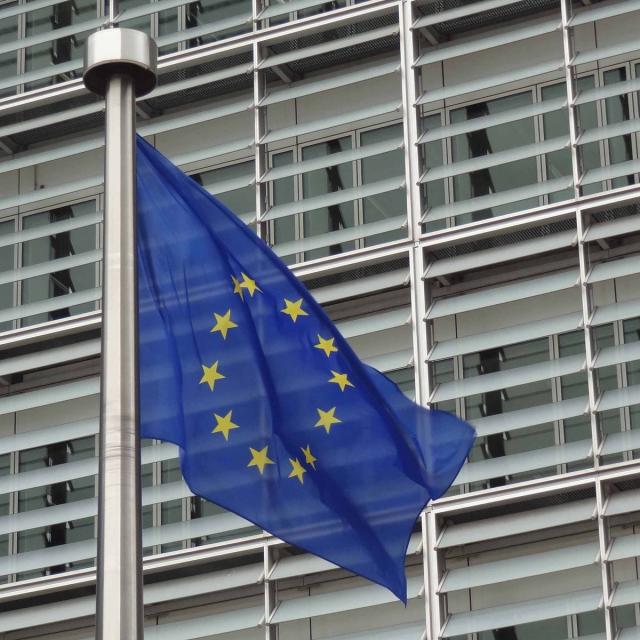
Global Energy and Climate Policy (Coursera)

Global Energy and Climate Policy (Coursera)

The Global Energy and Climate Policy course offers an introduction to the theoretical and practical understanding of how energy and climate change policies are designed, shaped, advocated and implemented. As energy markets go truly global, domestic energy policies are becoming more and more entangled with wider issues of international governance. Concurrently, the urgent need to mitigate and adapt to climate change and transition to a low-carbon future is adding a further layer of complexity.

Class Deals by MOOC List - Click here and see Coursera's Active Discounts, Deals, and Promo Codes.

The course is aimed broadly at people interested in learning more about interconnected issues in energy and climate policy globally. It assumes a level of interest but no necessary previous knowledge. However, the course also offers sufficient up to date research and new critical perspectives to be of interest to people with expertise in or academic familiarity with the topic as well.
The main aim of the course is to provide this wide-ranging introduction in a self-contained, but in-depth form, alongside the important practical skills necessary to understand and discuss energy and climate policy, and lay the groundwork for greater engagement in the future – either through academic study, in the public, private or not-for-profit sectors.

Syllabus

WEEK 1
The future of fossil fuels in a carbon-constrained world
This week introduces the concept of a carbon-constrained world, considering how it links to energy policies and the future of fossil fuels. It will also discuss the role of technologies such as carbon capture and storage (CCS) and how different stakeholders, in developed and developing countries, perceive the need to decarbonize energy systems.

WEEK 2
The nuclear option: the solution to the energy/climate conundrum?
This week introduces the competing cases on economic, environmental and political aspects of nuclear power as part of the global energy mix and its role in meeting both energy security and climate change mitigation needs.

WEEK 3
Up-scaling renewable energy: policy incentives
This week discusses the growing role of renewable energy sources such as wind and solar. It introduces the range of fiscal and other policy tools that governments’ use to promote an increase in the production and consumption of renewable energy.

WEEK 4
Energy and climate governance: two become one?
This week addresses how energy and climate governance are becoming more inter-related. Climate change is a global collective action problem whereas energy is more often associated with state based priorities. However, emissions from fossil fuel energy have global impacts and pose a challenge to the international community at-large.

WEEK 5
Climate change and energy security: resolving a tri-lemma
This week provides an introduction to the various conceptualisations of energy security and considers the implications these can have on energy and climate change strategies.

WEEK 6
What next for energy policy with the Paris Agreement on climate change? [OPTIONAL]
For the week 6 optional exercise, you may draw upon your learning from previous weeks to understand how climate change is changing the focus of energy policy. Specifically, you are asked to consider this in light of the 2015 Paris Agreement on climate change.
Go to Class
MOOC List is learner-supported. When you buy through links on our site, we may earn an affiliate commission.

Related Courses

Industrial Biotechnology (Coursera) Coursera
University of Manchester

Industrial Biotechnology (Coursera)

Fossil fuels have been the primary energy source for society since the Industrial Revolution. They provide the raw material for the manufacture of many everyday products that we take for granted, including pharmaceuticals, food and drink, materials, plastics and personal care. As the 21st century progresses we need solutions for the manufacture of chemicals that are smarter, more predictable and more sustainable.

Aug 10th 2026
5-12 Weeks
Ethical Social Media (Coursera) Coursera
The University of Sydney

Ethical Social Media (Coursera)

Social media connects us across space and time, allowing us to find like-minded communities and participate creatively in public life as never before. We may often use social media without thinking much about the possible consequences. But there is a shadow side associated with social media use, which takes the form of hate speech, increased surveillance, lack of anonymity and questionable use of our data. What do we need to know to use social media spaces effectively, in a way that is safe and productive for all?

Aug 10th 2026
5-12 Weeks
Renewable Energy and Green Building Entrepreneurship (Coursera) Coursera
Duke University

Renewable Energy and Green Building Entrepreneurship (Coursera)

Welcome to the course where you learn to launch a new business in the energy, finance, real estate, design, engineering, or environmental sectors, while also helping you create positive environmental and human health impacts around the world. We will integrate tools, trends, and tips from the field of entrepreneurship as a career path for making a difference and generating wealth in the renewable energy and green building sectors.

Aug 10th 2026
3 Weeks
Act on Climate: Steps to Individual, Community, and Political Action (Coursera) Coursera
University of Michigan

Act on Climate: Steps to Individual, Community, and Political Action (Coursera)

Are you concerned about climate change? Would you like to learn how to address and respond to this challenge? If so, this course is for you. Act on Climate: Steps to Individual, Community, and Political Action is intended to help learners understand, address and respond to climate change as individuals and in partnership with their communities and political leaders.

Aug 10th 2026
5-12 Weeks
Introduction to Chemistry: Reactions and Ratios (Coursera) Coursera
Duke University

Introduction to Chemistry: Reactions and Ratios (Coursera)

This is an introductory course for students with limited background in chemistry; basic concepts involved in chemical reactions, stoichiometry, the periodic table, periodic trends, nomenclature, and chemical problem solving will be emphasized with the goal of preparing students for further study in chemistry as needed for many science, health, and policy professions.

Aug 10th 2026
5-12 Weeks
Climate and Climate Change in New Jersey (Coursera) Coursera
American Museum of Natural History

Climate and Climate Change in New Jersey (Coursera)

Welcome to the American Museum of Natural History's (AMNH) primer called Climate and Climate Change in New Jersey! This primer includes numerous elements that will provide you with an understanding of our climate system and climate change in New Jersey, and encourage you to think about viable solutions for climate change impacts. It is divided into four parts, which may be completed sequentially as it was designed or in your sequence. We estimate that it will take approximately 2.5 hours to complete. We are also happy to inform you that you can receive 2.5 professional development hours and a Certificate of Attendance upon successful completion of this course.

Aug 10th 2026
4 Weeks
An Introduction to the U.S. Food System: Perspectives from Public Health (Coursera) Coursera
Johns Hopkins University

An Introduction to the U.S. Food System: Perspectives from Public Health (Coursera)

A food system encompasses the activities, people and resources involved in getting food from field to plate. Along the way, it intersects with aspects of public health, equity and the environment. In this course, we will provide a brief introduction to the U.S. food system and how food production practices and what we choose to eat impacts the world in which we live. Through several case studies, we will discuss some key historical and political factors that have helped shape the current food system and consider alternative approaches from farm to fork.

Aug 3rd 2026
5-12 Weeks
Oil & Gas Industry Operations and Markets (Coursera) Coursera
Duke University

Oil & Gas Industry Operations and Markets (Coursera)

The oil and gas industry has an enormous impact on all aspects of daily life. Individuals, corporations, and national governments make financial and policy decisions based on the cost, use, and availability of these two natural resources. This two-week course looks at the two most fundamental aspects of the oil and gas industry, its operations and markets, each of which is addressed as a separate module in the course.

Aug 5th 2026
2 Weeks
社会调查与研究方法 (上)Methodologies in Social Research (Part I) (Coursera) Coursera
Peking University

社会调查与研究方法 (上)Methodologies in Social Research (Part I) (Coursera)

社会调查与研究方法,首先,是一套观察社会现象、测量社会现象的工具;其次,是一套分析和运用社会现象数据的科学方法;最高境界,则是一套针对社会、经济、教育、政治、法律、管理、公共卫生、新闻报道等人类的生产与生活现象,进行科学沟通的思维逻辑与表达方式。

Aug 10th 2026
5-12 Weeks
Get Interactive: Practical Teaching with Technology (Coursera) Coursera
University of London,Bloomsbury Learning Environment

Get Interactive: Practical Teaching with Technology (Coursera)

This course is designed to help you create dynamic, interactive online courses through the use of multimedia tools, student collaboration opportunities, and formative assessment and feedback. Each week we will focus on a particular topic: Using multimedia for teaching and learning; Encouraging student collaboration; Formative assessment and feedback.

Aug 9th 2026
3 Weeks
Our Earth's Future (Coursera) Coursera
American Museum of Natural History

Our Earth's Future (Coursera)

Our Earth’s Future is about the science of climate change and how to talk about it. You will learn from scientists in the fields of climatology, oceanography, Earth science, and anthropology who study how climate change is affecting people, populations, and ways of life. Explore the multiple lines of evidence for the human-induced climate change that is happening today, and consider what that means for the future of our planet. At the end of this course you will be able to understand key scientific principles, identify and address misconceptions, and contribute confidently to conversations about climate change.

Aug 10th 2026
5-12 Weeks