Oil & Gas Industry Operations and Markets (Coursera)

Offered by Duke University,
Oil & Gas Industry Operations and Markets (Coursera)

The oil and gas industry has an enormous impact on all aspects of daily life. Individuals, corporations, and national governments make financial and policy decisions based on the cost, use, and availability of these two natural resources. This two-week course looks at the two most fundamental aspects of the oil and gas industry, its operations and markets, each of which is addressed as a separate module in the course.

Class Deals by MOOC List - Click here and see Coursera's Active Discounts, Deals, and Promo Codes.

In the operations module, the course provides an overview of the production of oil and gas, from initial exploration to final transport. The second module focuses on the forces that drive the industry's operations, the oil and gas markets, including the cost of wells, seasonal impacts on prices, and the role of oil reserves. After every lesson, learners will take short quizzes to test their newly acquired knowledge, participant in crowd-sourced discussions about global markets, and complete a final project.

Syllabus

WEEK 1
Oil and Gas Operations and Technology
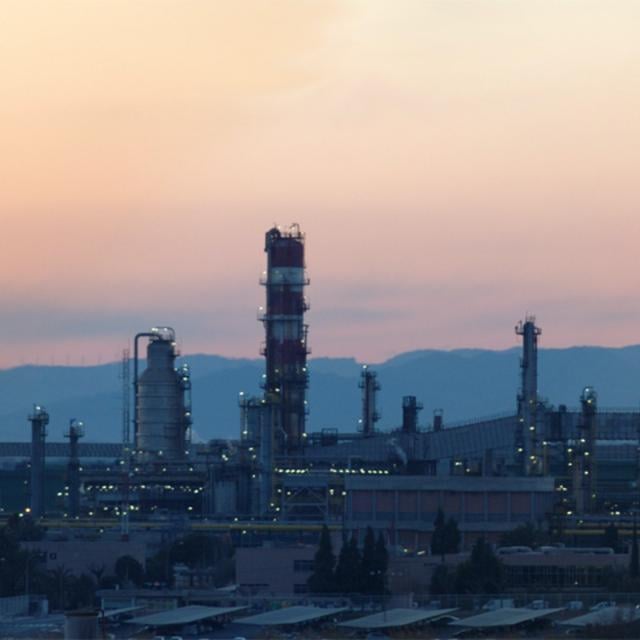
In this module, you will learn about the core activities that the Oil and Gas Industry executes to bring natural gas and petroleum products to market. We will look at the exploration and production of oil and gas, the processing and refining of the oil and gas into useable fuels and other valuable commodities, and finally the transport of oil, gas, and petroleum products from wells to refineries to retail outlets.

WEEK 2
Oil and Gas Industry Markets
In this second module, the course shifts to the markets that drive Oil and Gas Industry operations. You will learn about the various costs of the core oil and gas industry activities, the factors that determine the prices that oil, gas and petroleum products sell for, and the effect that the amount of oil and gas remaining in the ground has on the future viability of individual companies to the Industry as a whole.
Go to Class
MOOC List is learner-supported. When you buy through links on our site, we may earn an affiliate commission.

Related Courses

Electric Industry Operations and Markets (Coursera) Coursera
Duke University

Electric Industry Operations and Markets (Coursera)

This is a two week course. In the first week you will learn about the core activities that the Industry executes to bring electricity to customers. We will review what electricity is, how it is generated, how it is transmitted, how it comes into buildings, and how consumption of electricity instantly feeds back on the transmission and generation of electricity.

Sep 21st 2026
2 Weeks
Our Energy Future (Coursera) Coursera
University of California, San Diego

Our Energy Future (Coursera)

This course is designed to introduce students to the issues of energy in the 21st century – including food and fuels – which are inseparably linked – and will discuss energy production and utilization from the biology, engineering, economics, climate science, and social science perspectives. This course will cover the current production and utilization of energy, as well as the consequences of this use, examining finite fossil energy reserves, how food and energy are linked, impacts on the environment and climate, and the social and economic impacts of our present energy and food production and use.

Sep 21st 2026
5-12 Weeks
Energy management for real estate. Methods and digital tools (Coursera) Coursera
Politecnico di Milano

Energy management for real estate. Methods and digital tools (Coursera)

The figure of the Energy Manager (EM), introduced in the United States in the early 1970s, during the first oil crisis, brought to light the need to get more work out of less energy. In Italy, this figure was officially introduced by Law 308/82, but had its first strong impulse thanks to Law 10/91, aimed at implementing the National Energy Plan on the rational use of energy, energy saving and the development of renewable energy sources. More in detail, an Energy Manager is a person whose task is to manage what concerns energy within a company, a public body, or more generally a structure, verifying the energy consumption, optimising it, and promoting interventions aimed at energy efficiency and the use of renewable sources.

Sep 21st 2026
4 Weeks
Serverless Data Processing with Dataflow: Operations en Español (Coursera) Coursera
Google Cloud

Serverless Data Processing with Dataflow: Operations en Español (Coursera)

En esta última parte de la serie de cursos de Dataflow, presentaremos los componentes del modelo operativo de Dataflow. Examinaremos las herramientas y técnicas que permiten solucionar problemas y optimizar el rendimiento de las canalizaciones. Luego, revisaremos las prácticas recomendadas de las pruebas, la implementación y la confiabilidad en relación con las canalizaciones de Dataflow.

Sep 21st 2026
2 Weeks
Ash-Related Operational Challenges in Energy Utilization of Sustainable Fuels (Coursera) Coursera
Technical University of Denmark - DTU

Ash-Related Operational Challenges in Energy Utilization of Sustainable Fuels (Coursera)

The basic idea behind this MOOC, is to present recent data on fuel characterization, slagging, fouling, corrosion, and trace element transformations, in a course that can be readily provided for students and industry people. This ensures understanding and application of the research, and provides the students and industry with a forum for discussion of the very latest research results, as well as feedback from industry to the research group at DTU, on important new research subjects in the field.

Sep 21st 2026
5-12 Weeks
Sustainable Urban Regeneration (Coursera) Coursera
Università Bocconi

Sustainable Urban Regeneration (Coursera)

The transformation of land use, functions, and services in cities represents an opportunity to foster sustainable development, contributing to local and global challenges. Urban regeneration is a key area to govern change, attract investments, engage stakeholders, and generate multiple benefits in both developed and developing countries.

Sep 21st 2026
5-12 Weeks
Global Warming I: The Science and Modeling of Climate Change (Coursera) Coursera
University of Chicago

Global Warming I: The Science and Modeling of Climate Change (Coursera)

This class describes the science of global warming and the forecast for humans’ impact on Earth’s climate. Intended for an audience without much scientific background but a healthy sense of curiosity, the class brings together insights and perspectives from physics, chemistry, biology, earth and atmospheric sciences, and even some economics—all based on a foundation of simple mathematics (algebra).

Sep 21st 2026
5-12 Weeks
Introduction to Thermodynamics: Transferring Energy from Here to There (Coursera) Coursera
University of Michigan

Introduction to Thermodynamics: Transferring Energy from Here to There (Coursera)

This course provides an introduction to the most powerful engineering principles you will ever learn - Thermodynamics: the science of transferring energy from one place or form to another place or form. We will introduce the tools you need to analyze energy systems from solar panels, to engines, to insulated coffee mugs. More specifically, we will cover the topics of mass and energy conservation principles; first law analysis of control mass and control volume systems; properties and behavior of pure substances; and applications to thermodynamic systems operating at steady state conditions.

Sep 21st 2026
5-12 Weeks
Transição energética e ecológica em países do sul (Coursera) Coursera
École normale supérieure

Transição energética e ecológica em países do sul (Coursera)

Este MOOC encontra-se na confluência do desenvolvimento dos países do Sul e do desenvolvimento sustentável. Tem uma dimensão macroeconómica e financeira, trazida em particular por Gael Giraud e Alain Grandjean como intervenientes, uma dimensão ecológica e climática trazida em particular por David Claessen e pelos intervenientes da ENS, e uma dimensão de foco nos países do Sul, particularmente pelos intervenientes da AFD.

Sep 21st 2026
5-12 Weeks
Economie du sol et de l'immobilier II (Coursera) Coursera
École Polytechnique Fédérale de Lausanne

Economie du sol et de l'immobilier II (Coursera)

Quels sont les liens entre les prix fonciers, les prix immobiliers et les prix pour l'usage des immeubles? Est-ce que les prix immobiliers permettent de comprendre les prix fonciers? Ou l'inverse? Quels sont les calculs faits par les opérateurs sur ces marchés? On a le sentiment que ces marchés sont liés les uns aux autres. Avec ce cours, vous comprendrez mieux comment. En passant, vous aurez acquis une meilleure compréhension des mécanismes économiques qui peut être utile dans d'autres domaines.

Sep 21st 2026
5-12 Weeks
Global Energy and Climate Policy (Coursera) Coursera
University of London,SOAS University of London

Global Energy and Climate Policy (Coursera)

The Global Energy and Climate Policy course offers an introduction to the theoretical and practical understanding of how energy and climate change policies are designed, shaped, advocated and implemented. As energy markets go truly global, domestic energy policies are becoming more and more entangled with wider issues of international governance. Concurrently, the urgent need to mitigate and adapt to climate change and transition to a low-carbon future is adding a further layer of complexity.

Sep 21st 2026
5-12 Weeks