Extinctions: Past, Present, & Future (Coursera)

Offered by Emory University,
Extinctions: Past, Present, & Future (Coursera)

This course introduces you to the five mass extinctions of the pre-human past, their causes and significance to the history of life on earth, and the current mass extinction happening during our time. We’ll also explore the history of paleontology and geological study and review the key players that influenced the science today.

Class Deals by MOOC List - Click here and see Coursera's Active Discounts, Deals, and Promo Codes.

Regardless of your familiarity with the topic, you'll get portable handouts, lively demonstrations, and quizzes that bridge and enhance your knowledge.

What You Will Learn

  • Summarize extinctions as an important part of the history of life.
  • Identify the probable causes of mass extinctions in the geologic past (before humans).
  • Compare and contrast the Big Five mass extinctions with human-influenced extinctions.
  • Evaluate historical lessons and current trends to predict and prevent extinctions of the future.

Syllabus

WEEK 1: Introduction to Extinctions: Getting Started with the End
WEEK 2: Human Awareness of Extinctions: A History
WEEK 3: Mass Extinctions of the Pre-Human Past
WEEK 4: Extinctions of Pre-History & Near-Present (Pleistocene Epoch & Late Holocene Epoch)
WEEK 5: Extinctions Since European Colonization & Going into the Future

Go to Class
MOOC List is learner-supported. When you buy through links on our site, we may earn an affiliate commission.

Related Courses

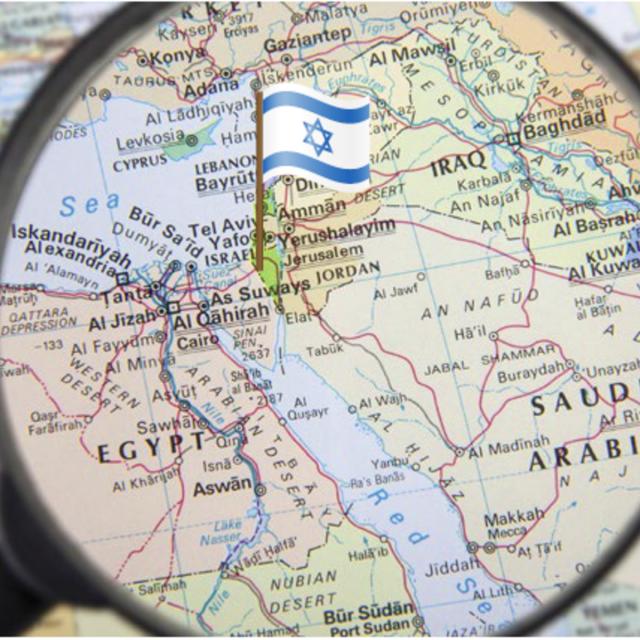
The Emergence of the Modern Middle East - Part I (Coursera) Coursera
Tel Aviv University

The Emergence of the Modern Middle East - Part I (Coursera)

This course will review the emergence of the modern Middle East from the fall of the Ottoman Empire, at the end of the First World War to the present. We will discuss the Ottoman legacy in the region and the Western imperial impact on the creation of the Arab state system. The course will review the rise and retreat of Arab nationalism, the problems of internal cohesion of the Arab states, issues of religion and state, and the evolution of Islamist politics. We will also focus on the evolution of the Arab-Israeli conflict and its impact on the region and will conclude with an in depth analysis of the “Arab Spring” by placing these contemporary revolutionary events in their historical context.

Jun 1st 2026
4 Weeks
Global Warming I: The Science and Modeling of Climate Change (Coursera) Coursera
University of Chicago

Global Warming I: The Science and Modeling of Climate Change (Coursera)

This class describes the science of global warming and the forecast for humans’ impact on Earth’s climate. Intended for an audience without much scientific background but a healthy sense of curiosity, the class brings together insights and perspectives from physics, chemistry, biology, earth and atmospheric sciences, and even some economics—all based on a foundation of simple mathematics (algebra).

Jun 1st 2026
5-12 Weeks
The Kennedy Half Century (Coursera) Coursera
University of Virginia

The Kennedy Half Century (Coursera)

When John F. Kennedy entered the presidential limousine at Love Field in Dallas, Texas on November 22, 1963, he began his ride into history. That journey continues even today and we call it the Kennedy legacy. This course will explore the Presidency, assassination, and lasting legacy of President John F. Kennedy. Students will learn how JFK’s life, administration, and tragic death have influenced the general public, the media, and each of the nine U.S. presidents who followed.

Jun 8th 2026
4 Weeks
The Arctic as a System (Coursera) Coursera
University of Colorado Boulder

The Arctic as a System (Coursera)

In this course you will first learn about the Arctic as a geographic region, the peoples the Arctic, and the long history of Arctic settlement and exploration. Attention then turns to key features of the Arctic environment – its climate and weather, features of the ocean, sea ice, lands and the Greenland Ice Sheet, and some of the rapid changes being observed.

Jun 8th 2026
5-12 Weeks
El Valle de los Reyes (Coursera) Coursera
Universitat Autònoma de Barcelona

El Valle de los Reyes (Coursera)

Este curso va dirigido a todos los amantes de la historia y arqueología, en general, y de manera particular a todos los interesados en egiptología, independientemente de su nivel de conocimiento inicial. El Valle de los Reyes constituye uno de los yacimientos arqueológicos más importantes de Egipto y su estudio, desde diferentes enfoques, resulta muy atractivo para cualquier aficionado o profesional de la egiptología. Con este curso nos proponemos conocer su historia y evolución a lo largo de las dinastías XVIII-XX del Reino Nuevo egipcio, desde su origen hasta su abandono y desmantelamiento.

Jun 8th 2026
5-12 Weeks
The Holocaust: The Destruction of European Jewry (Coursera) Coursera
University of California, Santa Cruz

The Holocaust: The Destruction of European Jewry (Coursera)

The Holocaust: The Destruction of European Jewry is an adaptation of an on-campus course that has been co-taught by Murray Baumgarten, Distinguished Professor of English and Comparative Literature (Literature Department), and Peter Kenez, Professor Emeritus (History Department), for over 20 years at UC Santa Cruz. In this course, you will explore the Holocaust from the overlapping perspectives of literature and history—through memoirs, historical documents, poetry, documentary footage, filmic representations, and novels.

Jun 1st 2026
5-12 Weeks
The Bible's Prehistory, Purpose, and Political Future (Coursera) Coursera
Emory University

The Bible's Prehistory, Purpose, and Political Future (Coursera)

With its walls razed to ground by Babylon’s armies, Jerusalem joined a long line of ancient vanquished cities—from Ur and Nineveh and Persepolis to Babylon itself. While some recovered from the destruction, others did not. But none responded to political catastrophe by fashioning the kind of elaborate and enduring monument to their own downfall that we find in the Bible. Most conquered populations viewed their subjugation as a source of shame. They consigned it to oblivion, opting instead to extol the golden ages of the past. The biblical authors in contrast reacted to loss by composing extensive writings that acknowledge collective failure, reflect deeply upon its causes, and discover thereby a ground for collective hope.

Jun 1st 2026
5-12 Weeks
Arch of Titus: Rome and the Menorah (Coursera) Coursera
Yeshiva University

Arch of Titus: Rome and the Menorah (Coursera)

The Arch of Titus: Rome and the Menorah explores one of the most significant Roman monuments to survive from antiquity, from the perspectives of Roman, Jewish and later Christian history and art. The Arch of Titus commemorates the destruction of Jerusalem by the emperor Titus in 70 CE, an event of pivotal importance for the history of the Roman Empire, of Judaism, of Christianity and of modern nationalism. Together with your guide, Professor Steven Fine, you will examine ancient texts and artifacts, gaining skills as a historian as you explore the continuing significance of the Arch of Titus from antiquity to the very present.

Jun 8th 2026
5-12 Weeks
What Are the 4 A’s of Marketing - Jagdish Sheth (Coursera) Coursera
University System of Georgia

What Are the 4 A’s of Marketing - Jagdish Sheth (Coursera)

The most common framework in marketing is the 4Ps of Marketing (Price, Product, Place, and Promotion). However, this is a company perspective about marketing and the 4A’s of marketing is a customer perspective on marketing. Customers are looking for value and the 4A’s is a value creation framework. Each A has two dimensions. For instance, acceptability is functional and psychological. Affordability encapsulates the ability and willingness to pay, and accessibility focuses on availability and convenience. Lastly, awareness looks at product and brand knowledge.

Jun 8th 2026
3 Weeks
Understanding China, 1700-2000: A Data Analytic Approach, Part 1 (Coursera) Coursera
The Hong Kong University of Science and Technology - HKUST

Understanding China, 1700-2000: A Data Analytic Approach, Part 1 (Coursera)

The purpose of this course is to summarize new directions in Chinese history and social science produced by the creation and analysis of big historical datasets based on newly opened Chinese archival holdings, and to organize this knowledge in a framework that encourages learning about China in comparative perspective. Our course demonstrates how a new scholarship of discovery is redefining what is singular about modern China and modern Chinese history.

Jun 8th 2026
5-12 Weeks