The History of Modern Israel – Part I: From an Idea to a State (Coursera)

Offered by Tel Aviv University,
The History of Modern Israel – Part I: From an Idea to a State (Coursera)

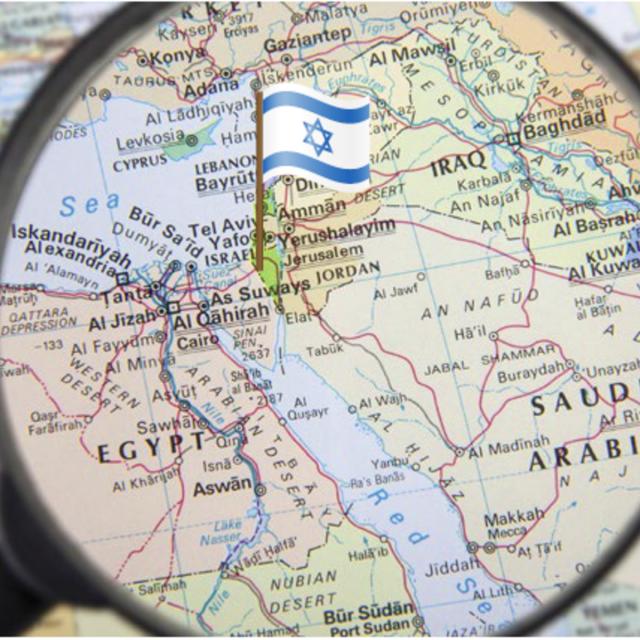
How did the State of Israel come to be? How is it that an idea, introduced in 19th century Europe, became a reality? And how does that reality prevail in the harsh complexities of the Middle East? Presented by Professor Eyal Naveh, with additional units from Professor Asher Sussers' "The Emergence of the Modern Middle East" course, This course will take you on a journey through the history of Modern Israel. In this 1st part of the course we will explore: How did the 19th century idea of a Jewish state become a reality? So the next time you hear about Israel in the news, you will be informed enough about the history of this area to comprehend the many sides and narratives that interact to shape the complex reality of Israel today.

Class Deals by MOOC List - Click here and see Coursera's Active Discounts, Deals, and Promo Codes.

Please note that there is a second part to this course"The History of Modern Israel - Part II: Challenges of Israel as a sovereign state" which is a direct extension of this part.

Syllabus

WEEK 1
The Emergence of Zionism
This module will discuss the major reasons for the rise of the Zionist movement as the national movement of the Jewish people, as a modern, European phenomenon at the last third of the nineteenth century. It will focus on the main features of the movement as well as its first projects in Palestine. The module will end with the impact of World War I on Jews in general and on the Zionist movement in particular, leading to the Balfour deceleration.

WEEK 2
The Jewish Community (Yishuv) in Palestine Under British Mandate, 1921-1939
Focusing on the first two decades of the British Mandate in Palestine, this module will explore the relationship between British authorities, Jews, and Arabs in the area. It will characterize the nature of the Zionist society that developed during this time by characterizing it as a "state in a process". It will also point to the emergence of initial Palestinian nationalism and its struggle against both the British authorities and the continuation of Jewish immigration and national building.

WEEK 3
WWII, the Holocaust, the end of the Mandate and the Establishment of Israel
This module will explore the most tragic event of the Twentieth century, namely the Second World War and the Holocaust. It will discuss the impact of this event on the Jewish Zionist society in Palestine. The module will continue by looking at the Zionist struggle against the British Mandate following the years of the war, the British decision to leave the area, the UN suggestion to create two states, one Jewish and one Arab, the failure of this project and the break of the war between Jews and Palestinians. We will analyze the declaration of independence and the creation of Israel as a sovereign state that had to fight for its existence and succeed to defend itself against an invasion of neighboring Arab states. It will explain the Palestinian catastrophe and the tragedy of Palestinian refugees.


Go to Class
MOOC List is learner-supported. When you buy through links on our site, we may earn an affiliate commission.

Related Courses

Organising an Empire: The Assyrian Way (Coursera) Coursera
Ludwig-Maximilians-Universität München

Organising an Empire: The Assyrian Way (Coursera)

Discover the mighty kingdom of Assyria, which came to be the world’s first great empire three thousand years ago. From the 9th to the 7th centuries BC, during the imperial phase of Assyria’s long history, modern day northern Iraq was the central region of a state reaching from the Mediterranean Sea to the Persian Gulf, and incorporating what is now Iraq, Syria, and Lebanon, as well as half of Israel, and wide parts of south-eastern Turkey, and Western Iran.

Aug 10th 2026
5-12 Weeks
Film, Images & Historical Interpretation in the 20th Century: The Camera Never Lies (Coursera) Coursera
University of London,Royal Holloway, University of London

Film, Images & Historical Interpretation in the 20th Century: The Camera Never Lies (Coursera)

This course is a short taster on the topic of the use of Images, Film, and their use in historical interpretation in the 20th century. It is primarily provided for those who have a general interest in history that draws on photojournalism as primary evidence, and films based on historical events.

Aug 10th 2026
5-12 Weeks
Plagues, Witches, and War: The Worlds of Historical Fiction (Coursera) Coursera
University of Virginia

Plagues, Witches, and War: The Worlds of Historical Fiction (Coursera)

A unique and exciting introduction to the genre and craft of historical fiction, for curious students, aspiring authors--anyone with a passion for the past. Read classics of the genre, encounter bestselling writers of historical fiction, and discover your own historical archive while interacting with a global community of interested readers.

Aug 3rd 2026
5-12 Weeks
The Kennedy Half Century (Coursera) Coursera
University of Virginia

The Kennedy Half Century (Coursera)

When John F. Kennedy entered the presidential limousine at Love Field in Dallas, Texas on November 22, 1963, he began his ride into history. That journey continues even today and we call it the Kennedy legacy. This course will explore the Presidency, assassination, and lasting legacy of President John F. Kennedy. Students will learn how JFK’s life, administration, and tragic death have influenced the general public, the media, and each of the nine U.S. presidents who followed.

Aug 3rd 2026
4 Weeks
History of Rock, Part Two (Coursera) Coursera
University of Rochester

History of Rock, Part Two (Coursera)

This course, part 2 of a 2-course sequence, examines the history of rock, primarily as it unfolded in the United States, from the early 1970s to the early 1990s. This course covers the music of Led Zeppelin, the Allman Brothers, Carole King, Bob Marley, the Sex Pistols, Donna Summer, Michael Jackson, Madonna, Prince, Metallica, Run-DMC, and Nirvana, and many more artists, with an emphasis both on cultural context and on the music itself. We will also explore how developments in the music business and in technology helped shape the ways in which styles developed.

Aug 3rd 2026
5-12 Weeks
Arctic Economy (Coursera) Coursera
University of Alberta,UiT The Arctic University of Norway

Arctic Economy (Coursera)

Arctic communities have diverse histories and roles in local, regional and global economies. However, the scope and scale of globalization has increased so quickly that vulnerable Arctic communities are facing new kinds of challenges to their survival. In this 3-week MOOC, a unique collaboration between the University of Alberta and UiT The Arctic University of Norway, you will investigate the challenges faced by Indigenous, North American, Russian and Nordic Arctic communities in a modern world. So join us as we venture above the 60th parallel North, and explore how these fascinating communities adjust to change while maintaining their ways of life, socio-economic histories, and cultural traditions.

Aug 17th 2026
4 Weeks
Exploring Beethoven’s Piano Sonatas Part 2 (Coursera) Coursera
Curtis Institute of Music

Exploring Beethoven’s Piano Sonatas Part 2 (Coursera)

Welcome to Part 2 of Exploring Beethoven's Piano Sonatas! I'm delighted to launch another set of new lectures of this course as Part 2. As before, this class is meant for people of all levels of experience with Beethoven's music (including no experience at all!). Remember that you are able to watch the lectures as many times as you like, at whatever pace is comfortable for you.

Aug 10th 2026
5-12 Weeks
Terrorism and Counterterrorism: Comparing Theory and Practice (Coursera) Coursera
Leiden University

Terrorism and Counterterrorism: Comparing Theory and Practice (Coursera)

Terrorism has arguably been one of the defining factors of our age. It frequently makes headlines, threatening or attacking governments, private business and ordinary citizens. And in many parts of the world, it has been one of the most important threats to peace, security and stability. But what does this exactly mean? What is the nature of this threat? Who or what is threatened, how, by whom and why? What can be done about it or how can we at least limit the impact of terrorism and make sure that terrorists do not make headlines and manage to scare us? These are just a handful of questions that will be addressed in this course that consists of three parts.

Aug 10th 2026
5-12 Weeks
What Is Contemporary Art? (Coursera) Coursera
The Museum of Modern Art

What Is Contemporary Art? (Coursera)

What is contemporary art? In this course, you’ll consider this question through more than 70 works of art made between 1980 and the present, with a focus on art from the past decade. You’ll hear directly from artists, architects, and designers from around the globe about their creative processes, materials, and inspiration.

Aug 17th 2026
5-12 Weeks