The Holocaust - An Introduction (I): Nazi Germany: Ideology, The Jews and the World (Coursera)

The Holocaust - An Introduction (I): Nazi Germany: Ideology, The Jews and the World (Coursera)

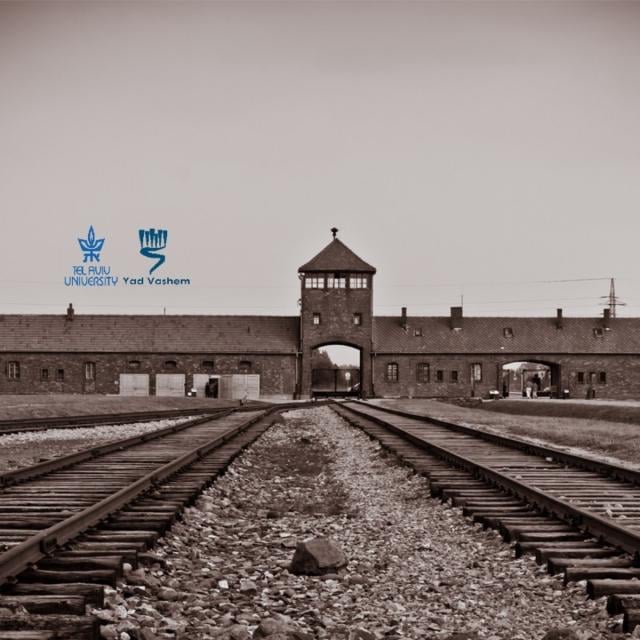
The Holocaust was an inconceivable historical event, which forever robbed Western culture of its innocence. As civilized human beings, we fail to understand how events of such horror could have taken place, and how an idea so inhumanly warped could have spread like wildfire through an entire continent, instigating the systematic annihilation of millions of Jews. This free online course was produced jointly by Tel Aviv University and Yad Vashem – the World Holocaust Remembrance Center. The course tracks the history of the Holocaust and has two parts.

Class Deals by MOOC List - Click here and see Coursera's Active Discounts, Deals, and Promo Codes.

"The Holocaust - An Introduction (I): Nazi Germany: Ideology, The Jews and the World" is the first of the two courses and covers the following themes in its three weeks:
Week 1: From Hatred to Core Ideology
We will try to delve into Nazi ideology and the special place of Jews and Judaism in it. We will also discuss how the National Socialist Party converted the German Democracy of the Weimar Republic into a totalitarian regime within a short period of time, and its meaning for Jews and non-Jewish citizens.
Week 2: The World and the Jews in World War II
We will try to examine the broader contexts of the Holocaust and to place it, as part of World War 2. In this meeting we will also refer to the vital Jewish world to be found under various Nazi occupations and influences.
Week 3: The Isolation Abyss - the Perspective of the Individual
We will try to reveal different aspects of Jewish life in the face of the badge of shame, ghettos and segregation, as well as the formation of individual, societies’ and leader’s reactions in the face of a consistent policy of dispossession and discrimination.
Once you’ve completed this course, you can continue your learning with The Holocaust - An Introduction (II): The Final Solution
This online course is offered in an innovative, multi-level format, comprising:

  • Comprehensive lectures by leading researchers from Tel Aviv University and Yad Vashem.
  • A wealth of voices and viewpoints presented by guest lecturers.
  • Numerous documents, photos, testimonies and works of art from the time of the Holocaust.
  • Novel learning experience: Crowd sourcing – involving the learners themselves in the act of collecting and shaping information, via unique, exciting online assignments.

REQUIREMENTS:
This course is designed for anyone with an interest in the Holocaust, including students, teachers, academics and policy-makers.

Syllabus

WEEK 1
From Hatred to Core Ideology; From Democracy to a Totalitarian State; Nazi Germany and the Jews
We will try to delve into Nazi ideology and the special place of Jews and Judaism in it. We will ask ourselves what, if anything, it renewed regarding traditional hatred of Israel and modern anti-Semitism and analyze Nazi documents to see how it reflects in them. Also, in this lesson we will discuss how the National Socialist Party succeeded in converting the German Democracy of the Weimar Republic into a totalitarian regime within a short period of time, and the significance of this process for its citizens - Jews and non-Jews alike.

WEEK 2
The World and the Jews in World War II
We will try to examine the broader contexts of the Holocaust and to position it as a part of a various global conflicts that took place during world war 2. In this context, we will focus in a number of unique realities that were formed and created in Occupied Poland and France using them to identify key practices of Nazi Germany, European companies and the Jews who lived among them. We’ll look at the different fates of Jews in various European countries before and during World War 2, through the lens of the enormous changes which the Jewish world underwent in modern times: emancipation, secularization, urbanization and emigration.

WEEK 3
The Abyss of Isolation - the perspective of the individual
Instead of policy, state and society at large, we’ll focus on the individual, the family and the Jewish communities across Europe, using a broad range of wartime accounts: official documents, diaries, letters, artwork and more. In this context, we will try to reveal different aspects of Jewish life in the face of shame, ghettos and segregation, as well as the formation of individual, societies and leaders reactions in the face of consistent policy of dispossession and discrimination. A variety of sources will help us create a complex puzzle consists of Jewish life in those dark days. In this context, we will try to reveal different aspects of Jewish life in the face of shame, ghettos and segregation, as well as the formation of individual, societies and leaders reactions in the face of consistent policy of dispossession and discrimination. A variety of sources will help us create a complex puzzle consists of Jewish life in those dark days.
Go to Class
MOOC List is learner-supported. When you buy through links on our site, we may earn an affiliate commission.

Related Courses

Introduction to Typography (Coursera) Coursera
California Institute of the Arts

Introduction to Typography (Coursera)

Typography is the art of manipulating the visual form of language to enrich and control its meaning. It’s an essential area of skill and knowledge for graphic designers. Typography predates modern graphic design by around 500 years; it is rich in rules, conventions, and esoteric terminology—but it remains an exciting space for invention and expression.

Jun 1st 2026
4 Weeks
Data Science Ethics (Coursera) Coursera
University of Michigan

Data Science Ethics (Coursera)

What are the ethical considerations regarding the privacy and control of consumer information and big data, especially in the aftermath of recent large-scale data breaches? This course provides a framework to analyze these concerns as you examine the ethical and privacy implications of collecting and managing big data. Explore the broader impact of the data science field on modern society and the principles of fairness, accountability and transparency as you gain a deeper understanding of the importance of a shared set of ethical values.

Jun 1st 2026
4 Weeks
Paradoxes of War (Coursera) Coursera
Princeton University

Paradoxes of War (Coursera)

The Paradoxes of War teaches us to understand that war is not only a normal part of human existence, but is arguably one of the most important factors in making us who we are. Through this course, I hope that you will come to appreciate that war is both a natural expression of common human emotions and interactions and a constitutive part of how we cohere as groups. That is, war is paradoxically an expression of our basest animal nature and the exemplar of our most vaunted and valued civilized virtues.

Jun 1st 2026
13-24 Weeks
Recovering the Humankind's Past and Saving the Universal Heritage (Coursera) Coursera
Sapienza University of Rome

Recovering the Humankind's Past and Saving the Universal Heritage (Coursera)

Archaeology has as its objective the recovery and revival of humankind past, and as its aim the rescue and preservation of cultural heritage. Archaeology is, among human sciences, the discipline with the strongest importance for the rediscovery, but also for the preservation and protection of cultural heritage, as Humankind’s universal patrimony. You will be introduced to the way we ourselves reflect on and are engaged with the study of human past: from the practical and material recovery of ancient traces in the field to the study and interpretation. On the other hand, the discovery of human past implies the correct conservation and presentation for both experts and general public: the study and protection of the past we share every day prevent from any possible destruction, misuse, abuse and thus cancellation of human memory.

Jun 1st 2026
5-12 Weeks
Transmedia Writing (Coursera) Coursera
Michigan State University

Transmedia Writing (Coursera)

Do you have a desire to write a novel, write a screenplay, design a video game? In this project-centered course you will develop your own, original, intellectual property (IP) into a transmedia project containing written versions of your IP on various platforms. You will begin your novel, adapt the first chapters of your novel into the opening scenes of a film or TV show and create a game design concept of your IP.

Jun 1st 2026
5-12 Weeks
Fashion as Design (Coursera) Coursera
The Museum of Modern Art

Fashion as Design (Coursera)

Among all objects of design, our clothes are the most universal and intimate. Like other kinds of design, fashion thrives on productive tensions between form and function, automation and craftsmanship, standardization and customization, universality and self-expression, and pragmatism and utopian vision. It exists in the service of others, and it can have profound consequences—social, political, cultural, economic, and environmental.

Jun 1st 2026
5-12 Weeks
Inequality and Democracy (Coursera) Coursera
Universiteit Utrecht

Inequality and Democracy (Coursera)

Most countries are getting more and more unequal. But the core of democracy is political equality: that everyone should have an equal say in how their country is run. Can we really expect these things to go together? Can people have equal political power while economic inequality grows and grows? Take this course and decide for yourself.

Jun 1st 2026
5-12 Weeks
Journey of the Universe: The Unfolding of Life (Coursera) Coursera
Yale University

Journey of the Universe: The Unfolding of Life (Coursera)

Journey of the Universe weaves together the discoveries of the evolutionary sciences together with humanities such as history, philosophy, art, and religion. The course draws on the Emmy-award winning film, Journey of the Universe, and the book from Yale University Press. Journey explores cosmic evolution as a creative process based on connection, interdependence, and emergence. It examines a range of dynamic interactions in the unfolding of galaxies, Earth, life, and human communities. It investigates ways in which we understand evolutionary processes and the implications for humans and our ecological future.

May 25th 2026
5-12 Weeks
Securing Digital Democracy (Coursera) Coursera
University of Michigan

Securing Digital Democracy (Coursera)

In this course, you'll learn what every citizen should know about the security risks--and future potential — of electronic voting and Internet voting. We'll take a look at the past, present, and future of election technologies and explore the various spaces intersected by voting, including computer security, human factors, public policy, and more.

Jun 1st 2026
5-12 Weeks