Fashion as Design (Coursera)

Fashion as Design (Coursera)

Among all objects of design, our clothes are the most universal and intimate. Like other kinds of design, fashion thrives on productive tensions between form and function, automation and craftsmanship, standardization and customization, universality and self-expression, and pragmatism and utopian vision. It exists in the service of others, and it can have profound consequences—social, political, cultural, economic, and environmental.

Class Deals by MOOC List - Click here and see Coursera's Active Discounts, Deals, and Promo Codes.

Fashion as Design focuses on a selection of more than 70 garments and accessories from around the world, ranging from kente cloth to jeans to 3D-printed dresses. Through these garments, we’re going to look closely at what we wear, why we wear it, how it’s made, and what it means. You’ll hear directly from a range of designers, makers, historians, and others working with clothing every day—and, in some cases, reinventing it for the future. Studio visits, interviews, and other resources introduce the history and development of each garment and their changing uses, meanings, and impact over time.
Course Learning Objectives:
Develop critical tools to appreciate and contextualize fashion design—from everyday clothing to couture garments—through many different perspectives.
Trace the history, development, and impact of garments over time, and explore how they may be reinvented.
Investigate garments through multiple lenses including politics, identity, and economics.
Understand more about the lifecycle of clothing, from its design and production to its marketing, distribution, and consumption.
Better comprehend the choices you make about fashion with respect to the visual language of dress, individual and collective identities, and issues such as labor practices, sustainability, and body politics.
Course 4 of 4 in the Modern and Contemporary Art and Design Specialization.

Syllabus

WEEK 1
Introduction

WEEK 2
Heroes
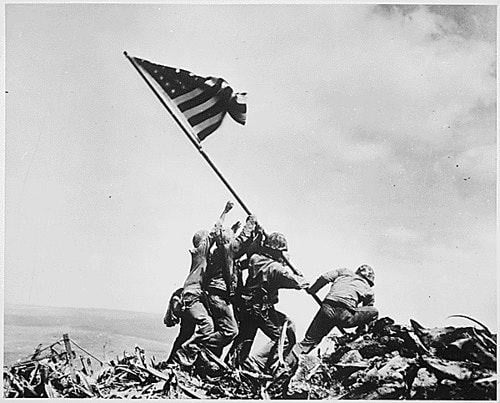
Wearing certain garments can inspire heroic transformations, while heroes can elevate everyday clothing to iconic status. In this module, you will discover the relationship between aspiration, achievement, adulation, and attire through a wide range of heroes—and even imagine yourself as a space hero in the future.

WEEK 3
Silhouettes
When we put on clothes, we change the shape and outline of our bodies—sometimes profoundly. The silhouettes we adopt are determined by everything from shifting trends in fashion to what looks and feels good. This week, we explore how clothes shape the body and how cultural constructions of the body shape clothes.

WEEK 4
Coutures
The French word couture means "dressmaking" or "sewing,” and often refers to one-of-a-kind, primarily handmade garments intended for a specific individual. This module approaches couture from a broader perspective, exploring the complex processes—from traditional handcrafting to the use of new technologies—that go into the making of high-end and everyday garments.

WEEK 5
Lifecycle
This module examines the lifecycle of garments, an often overlooked aspect of fashion that many individuals and companies are addressing with growing urgency. How do garments begin, how do they end, and how does the cycle of production, consumption, and disposal impact the world around us?

WEEK 6
Modesty
Modesty has many varied expressions that can be informed by social, religious, or political identifications, as well as by personal choice. But whether covered up or exposed, our bodies are often battlegrounds for continually shifting societal claims around morality, agency, and etiquette.

WEEK 7
Expression
What we wear and how we wear it can communicate messages, create group identification, borrow and remake existing styles, or subvert a garment’s traditional associations. While choosing and wearing clothes is an act of personal expression, it is also a response to many of the topics addressed in the preceding weeks of this course. In this final week, we look at the ways in which clothing allows us to feel connected to others and to stand out.

Go to Class
MOOC List is learner-supported. When you buy through links on our site, we may earn an affiliate commission.

Related Courses

Terrorism and Counterterrorism: Comparing Theory and Practice (Coursera) Coursera
Leiden University

Terrorism and Counterterrorism: Comparing Theory and Practice (Coursera)

Terrorism has arguably been one of the defining factors of our age. It frequently makes headlines, threatening or attacking governments, private business and ordinary citizens. And in many parts of the world, it has been one of the most important threats to peace, security and stability. But what does this exactly mean? What is the nature of this threat? Who or what is threatened, how, by whom and why? What can be done about it or how can we at least limit the impact of terrorism and make sure that terrorists do not make headlines and manage to scare us? These are just a handful of questions that will be addressed in this course that consists of three parts.

Aug 10th 2026
5-12 Weeks
Understanding China, 1700-2000: A Data Analytic Approach, Part 1 (Coursera) Coursera
The Hong Kong University of Science and Technology - HKUST

Understanding China, 1700-2000: A Data Analytic Approach, Part 1 (Coursera)

The purpose of this course is to summarize new directions in Chinese history and social science produced by the creation and analysis of big historical datasets based on newly opened Chinese archival holdings, and to organize this knowledge in a framework that encourages learning about China in comparative perspective. Our course demonstrates how a new scholarship of discovery is redefining what is singular about modern China and modern Chinese history.

Aug 3rd 2026
5-12 Weeks
Chemerinsky on Constitutional Law - Individual Rights and Liberties (Coursera) Coursera
University of California, Irvine

Chemerinsky on Constitutional Law - Individual Rights and Liberties (Coursera)

Chemerinsky on Constitutional Law: Individual Rights and Liberties will highlight the construction and interpretation of the U.S. Constitution through the centuries with an emphasis on protections of individual liberties and the evolution of equal protection. You'll learn the history behind the Constitution, cases that formed important precedent, and how changes in interpretation have been dependent on shifts in cultural and political climate as well as the composition of the Supreme Court.

Aug 10th 2026
5-12 Weeks
Arch of Titus: Rome and the Menorah (Coursera) Coursera
Yeshiva University

Arch of Titus: Rome and the Menorah (Coursera)

The Arch of Titus: Rome and the Menorah explores one of the most significant Roman monuments to survive from antiquity, from the perspectives of Roman, Jewish and later Christian history and art. The Arch of Titus commemorates the destruction of Jerusalem by the emperor Titus in 70 CE, an event of pivotal importance for the history of the Roman Empire, of Judaism, of Christianity and of modern nationalism. Together with your guide, Professor Steven Fine, you will examine ancient texts and artifacts, gaining skills as a historian as you explore the continuing significance of the Arch of Titus from antiquity to the very present.

Aug 3rd 2026
5-12 Weeks
Organising an Empire: The Assyrian Way (Coursera) Coursera
Ludwig-Maximilians-Universität München

Organising an Empire: The Assyrian Way (Coursera)

Discover the mighty kingdom of Assyria, which came to be the world’s first great empire three thousand years ago. From the 9th to the 7th centuries BC, during the imperial phase of Assyria’s long history, modern day northern Iraq was the central region of a state reaching from the Mediterranean Sea to the Persian Gulf, and incorporating what is now Iraq, Syria, and Lebanon, as well as half of Israel, and wide parts of south-eastern Turkey, and Western Iran.

Aug 10th 2026
5-12 Weeks
Historia del Arte: Del Barroco al Arte Posmoderno (Coursera) Coursera
Universidad de Palermo

Historia del Arte: Del Barroco al Arte Posmoderno (Coursera)

El arte deriva de un deseo de la persona para comunicarse con otros” (Edvard Munch). Y es desde la prehistoria que el humano ha dejado impresas sus huellas a través del arte. ¿Qué características tienen esas huellas artísticas? ¿Qué nos comunican sobre el periodo de tiempo al que pertenecen? Sumergite en la historia del arte recorriendo este curso, partiendo desde la construcción del Arte Moderno y realizando un camino por los diferentes sistemas de representación dominantes de distintos períodos hasta llegar a la Muerte del Arte.

Aug 10th 2026
4 Weeks
Sharpened Visions: A Poetry Workshop (Coursera) Coursera
California Institute of the Arts

Sharpened Visions: A Poetry Workshop (Coursera)

Why just write poems when you can write better ones? This course is built on the notion that the most exciting writing begins after the first draft. It is specifically for folks who believe that writing poems just to express oneself is like using the Internet just for email. After all, poetry can change the way you and your readers think of the world and its inhabitants; it can break new ground for language; turn a blank sheet of paper into a teeming concert of voices and music.

Aug 3rd 2026
5-12 Weeks
Global Diplomacy – Diplomacy in the Modern World (Coursera) Coursera
University of London,SOAS University of London

Global Diplomacy – Diplomacy in the Modern World (Coursera)

The Global Diplomacy course is a unique offering to the MOOC environment. Bringing together cutting edge research in the broad fields of Diplomatic and International Studies, award winning distance learning delivery and the instructors previous experience of delivering a successful MOOC. Please see the volume Global Diplomacy: Theories, Types and Models authored with Dr Alison Holmes, (Westview, 2016), and the Understanding Research Methods MOOC from Coursera.

Aug 10th 2026
5-12 Weeks
A Journey through Western Christianity: from Persecuted Faith to Global Religion (200 - 1650) (Coursera) Coursera
Yale University

A Journey through Western Christianity: from Persecuted Faith to Global Religion (200 - 1650) (Coursera)

This course follows the extraordinary development of Western Christianity from its early persecution under the Roman Empire in the third century to its global expansion with the Jesuits of the early modern world. We explore the dynamic and diverse character of a religion with an enormous cast characters. We will meet men and women who tell stories of faith as well as of violence, suppression, and division.

Aug 10th 2026
5-12 Weeks