Film, Images & Historical Interpretation in the 20th Century: The Camera Never Lies (Coursera)

Film, Images & Historical Interpretation in the 20th Century: The Camera Never Lies (Coursera)

This course is a short taster on the topic of the use of Images, Film, and their use in historical interpretation in the 20th century. It is primarily provided for those who have a general interest in history that draws on photojournalism as primary evidence, and films based on historical events.

Class Deals by MOOC List - Click here and see Coursera's Active Discounts, Deals, and Promo Codes.

Once you have completed this course we hope you will be equipped to:

  • Appreciate the significance of photographs as historical evidence in the twentieth century.
  • Understand the limitations of the medium, and how we can attribute meaning to these individual records of 'one moment in time' while taking into account the circumstances in which any particular image was taken.
  • Understand how individuals and institutions have looked to manipulate images to their own ends – through alteration and/or censorship – and what that meant to contemporary interpretation, as well as subsequent historical interpretation.
  • Put individual images into a wider context, and in particular with reference to history written, or portrayed, beyond academia: public history.

Do be aware that part of the contents of this course regard images and depiction of war. Real wars and real images.

Syllabus

WEEK 1
Introduction
We will explore the issues associated with the use of images as a source for historical research and consider a number of examples where image manipulation has been uncovered

WEEK 2
Images and History in the Twentieth Century
We will review a number of cases studies where images have either shaped our opinion of events or have been suppressed from the public at the time, to avoid adverse or negative reaction.

WEEK 3
The Air-Brushing of History: Stalin and Falsification
The cause célèbre' of historical manipulation - Joseph Stalin. The 'air brushing' of historical records, and in this case the literal airbrushing of Soviet images in the 1930s and 1940s

WEEK 4
Photojournalism, Authenticity and Matters of Public Acceptability: The Battle of Mogadishu
With respect to Reportage and the use of images as a evidential record, should we condemn Stalin in the last 20th and early 21th century? We use an example from 1993 to illustrate this point.

WEEK 5
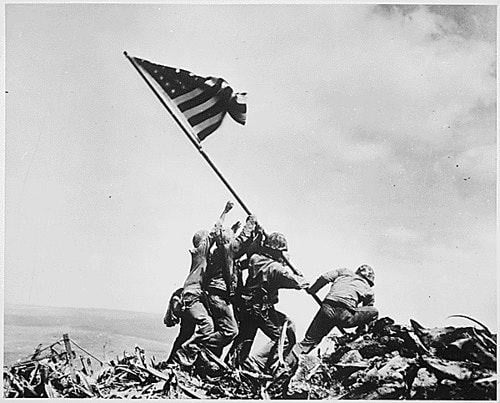
The Power of the Image: Mount Suribachi, 1945
The photograph of the raising of the flag at Mt. Suribachi was a Pulitzer Prize winning image, and the base of the film 'The Flag of our Fathers'. We will explore the use of the still and the motion picture to influence our opinion.

WEEK 6
From Page to Screen: Film as Public History
What is 'Public History'? How do photographs and films with an historical theme shape our awareness of historical events and our memories?
Go to Class
MOOC List is learner-supported. When you buy through links on our site, we may earn an affiliate commission.

Related Courses

Miracles of Human Language: An Introduction to Linguistics (Coursera) Coursera
Leiden University,Meertens Instituut - KNAW

Miracles of Human Language: An Introduction to Linguistics (Coursera)

Everywhere, every day, everybody uses language. There is no human society, no matter how small or how isolated, which does not employ a language that is rich and diverse. This course introduces you to linguistics, featuring interviews with well-known linguists and with speakers of many different languages. Join us to explore the miracles of human language!

Aug 17th 2026
5-12 Weeks
Søren Kierkegaard - Subjectivity, Irony and the Crisis of Modernity (Coursera) Coursera
University of Copenhagen

Søren Kierkegaard - Subjectivity, Irony and the Crisis of Modernity (Coursera)

In this course created by former associate professor at the Søren Kierkegaard Research Centre, Jon Stewart, we will explore how Kierkegaard deals with the problems associated with relativism, the lack of meaning and the undermining of religious faith that are typical of modern life. His penetrating analyses are still highly relevant today and have been seen as insightful for the leading figures of Existentialism, Post-Structuralism and Post-Modernism.

Aug 17th 2026
5-12 Weeks
The History of Modern Israel - Part II: Challenges of Israel as a sovereign state (Coursera) Coursera
Tel Aviv University

The History of Modern Israel - Part II: Challenges of Israel as a sovereign state (Coursera)

This course deals with the Israeli politics, economy, society and culture, since its creation in 1948 till today. It analyzes the construction of the Israeli historical narrative as an identity-building narrative, intending to inculcate a collective memory to a diverse society. We will focus on key events and essential components that shaped the Israeli society from the fifties till the present. We will also discuss the changes that the Israeli society experiences in its almost seventy years of existence and how it affects its politics and culture.

Aug 17th 2026
5-12 Weeks
History of Rock, Part Two (Coursera) Coursera
University of Rochester

History of Rock, Part Two (Coursera)

This course, part 2 of a 2-course sequence, examines the history of rock, primarily as it unfolded in the United States, from the early 1970s to the early 1990s. This course covers the music of Led Zeppelin, the Allman Brothers, Carole King, Bob Marley, the Sex Pistols, Donna Summer, Michael Jackson, Madonna, Prince, Metallica, Run-DMC, and Nirvana, and many more artists, with an emphasis both on cultural context and on the music itself. We will also explore how developments in the music business and in technology helped shape the ways in which styles developed.

Aug 3rd 2026
5-12 Weeks
Reimagining Blackness and Architecture (Coursera) Coursera
The Museum of Modern Art

Reimagining Blackness and Architecture (Coursera)

Architecture structures our daily lives. It shapes our homes, streets, neighborhoods, cities and more. But who gets to create and occupy these spaces? In the United States, a long history of anti-Black racism has created spatial inequalities that are built into the physical environment and erased the stories of Black architects and communities. Reimagining Blackness and Architecture explores the relationship between architecture and Blackness as an identity and a lived experience.

Aug 10th 2026
5-12 Weeks
The Holocaust - An Introduction (II): The Final Solution (Coursera) Coursera
Tel Aviv University,Yad Vashem

The Holocaust - An Introduction (II): The Final Solution (Coursera)

The Holocaust was an inconceivable historical event, which forever robbed Western culture of its innocence. As civilized human beings, we fail to understand how events of such horror could have taken place, and how an idea so inhumanly warped could have spread like wildfire through an entire continent, instigating the systematic annihilation of millions of Jews.

Aug 10th 2026
3 Weeks
Exploring Beethoven’s Piano Sonatas Part 2 (Coursera) Coursera
Curtis Institute of Music

Exploring Beethoven’s Piano Sonatas Part 2 (Coursera)

Welcome to Part 2 of Exploring Beethoven's Piano Sonatas! I'm delighted to launch another set of new lectures of this course as Part 2. As before, this class is meant for people of all levels of experience with Beethoven's music (including no experience at all!). Remember that you are able to watch the lectures as many times as you like, at whatever pace is comfortable for you.

Aug 10th 2026
5-12 Weeks
Journey of the Universe: The Unfolding of Life (Coursera) Coursera
Yale University

Journey of the Universe: The Unfolding of Life (Coursera)

Journey of the Universe weaves together the discoveries of the evolutionary sciences together with humanities such as history, philosophy, art, and religion. The course draws on the Emmy-award winning film, Journey of the Universe, and the book from Yale University Press. Journey explores cosmic evolution as a creative process based on connection, interdependence, and emergence. It examines a range of dynamic interactions in the unfolding of galaxies, Earth, life, and human communities. It investigates ways in which we understand evolutionary processes and the implications for humans and our ecological future.

Aug 17th 2026
5-12 Weeks
From Brand to Image: Creating High Impact Campaigns That Tell Brand Stories (Coursera) Coursera
IE Business School

From Brand to Image: Creating High Impact Campaigns That Tell Brand Stories (Coursera)

There are many different ways to approach clients to assess their needs and develop creative campaigns which fulfill your creative desires. Many agencies have established methodology, terminology and processes, and oftentimes, have spent decades or even years developing these processes. However, whether you are a freelancer, designer, illustrator, photographer or marketing director, or perhaps a small business owner, you will be looking to develop a simple process to create campaigns for yourself or your client.

Aug 17th 2026
4 Weeks
The Modern and the Postmodern (Part 2) (Coursera) Coursera
Wesleyan University

The Modern and the Postmodern (Part 2) (Coursera)

This course examines how the idea of "the modern" develops at the end of the 18th century in European philosophy and literature, and how being modern (or progressive, or hip) became one of the crucial criteria for understanding and evaluating cultural change. Are we still in modernity, or have we moved beyond the modern to the postmodern?

Aug 10th 2026
5-12 Weeks