Chosen Issues in Holocaust History (Coursera)

Offered by Yad Vashem,
Chosen Issues in Holocaust History (Coursera)

The Holocaust - what do we know about it and what more can we learn? This course provides a broad and in-depth look at central topics relating to the history of the Holocaust. It examines the events and processes that took place during these earth-shattering years through new and thought-provoking perspectives.

Class Deals by MOOC List - Click here and see Coursera's Active Discounts, Deals, and Promo Codes.

What You Will Learn

  • The rise of Nazi party to power and the development of anti-Jewish policy until the outbreak of the war
  • The establishment of the ghettos and the daily life within them
  • The development and implementation of the "Final Solution"
  • The development of antisemitism throughout the ages and its expression

Syllabus

WEEK 1
Nazi Germany: 1933-1939
In this chapter, the first of the course, we will learn together with Professor Guy Meron about Nazi Germany between 1933-1939. The chapter begins with an overview of the state of European Jewry during the interwar years. It will explore the fall of the Weimar Republic and the rise of the Nazi regime to power, as well as the implementation of anti-Jewish policies until the outbreak of World War II in 1939.

WEEK 2
The Outbreak of World War II and Anti-Jewish Policies, 1939-1941
Under the direction of Professor Dan Michman, this chapter will focus on Nazi Germany's anti-Jewish policies, from the outbreak of the war until 1941. We will identify different regime patterns in countries under German occupation and their anti-Jewish policies. We will also learn about the so-called "Jewish Council" (Judenrat), the establishment of ghettos and the lives of Jews within and outside of them during the Holocaust.

WEEK 3
The Formulation and Implementation of the "Final Solution", 1941-1945
Together with Dr David Silberklang, in this chapter, we will discuss the formulation and implementation of the "Final Solution". Dr Silberklang will explain different historiographical approaches to the development of the "Final Solution", will discuss Germany's invasion of the Soviet Union and the beginning of the mass murders. We will also explore the establishment of the death camps, as well as the life of prisoners in the various camps.

WEEK 4
The Image of "the Jew" in Nazi Antisemitism - Visuals and Typology
In this chapter, Dr Robert Rosett will describe the development of antisemitism throughout the ages and the evolution of the image of the Jewish figure within it. We will explore modern, political and racial antisemitism in the 19th century, as well as Nazi ideology.

WEEK 5
Key Stages in the History of World War II and The Deportations
Two main subjects are raised in Dr Joel Zisenwine lectures found in this chapter: The key stages in the history of world war II and the deportation of Jews to camps during the Holocaust.

WEEK 6
The World After the Holocaust: Trauma, Memory and Culture
The issues discussed in this chapter are taken from Yad Vashem's learning center "Reflections After the Holocaust", situated in the museum complex. The speakers include historian Prof. Omar Bartov, author David Grossman and Father Emile Shoufani and Holocaust survivor and journalist Roman Frister. The chapter consists of three sub-chapters, each containing one video lecture. Alongside them, you will find testimonies, original documents, discussion prompts, and primary and secondary sources.


Go to Class
MOOC List is learner-supported. When you buy through links on our site, we may earn an affiliate commission.

Related Courses

William Shakespeare's Twelfth Night: Comedy, Conflict, and Community (Coursera) Coursera
University of Colorado Boulder

William Shakespeare's Twelfth Night: Comedy, Conflict, and Community (Coursera)

This course introduces and explores William Shakespeare’s classic comedy, Twelfth Night. Interviews with actors who appeared in the Colorado Shakespeare Festival’s 2019 production of Twelfth Night, as well as lectures by scholars and theater professionals who work and teach at the University of Colorado Boulder, offer students insight into Shakespeare’s artistic vision and its applications.

Aug 17th 2026
5-12 Weeks
The Worldview of Thomas Berry: The Flourishing of the Earth Community (Coursera) Coursera
Yale University

The Worldview of Thomas Berry: The Flourishing of the Earth Community (Coursera)

Thomas Berry (1914-2009) was a historian of world religions and an early voice awakening moral sensibilities to the environmental crisis. He is known for articulating a “new story” of the universe that explores the implications of the evolutionary sciences and cultural traditions for creating a flourishing future. This course investigates Berry’s life and thought in relation to the Journey of the Universe project.

Aug 17th 2026
5-12 Weeks
The Changing Landscape of Ancient Rome. Archaeology and History of the Palatine Hill (Coursera) Coursera
Sapienza University of Rome

The Changing Landscape of Ancient Rome. Archaeology and History of the Palatine Hill (Coursera)

Studying ancient - as well as medieval or modern - cities basically means telling local urban stories based on the reconstruction of changing landscapes through the centuries. Given the fragmentary nature of archaeological evidence, it is necessary to create new images that would give back the physical aspect of the urban landscape and that would bring it to life again. We are not just content with analyzing the many elements still visible of the ancient city.

Aug 17th 2026
5-12 Weeks
The Making of Modern Ukraine (Coursera) Coursera
Yale University

The Making of Modern Ukraine (Coursera)

Ukraine must have existed as a society and polity on 23 February 2022, else Ukrainians would not have collectively resisted Russian invasion the next day. What does it mean for a nation to exist? Is this a matter of structures, actions, or both? Why has the existence of Ukraine occasioned such controversy? In what ways are Polish, Russian, and Jewish self-understanding dependent upon experiences in Ukraine? Just how and when did a modern Ukrainian nation emerge?

Aug 17th 2026
1 Week
Egiptología (Egyptology) (Coursera) Coursera
Universitat Autònoma de Barcelona

Egiptología (Egyptology) (Coursera)

¿Sientes curiosidad por la civilización del antiguo Egipto? ¿Eres un apasionado de su cultura e historia? En este curso nos acercaremos a los templos de los antiguos faraones, a sus complejos funerarios, a sus ciudades, a su escritura jeroglífica, a su religión y a muchos otros aspectos de esta gran civilización.

Aug 3rd 2026
5-12 Weeks
Miracles of Human Language: An Introduction to Linguistics (Coursera) Coursera
Leiden University,Meertens Instituut - KNAW

Miracles of Human Language: An Introduction to Linguistics (Coursera)

Everywhere, every day, everybody uses language. There is no human society, no matter how small or how isolated, which does not employ a language that is rich and diverse. This course introduces you to linguistics, featuring interviews with well-known linguists and with speakers of many different languages. Join us to explore the miracles of human language!

Aug 17th 2026
5-12 Weeks
Søren Kierkegaard - Subjectivity, Irony and the Crisis of Modernity (Coursera) Coursera
University of Copenhagen

Søren Kierkegaard - Subjectivity, Irony and the Crisis of Modernity (Coursera)

In this course created by former associate professor at the Søren Kierkegaard Research Centre, Jon Stewart, we will explore how Kierkegaard deals with the problems associated with relativism, the lack of meaning and the undermining of religious faith that are typical of modern life. His penetrating analyses are still highly relevant today and have been seen as insightful for the leading figures of Existentialism, Post-Structuralism and Post-Modernism.

Aug 17th 2026
5-12 Weeks
Words Spun Out of Images: Visual and Literary Culture in Nineteenth Century Japan (Coursera) Coursera
The University of Tokyo

Words Spun Out of Images: Visual and Literary Culture in Nineteenth Century Japan (Coursera)

In their ambition to capture “real life,” Japanese painters, poets, novelists and photographers of the nineteenth century collaborated in ways seldom explored by their European contemporaries. This course offers learners the chance to encounter and appreciate behavior, moral standards and some of the material conditions surrounding Japanese artists in the nineteenth century, in order to renew our assumptions about what artistic “realism” is and what it meant.

Aug 10th 2026
4 Weeks
Arctic Economy (Coursera) Coursera
University of Alberta,UiT The Arctic University of Norway

Arctic Economy (Coursera)

Arctic communities have diverse histories and roles in local, regional and global economies. However, the scope and scale of globalization has increased so quickly that vulnerable Arctic communities are facing new kinds of challenges to their survival. In this 3-week MOOC, a unique collaboration between the University of Alberta and UiT The Arctic University of Norway, you will investigate the challenges faced by Indigenous, North American, Russian and Nordic Arctic communities in a modern world. So join us as we venture above the 60th parallel North, and explore how these fascinating communities adjust to change while maintaining their ways of life, socio-economic histories, and cultural traditions.

Aug 17th 2026
4 Weeks
Exploring Beethoven’s Piano Sonatas Part 2 (Coursera) Coursera
Curtis Institute of Music

Exploring Beethoven’s Piano Sonatas Part 2 (Coursera)

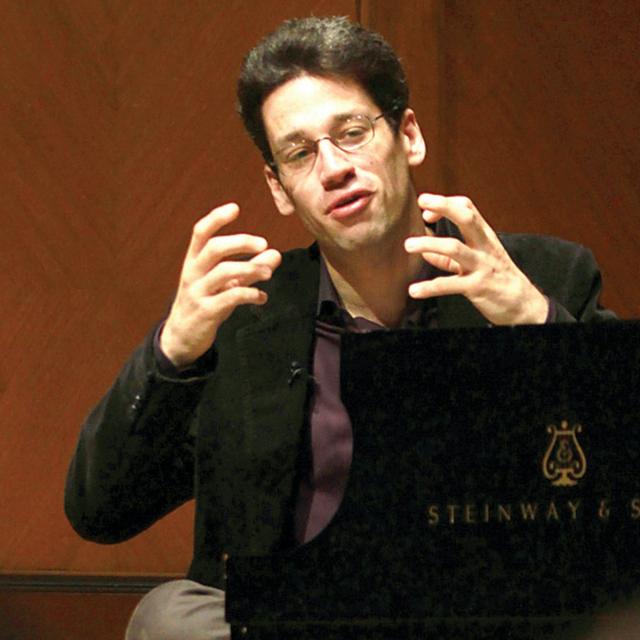
Welcome to Part 2 of Exploring Beethoven's Piano Sonatas! I'm delighted to launch another set of new lectures of this course as Part 2. As before, this class is meant for people of all levels of experience with Beethoven's music (including no experience at all!). Remember that you are able to watch the lectures as many times as you like, at whatever pace is comfortable for you.

Aug 10th 2026
5-12 Weeks