The Holocaust: The Destruction of European Jewry (Coursera)

The Holocaust: The Destruction of European Jewry (Coursera)

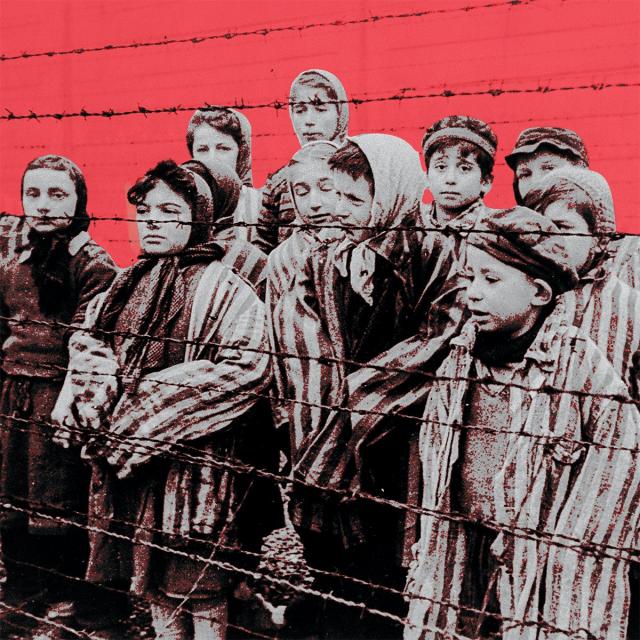
The Holocaust: The Destruction of European Jewry is an adaptation of an on-campus course that has been co-taught by Murray Baumgarten, Distinguished Professor of English and Comparative Literature (Literature Department), and Peter Kenez, Professor Emeritus (History Department), for over 20 years at UC Santa Cruz. In this course, you will explore the Holocaust from the overlapping perspectives of literature and history—through memoirs, historical documents, poetry, documentary footage, filmic representations, and novels.

Class Deals by MOOC List - Click here and see Coursera's Active Discounts, Deals, and Promo Codes.

You will expand your knowledge of the literature of the Holocaust, Eastern and Western European Jewish communities, the origins and development of antisemitism, the establishment of labor and extermination camps, resistance movements, and the Holocaust as a problem for world history.
There is more than one way to take this course: You can complete all of the activities (and earn a Verified Certificate) or only the activities that are most interesting to you. Whatever you choose to do, we encourage you to find a havruta (a study partner) in your community or in the Coursera community so that you can experience the course in a more interactive and meaningful way.

Syllabus

WEEK 1
Who were the Jews?
This module is an introduction to the study of the Holocaust and a prehistory of the Holocaust. Profs. Baumgarten and Kenez discuss the roots of modern antisemitism, the culture of European Jews in the 19th century, Nehama Tec’s Dry Tears, and the various genres of Holocaust literature. The module also contains general information about the course.

WEEK 2
Prelude to the Holocaust
In this module Profs. Baumgarten and Kenez discuss the changing demographics and political landscape of early 20th century Eastern Europe, Jewish identity, the Bildungsroman, Silvano Arieti’s The Parnas, Primo Levi’s Survival in Auschwitz, Aharon Appelfeld’s Badenheim 1939, and Elie Wiesel’s Night.

WEEK 3
Rise of the Nazis
In this module Profs. Baumgarten and Kenez discuss the political and social environment of 1930s Germany, the Jewish question, and the treatment of evil in poetry.

WEEK 4
Beginnings of war
In this module Profs. Baumgarten and Kenez discuss the conditions that were necessary for the Holocaust to occur, the early events of World War II, Thomas Kenneally’s Schindlers List, Andres Schwartz-Bart’s The Last of the Just, and questions of guilt and responsibility.

WEEK 5
Witness to trauma
In this module Profs. Baumgarten and Kenez discuss the invasion of the Soviet Union, Thomas Kenneally’s Schindler’s List, and questions of witnessing. Guest speaker Dora Sorell shares her own experience of the Holocaust.

WEEK 6
Establishment of the camps
In this module Profs. Baumgarten and Kenez discuss the establishment of labor and extermination camps, memorialization, Tadeusz Borowski’s This Way for the Gas, Ladies and Gentlemen, and Christopher Browning’s Ordinary Men.

WEEK 7
Deportation and extermination
In this module Profs. Baumgarten and Kenez discuss the Holocaust in Western Europe, the complex history of Hungary, Imre Kertész’s Fatelessness, and Ida Fink’s A Scrap of Time.

WEEK 8
The perpetrators, the neighbors, and the outside world
In this module Profs. Baumgarten and Kenez discuss the unique case of Romania, the culpability of the outside world, and the end of World War II. The text of Adolf Hitler’s last testament is provided.

Go to Class
MOOC List is learner-supported. When you buy through links on our site, we may earn an affiliate commission.

Related Courses

Egiptología (Egyptology) (Coursera) Coursera
Universitat Autònoma de Barcelona

Egiptología (Egyptology) (Coursera)

¿Sientes curiosidad por la civilización del antiguo Egipto? ¿Eres un apasionado de su cultura e historia? En este curso nos acercaremos a los templos de los antiguos faraones, a sus complejos funerarios, a sus ciudades, a su escritura jeroglífica, a su religión y a muchos otros aspectos de esta gran civilización.

Sep 28th 2026
5-12 Weeks
El Valle de los Reyes (Coursera) Coursera
Universitat Autònoma de Barcelona

El Valle de los Reyes (Coursera)

Este curso va dirigido a todos los amantes de la historia y arqueología, en general, y de manera particular a todos los interesados en egiptología, independientemente de su nivel de conocimiento inicial. El Valle de los Reyes constituye uno de los yacimientos arqueológicos más importantes de Egipto y su estudio, desde diferentes enfoques, resulta muy atractivo para cualquier aficionado o profesional de la egiptología. Con este curso nos proponemos conocer su historia y evolución a lo largo de las dinastías XVIII-XX del Reino Nuevo egipcio, desde su origen hasta su abandono y desmantelamiento.

Sep 28th 2026
5-12 Weeks
Seeing Through Photographs (Coursera) Coursera
The Museum of Modern Art

Seeing Through Photographs (Coursera)

Although taking, sharing, and viewing photographs has become second nature for many of us, our regular engagement with images does not necessarily make us visually literate. This course aims to address the gap between seeing and truly understanding photographs by introducing a diversity of ideas, approaches, and technologies that inform their making. In this course you will look closely at 100 photographs from the collection of The Museum of Modern Art, going behind the scenes of the Museum and into artist studios through original films and audio interviews.

Sep 21st 2026
5-12 Weeks
A Journey through Western Christianity: from Persecuted Faith to Global Religion (200 - 1650) (Coursera) Coursera
Yale University

A Journey through Western Christianity: from Persecuted Faith to Global Religion (200 - 1650) (Coursera)

This course follows the extraordinary development of Western Christianity from its early persecution under the Roman Empire in the third century to its global expansion with the Jesuits of the early modern world. We explore the dynamic and diverse character of a religion with an enormous cast characters. We will meet men and women who tell stories of faith as well as of violence, suppression, and division.

Oct 5th 2026
5-12 Weeks
Iniciación a los Jeroglíficos Egipcios (Coursera) Coursera
Universitat Autònoma de Barcelona

Iniciación a los Jeroglíficos Egipcios (Coursera)

¿Te apasiona la historia y la cultura del antiguo Egipto? ¿Sientes fascinación por las lenguas y los sistemas de escritura de las civilizaciones de la Antigüedad? ¿Te atrae la idea de adentrarte en el secreto de los jeroglíficos egipcios y comprender las claves de su lectura e interpretación? ¡Si es así, este es tu curso!

Sep 28th 2026
5-12 Weeks
Terrorism and Counterterrorism: Comparing Theory and Practice (Coursera) Coursera
Leiden University

Terrorism and Counterterrorism: Comparing Theory and Practice (Coursera)

Terrorism has arguably been one of the defining factors of our age. It frequently makes headlines, threatening or attacking governments, private business and ordinary citizens. And in many parts of the world, it has been one of the most important threats to peace, security and stability. But what does this exactly mean? What is the nature of this threat? Who or what is threatened, how, by whom and why? What can be done about it or how can we at least limit the impact of terrorism and make sure that terrorists do not make headlines and manage to scare us? These are just a handful of questions that will be addressed in this course that consists of three parts.

Oct 5th 2026
5-12 Weeks
The Holocaust through the Perspective of Primary Sources (Coursera) Coursera
Yad Vashem

The Holocaust through the Perspective of Primary Sources (Coursera)

In this new online video course produced by EHRI, the European Holocaust Research Infrastructure, we will explore diaries, photographs, official Nazi documents, postwar survivor testimonies and much more - all together with leading scholars in the field. We will become acquainted with original documents and gain hands-on experience in using them while learning about their importance, and the unique perspectives they provide us into this cataclysmic event.

Oct 5th 2026
5-12 Weeks
Greek and Roman Mythology (Coursera) Coursera
University of Pennsylvania

Greek and Roman Mythology (Coursera)

Myths are traditional stories that have endured over a long time. Some of them have to do with events of great importance, such as the founding of a nation. Others tell the stories of great heroes and heroines and their exploits and courage in the face of adversity. Still others are simple tales about otherwise unremarkable people who get into trouble or do some great deed. What are we to make of all these tales, and why do people seem to like to hear them? This course will focus on the myths of ancient Greece and Rome, as a way of exploring the nature of myth and the function it plays for individuals, societies, and nations. We will also pay some attention to the way the Greeks and Romans themselves understood their own myths.

Sep 21st 2026
5-12 Weeks
The Modern and the Postmodern (Part 2) (Coursera) Coursera
Wesleyan University

The Modern and the Postmodern (Part 2) (Coursera)

This course examines how the idea of "the modern" develops at the end of the 18th century in European philosophy and literature, and how being modern (or progressive, or hip) became one of the crucial criteria for understanding and evaluating cultural change. Are we still in modernity, or have we moved beyond the modern to the postmodern?

Oct 5th 2026
5-12 Weeks
The Bible's Prehistory, Purpose, and Political Future (Coursera) Coursera
Emory University

The Bible's Prehistory, Purpose, and Political Future (Coursera)

With its walls razed to ground by Babylon’s armies, Jerusalem joined a long line of ancient vanquished cities—from Ur and Nineveh and Persepolis to Babylon itself. While some recovered from the destruction, others did not. But none responded to political catastrophe by fashioning the kind of elaborate and enduring monument to their own downfall that we find in the Bible. Most conquered populations viewed their subjugation as a source of shame. They consigned it to oblivion, opting instead to extol the golden ages of the past. The biblical authors in contrast reacted to loss by composing extensive writings that acknowledge collective failure, reflect deeply upon its causes, and discover thereby a ground for collective hope.

Sep 21st 2026
5-12 Weeks