What Is Contemporary Art? (Coursera)

What Is Contemporary Art? (Coursera)

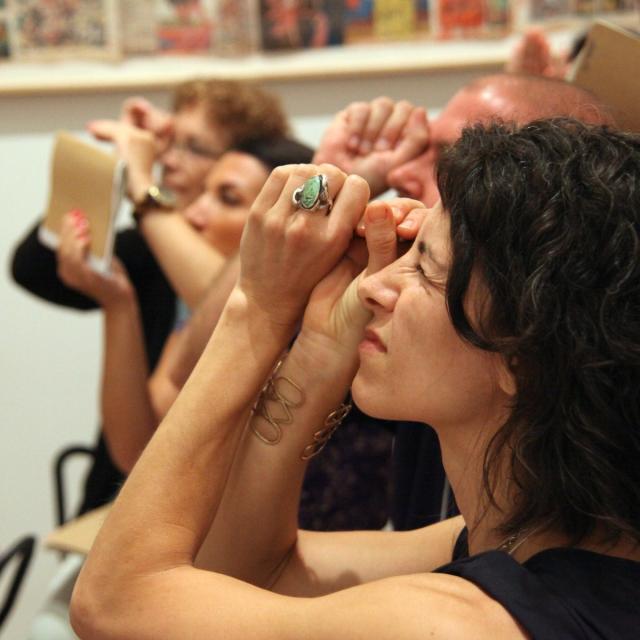
What is contemporary art? In this course, you’ll consider this question through more than 70 works of art made between 1980 and the present, with a focus on art from the past decade. You’ll hear directly from artists, architects, and designers from around the globe about their creative processes, materials, and inspiration.

Class Deals by MOOC List - Click here and see Coursera's Active Discounts, Deals, and Promo Codes.

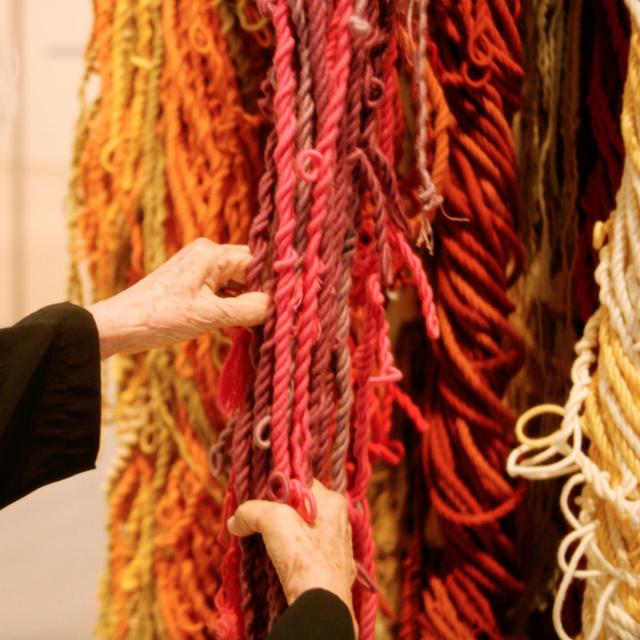
Five themes serve as your guide: Media from Television to the Internet, Territories & Transit, Materials & Making, Agency, and Power. You’ll look at 3-D–printed glass and fiber sculptures, performances in a factory and a museum, painted portraits—as well as those made with artificial intelligence—and interventions into television and video games. And much more, all drawn from the collection of The Museum of Modern Art.
Come along as artists invite us into their studios, out into their neighborhoods, and to experiment with the materials they use. Not only will you develop a deeper understanding of how artists work today, you’ll also explore some of their many approaches to the pressing issues and questions of our time. By taking this course, you’ll gain confidence to look at contemporary art wherever you encounter it and make connections to your own life or creative practice.

Syllabus

WEEK 1: Introduction to What Is Contemporary Art?
WEEK 2: Media from Television to the Internet
WEEK 3: Territories & Transit
WEEK 4: Materials & Making
WEEK 5: Agency
WEEK 6: Power
Go to Class
MOOC List is learner-supported. When you buy through links on our site, we may earn an affiliate commission.

Related Courses

Soul Beliefs: Causes and Consequences - Unit 2: Belief Systems (Coursera) Coursera
Rutgers University

Soul Beliefs: Causes and Consequences - Unit 2: Belief Systems (Coursera)

Throughout history, the vast majority of people around the globe have believed they have, however defined, a “soul.” While the question of whether the soul exists cannot be answered by science, what we can study are the causes and consequences of various beliefs about the soul and its prospects of surviving the death of the body. Why are soul and afterlife beliefs so common in human history? Are there adaptive advantages to assuming souls exist?

Aug 31st 2026
5-12 Weeks
Art and the Digital Transformation (Coursera) Coursera
Copenhagen Business School

Art and the Digital Transformation (Coursera)

More than two decades into the new millennium, it is difficult to envision a future in which digital technologies do not play a significant role. Digital technologies frequently make a lot of promises. However, in recent years, we have seen an increasing number of artists address fundamental issues of the Digital Transformation, such as surveillance, lack of representation, and digital illiteracy. Artists have demonstrated that, while digital technologies have the potential to support processes leading to greater equality, they are frequently viewed as perpetuating and even exacerbating inequalities.

Sep 7th 2026
5-12 Weeks
Developing Innovative Ideas for New Companies: The First Step in Entrepreneurship (Coursera) Coursera
University of Maryland, College Park

Developing Innovative Ideas for New Companies: The First Step in Entrepreneurship (Coursera)

This course assists aspiring and active entrepreneurs in developing great ideas into great companies. With strong economies presenting rich opportunities for new venture creation, and challenging economic times presenting the necessity for many to make their own job, the need to develop the skills to develop and act on innovative business opportunities is increasingly vital.

Sep 7th 2026
4 Weeks
Art & Activity: Interactive Strategies for Engaging with Art (Coursera) Coursera
The Museum of Modern Art

Art & Activity: Interactive Strategies for Engaging with Art (Coursera)

Art can be a powerful catalyst for building skills and understanding a range of subjects. Intended for primary and secondary teachers of all disciplines, Art & Activity builds upon the inquiry-based approaches of Art and Inquiry: Museum Teaching Strategies for Your Classroom, while delving into activity-based strategies that will make your students empowered participants.

Aug 31st 2026
4 Weeks
Art & Ideas: Teaching with Themes (Coursera) Coursera
The Museum of Modern Art

Art & Ideas: Teaching with Themes (Coursera)

This course is designed to help build critical skills that support theme-based teaching practices and build confidence in incorporating modern and contemporary art into interdisciplinary lesson plans. By addressing themes and questions that arise in relation to modern and contemporary art, the course will help you to think creatively about links to your curriculum and the ways that you can tap into students’ knowledge and life experience.

Sep 7th 2026
5-12 Weeks
Film, Images & Historical Interpretation in the 20th Century: The Camera Never Lies (Coursera) Coursera
University of London,Royal Holloway, University of London

Film, Images & Historical Interpretation in the 20th Century: The Camera Never Lies (Coursera)

This course is a short taster on the topic of the use of Images, Film, and their use in historical interpretation in the 20th century. It is primarily provided for those who have a general interest in history that draws on photojournalism as primary evidence, and films based on historical events.

Sep 7th 2026
5-12 Weeks
Terrorism and Counterterrorism: Comparing Theory and Practice (Coursera) Coursera
Leiden University

Terrorism and Counterterrorism: Comparing Theory and Practice (Coursera)

Terrorism has arguably been one of the defining factors of our age. It frequently makes headlines, threatening or attacking governments, private business and ordinary citizens. And in many parts of the world, it has been one of the most important threats to peace, security and stability. But what does this exactly mean? What is the nature of this threat? Who or what is threatened, how, by whom and why? What can be done about it or how can we at least limit the impact of terrorism and make sure that terrorists do not make headlines and manage to scare us? These are just a handful of questions that will be addressed in this course that consists of three parts.

Sep 7th 2026
5-12 Weeks
A Journey through Western Christianity: from Persecuted Faith to Global Religion (200 - 1650) (Coursera) Coursera
Yale University

A Journey through Western Christianity: from Persecuted Faith to Global Religion (200 - 1650) (Coursera)

This course follows the extraordinary development of Western Christianity from its early persecution under the Roman Empire in the third century to its global expansion with the Jesuits of the early modern world. We explore the dynamic and diverse character of a religion with an enormous cast characters. We will meet men and women who tell stories of faith as well as of violence, suppression, and division.

Sep 7th 2026
5-12 Weeks
Teaching the Violin and Viola: Creating a Healthy Foundation (Coursera) Coursera
Northwestern University

Teaching the Violin and Viola: Creating a Healthy Foundation (Coursera)

Join us as we explore the fundamental principles and early stages of teaching violin and viola through a series of engaging video lectures and lesson demonstrations, including: 1) Master classes with some of the world’s top string pedagogues, 2) Individual lesson demos of teaching violin/viola set up, left and right hand technique and pieces from the early violin/viola repertoire, 3) Group lesson demos of teaching music theory, ear training and fun activities that encourage good playing habits, and 4) A “field trip” to the violin shop, where we will outfit a new beginning student with a proper instrument and bow.

Aug 31st 2026
5-12 Weeks
Applied Public History: Places, People, Stories (Coursera) Coursera
University of London

Applied Public History: Places, People, Stories (Coursera)

This course introduces learners to applied public history: understanding and interpreting the past today, and engaging diverse communities in the practice of making and sharing histories. The course draws on project case studies, expert insights and diverse perspectives to model exciting approaches to researching and sharing the history of places and people. Learners will develop a toolkit to apply in their own practice, by participating in discussion, quizzes, creative activities and mini masterclasses. What kinds of stories can we discover through research into the history of places and people?

Sep 7th 2026
5-12 Weeks