The Blues: Understanding and Performing an American Art Form (Coursera)

The Blues: Understanding and Performing an American Art Form (Coursera)

The blues is an American art form and the most important musical form in jazz. Although there are other formal paradigms of the blues, such as 8-bar or 16-bar, this course focuses on different incarnations of the 12-bar blues. There are considerable differences between Early Jazz blues, Swing blues, Bebop blues, Modal blues, and Post Bop blues.

Class Deals by MOOC List - Click here and see Coursera's Active Discounts, Deals, and Promo Codes.

Each type has its unique harmonic syntax, melodic vocabulary and, associated with them, improvisational techniques. While other aspects of jazz performance practice have been constantly changing from one stylistic convention to another, the blues has never lost its identity and expressive power, and continues to exert a powerful influence on the harmonic and melodic syntax of jazz.
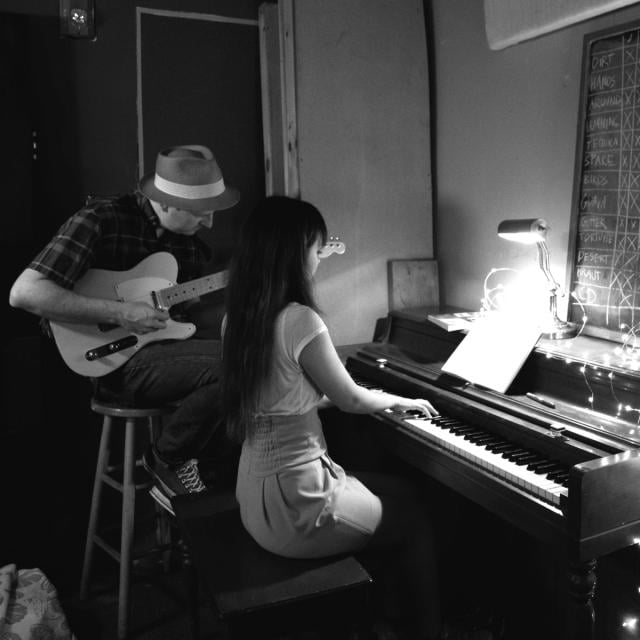
This seven-week course explores important aspects of the blues, blues improvisation, basic keyboard textures, jazz harmonic and melodic syntax. Topics include: (1) Blues Progressions; (2) Blues and Other Scales; (3) Improvisational Tools, and others. This course will also cover valuable theoretical concepts enabling the student to master the art of jazz improvisation. Each topic will be introduced from a practical perspective with the clearly stated goal: to improve one’s improvisational skills. Jazz improvisation is rooted in spontaneity, creativity, self-expression and, at the same time, self-control and order. A unique pedagogical approach based on a one-to-one musical interaction conducted with different instrumentalists will help to reinforce many of the concepts introduced in this course and realize its stated objectives.

Syllabus

WEEK 1
Blues Progressions – Theory and Practice
Lesson 1 focuses on foundational aspects of the blues, examining its history, innovation, and evolving harmonic structure. At the end of this lecture, students should have a firm understanding of the harmonic structure of the basic, generic, and minor blues forms, as well as a familiarity with the A A’ B phrase-structure of the blues.

WEEK 2
Blues Scales
Lesson 2 dives into what makes the blues tick, beginning with an examination of the blues scale and the basics of jazz rhythms and blues riffs. Students will then explore call and response techniques and application of the blues scale in improvisation through demonstration with a live musician.

WEEK 3
Keyboard Realization
Lesson 3 introduces the concept of guide tones and its association with invertible counterpoint. Four-part and five-part chords are discussed in detail by exploring their construction and function, as well as techniques to facilitate good voice-leading between chords using chordal inversions.

WEEK 4
“Bird” Blues and Other Blues Progressions
In lesson 4 students analyze harmonic progressions from 3 jazz standards: “Now’s The Time,” “Billie’s Bounce,” and “Blues For Alice.” Practice techniques are discussed, including ear-training strategies, rhythmic displacement, and voice-leading exercises.

WEEK 5
Improvisational Tools
Lesson 5 introduces 3 more jazz standards for analysis: “Mr. PC,” “Mr. Day,” and “Isotope.” Tritone substitutions are examined, and pentatonic scale as tools in improvisation are introduced through exploration of their construction, typical voicings, and voice-leading principles.

WEEK 6
Improvising the Blues – Part 1
Lesson 6 centers around the demonstration of improvisational techniques discussed thus far, including motivic development, guide-tone lines, and chordal arpeggiation. Observation of live Eastman musicians, as well as play-along tracks provided by the rhythm section, allow the student to imitate, assimilate, and apply the techniques discussed in the course.

WEEK 7
Improvising the Blues – Part 2
Lesson 7 explores modal categories and scalar patterns in improvisation, in addition to continued discussion on pentatonics. As in the previous lesson, live musicians demonstrate key concepts and principles presented in the lecture, with additional play-along tracks provided for the student to explore concepts on their own.


Go to Class
MOOC List is learner-supported. When you buy through links on our site, we may earn an affiliate commission.

Related Courses

Creative Thinking: Techniques and Tools for Success (Coursera) Coursera
Imperial College London

Creative Thinking: Techniques and Tools for Success (Coursera)

In today’s ever-growing and changing world, being able to think creatively and innovatively are essential skills. It can sometimes be challenging to step back and reflect in an environment which is fast paced or when you are required to assimilate large amounts of information. Making sense of or communicating new ideas in an innovative and engaging way, approaching problems from fresh angles, and producing novel solutions are all traits which are highly sought after by employers.

Jun 8th 2026
5-12 Weeks
Musicianship: Tensions, Harmonic Function, and Modal Interchange (Coursera) Coursera
Berklee College of Music

Musicianship: Tensions, Harmonic Function, and Modal Interchange (Coursera)

After a tremendous response from learners on Coursera, Berklee Online has created a Developing Your Musicianship specialization, and this course is the third course in the series. If you have a general understanding of music theory or if you have completed Developing Your Musicianship I and II, this course will continue to help you understand musical concepts, enabling you to create and perform contemporary music. Taught by Berklee College of Music professor George W. Russell, Jr., the course includes four lessons that delve into an intermediate level of harmony and ear training.

Jun 8th 2026
4 Weeks
Fundamentos del Emprendimiento: Pensamiento y Acción (Coursera) Coursera
University of California, Irvine

Fundamentos del Emprendimiento: Pensamiento y Acción (Coursera)

El éxito en los negocios puede aumentar enormemente cuando se comprenden las características de emprendimiento claves y las soluciones basadas en las competencias. En este curso interactivo se brinda el conocimiento que los emprendedores potenciales necesitan para tener éxito en una oportunidad empresarial.

Jun 8th 2026
4 Weeks
So You Think You Know Tango? (Coursera) Coursera
Emory University

So You Think You Know Tango? (Coursera)

How well do you think you know tango? This two-week mini-course is designed for music lovers, musicians, and dancers who are interested in learning more about the Argentine Tango. It will explore the many dimensions of the Argentine Tango music, including its origins, popularization during the Golden Age, dissemination abroad, evolution into an artistic music-dance form, and adoption by Argentine and international art-music composers to date.

Jun 8th 2026
2 Weeks
Writing and Editing: Revising (Coursera) Coursera
University of Michigan

Writing and Editing: Revising (Coursera)

This fourth and final course in the “Good with Words: Writing and Editing” series will help you master perhaps the most important step in the writing process: revising. You’ll learn about the difference between editing and proofreading. You’ll practice “un-numbing the numbers” so that data and statistics you use are clear and compelling. And you’ll be introduced to a framework for giving and receiving feedback that helpfully systematizes what should be cut and what should be kept from each draft.

Jun 8th 2026
4 Weeks
Story and Narrative Development for Video Games (Coursera) Coursera
California Institute of the Arts

Story and Narrative Development for Video Games (Coursera)

In this course, you will examine how storytelling acts as a vital mechanism for driving video gameplay forward. Looking at several historical and contemporary games, you will be asked to evaluate and interpret different story styles with the goal of identifying themes and procedures for your own game ideas. We'll examine traditional narrative story processes, such as three-act structure, and how they fit into game story flows and the strategic elements of gameplay. Ultimately, you will learn how to define character, setting, and structure to create a compelling game concept.

Jun 8th 2026
4 Weeks
The Search for Great Ideas: Harnessing creativity to empower innovation (Coursera) Coursera
Michigan State University

The Search for Great Ideas: Harnessing creativity to empower innovation (Coursera)

Where do great business ideas come from? We all have compelling business concepts that we've been thinking about for years. In this course we will explore how to use observational tools and other techniques for idea generation and we will talk about how to evaluate the good ideas from the bad. The goal is to settle on a business idea that you are not only passionate about but also has real market application.

Jun 8th 2026
3 Weeks
History of Rock, Part One (Coursera) Coursera
University of Rochester

History of Rock, Part One (Coursera)

This course, part 1 of a 2-course sequence, examines the history of rock, primarily as it unfolded in the United States, from the days before rock (pre-1955) to the end of the 1960s. This course covers the music of Elvis Presley, Chuck Berry, Phil Spector, Bob Dylan, the Beatles, the Rolling Stones, Jimi Hendrix, Cream, and many more artists, with an emphasis both on cultural context and on the music itself. We will also explore how developments in the music business and in technology helped shape the ways in which styles developed.

Jun 8th 2026
5-12 Weeks
In the Studio: Postwar Abstract Painting (Coursera) Coursera
The Museum of Modern Art

In the Studio: Postwar Abstract Painting (Coursera)

Want to know how some of the 20th century’s most celebrated artists made abstract paintings? This course offers an in-depth, hands-on look at the materials, techniques, and thinking of seven New York School artists, including Willem de Kooning, Yayoi Kusama, Agnes Martin, Barnett Newman, Jackson Pollock, Ad Reinhardt, and Mark Rothko. Through studio demonstrations and gallery walkthroughs, you’ll form a deeper understanding of what a studio practice means and how ideas develop from close looking, and you’ll gain a sensitivity to the physical qualities of paint.

Jun 8th 2026
5-12 Weeks