Introduction to Typography (Coursera)

Introduction to Typography (Coursera)

Typography is the art of manipulating the visual form of language to enrich and control its meaning. It’s an essential area of skill and knowledge for graphic designers. Typography predates modern graphic design by around 500 years; it is rich in rules, conventions, and esoteric terminology—but it remains an exciting space for invention and expression.

Class Deals by MOOC List - Click here and see Coursera's Active Discounts, Deals, and Promo Codes.

In this rigorous introductory course, we will study, name, and measure the characteristics of letterforms. We’ll consider the pragmatic concerns involved in selecting and combining type. We’ll peek into the 
rich historical, cultural, and aesthetic histories of familiar typefaces. We’ll discuss time-tested conventions and best practices in setting type, as governed by principles of hierarchy and spatial organization. And we’ll explore the expressive, meaning-making potential of type.
Informative lectures will be complemented by a series of three peer-assessed assignments, culminating 
in an opportunity to design a full-scale typographic poster.
Please note that this is not a software course; a basic working knowledge of Adobe InDesign or other 
page layout software will be assumed. You will need access to a computer and page layout software, such as InDesign, to complete the assignments.

What You Will Learn

  • Conduct a peer-reviewed typesetting exercise
  • Design of a full-scale typographic poster
  • Explore how typefaces tell stories and understand the historic evolution
  • Review the terminology and measuring system used to describe type

Course 2 of 5 in theGraphic Design Specialization.

Syllabus

WEEK 1
Talking Type
This week, we’ll take an up-close look at typefaces, both as physical artifacts and as works of design. 
We will study the formal elements that define and give character to type, and understand where they came from and why they look the way they do. We will review the terminology and measuring system used to describe type, and look at the way the form and proportion of letters relate to the practical concerns of selecting and combining typefaces. The week will wrap up with a graded quiz.

WEEK 2
Typefaces and their Stories
This week, we’ll explore the way typefaces express connotative meaning—tell stories—through their association with different time periods, aesthetics, and ideas. Through six short case studies, we 
will look at the way a typeface’s connotations are shaped by its context, understand the historic evolution of typographic forms, and familiarize ourselves with the way typefaces are classified. You’ll extend 
your exploration through some independent research into a typeface of your choosing.

WEEK 3
Putting Type to Work
This week, we will engage the visual principles and conventions of typesetting. We will look at how the spaces between letters, lines, and blocks of type can be manipulated to refine the appearance and control the meaning of type. We’ll explore the ways typographic hierarchy and grid systems can further organize and clarify type. And we’ll survey the rules and conventions that can add polish to your typesetting. You’ll apply your skills and knowledge in a peer-reviewed typesetting exercise at the end 
of the week.

WEEK 4
Making Meaningful Type
In our final week, we’ll examine the ways typographic form can dramatically shape the meaning of written language. We’ll survey and analyze possibilities for type treatments—from subtle typesetting choices
 to dramatic manipulations—by looking at examples of expressive and unconventional typography. At the end of the week, you’ll bring together and apply everything you have learned in this course in the 
design of a full-scale typographic poster.
Go to Class
MOOC List is learner-supported. When you buy through links on our site, we may earn an affiliate commission.

Related Courses

The Holocaust - An Introduction (II): The Final Solution (Coursera) Coursera
Tel Aviv University,Yad Vashem

The Holocaust - An Introduction (II): The Final Solution (Coursera)

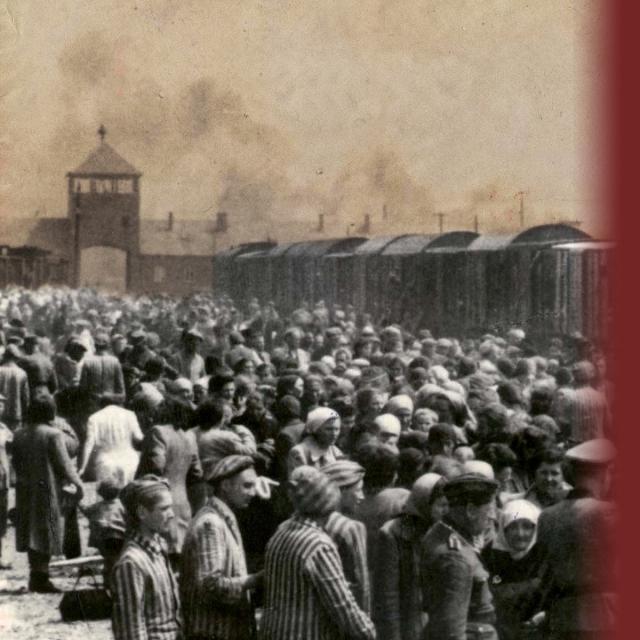
The Holocaust was an inconceivable historical event, which forever robbed Western culture of its innocence. As civilized human beings, we fail to understand how events of such horror could have taken place, and how an idea so inhumanly warped could have spread like wildfire through an entire continent, instigating the systematic annihilation of millions of Jews.

Oct 5th 2026
3 Weeks
ART of the MOOC: Activism and Social Movements (Coursera) Coursera
Duke University,Creative Time

ART of the MOOC: Activism and Social Movements (Coursera)

This course is for activists, artists, and thinkers who wish to better understand and participate in social change. We will focus on the prolific and exciting overlap between socially engaged art and cultural practices generated by recent social movements around the world. Rather than assess the political efficacy of activities like mourning, listening, organizing, dancing, or partying, the lectures examine such cultural activities next to, and within, contemporary art practice.

Oct 12th 2026
5-12 Weeks
The Final Solution to the Jewish Question (Coursera) Coursera
Yad Vashem

The Final Solution to the Jewish Question (Coursera)

The "Final Solution to the Jewish Question" was the official code name used by Nazi German authorities for the planned annihilation of Jews during World War II. This course focuses on the origins, evolution, and implementation of this deadly operation which led to the murder of six million Jews by the Nazis and their collaborators.

Oct 12th 2026
5-12 Weeks
ART of the MOOC: Public Art and Pedagogy (Coursera) Coursera
Duke University,Creative Time

ART of the MOOC: Public Art and Pedagogy (Coursera)

Students of this course may try their hand at their own public art interventions, or simply focus on learning from the theory of public practice and its recent history. Designed by artist and Duke professor, Pedro Lasch, and co-taught by Creative Time artistic director, Nato Thompson, this course presents public culture and art in their radically reinenvented contemporary forms. The lectures link major developments of recent decades to wider topics like spatial politics, everyday social structures, and experimental education.

Oct 12th 2026
5-12 Weeks
Fundamentos de Excel para Negocios (Coursera) Coursera
Universidad Austral

Fundamentos de Excel para Negocios (Coursera)

Cuando finalices este curso habrás logrado un gran número de habilidades como introducir información, ordenarla, manipularla, realizar cálculos de diversa índole (matemáticos, trigonométricos, estadísticos, financieros, ingenieriles, probabilísticos), extraer conclusiones, trabajar con fechas y horas, construir gráficos, imprimir reportes y muchas más.

Oct 12th 2026
5-12 Weeks
The Blues: Understanding and Performing an American Art Form (Coursera) Coursera
University of Rochester

The Blues: Understanding and Performing an American Art Form (Coursera)

The blues is an American art form and the most important musical form in jazz. Although there are other formal paradigms of the blues, such as 8-bar or 16-bar, this course focuses on different incarnations of the 12-bar blues. There are considerable differences between Early Jazz blues, Swing blues, Bebop blues, Modal blues, and Post Bop blues.

Oct 5th 2026
5-12 Weeks
The Worldview of Thomas Berry: The Flourishing of the Earth Community (Coursera) Coursera
Yale University

The Worldview of Thomas Berry: The Flourishing of the Earth Community (Coursera)

Thomas Berry (1914-2009) was a historian of world religions and an early voice awakening moral sensibilities to the environmental crisis. He is known for articulating a “new story” of the universe that explores the implications of the evolutionary sciences and cultural traditions for creating a flourishing future. This course investigates Berry’s life and thought in relation to the Journey of the Universe project.

Oct 12th 2026
5-12 Weeks
The Emergence of the Modern Middle East - Part II (Coursera) Coursera
Tel Aviv University

The Emergence of the Modern Middle East - Part II (Coursera)

This course will discuss the developments in the Middle East from the early 20th century to the present. It will discuss the rise and retreat of Arab nationalism, the problems of internal cohesion of the Arab states, issues of religion and state, and the evolution of Islamist politics. It will also focus on the evolution of the Arab-Israeli conflict and its impact on the region and will conclude with an in depth analysis of the “Arab Spring” by placing these contemporary revolutionary events in their historical context.

Oct 5th 2026
5-12 Weeks
Creativity Toolkit I: Changing Perspectives (Coursera) Coursera
University of Illinois at Urbana-Champaign

Creativity Toolkit I: Changing Perspectives (Coursera)

Thinking and doing the same things faster and better is not enough; we need creativity. Fortunately, creativity is a skill you can learn. This course will examine when, why, and how we can be creative. It examines the cues that trigger us to consider being creative. It provides a road map of the creative process – the process of changing our perspectives – and the kinds of outcomes that result from creativity.

Oct 7th 2026
4 Weeks
The Mediterranean, a Space of Exchange (from the Renaissance to Enlightenment) (Coursera) Coursera
University of Barcelona

The Mediterranean, a Space of Exchange (from the Renaissance to Enlightenment) (Coursera)

The course The Mediterranean, a Space of Exchange (from Renaissance to Enlightenment) aims to explain the Mediterranean, using history and the analysis of the past, as a space generated by routes and circulation. We consider it crucial to disclose mobility as a historical factor: a mobility comprised of four major elements, namely people, objects, ideas and practices.

Oct 9th 2026
5-12 Weeks