Ideas from the History of Graphic Design (Coursera)

Ideas from the History of Graphic Design (Coursera)

This condensed survey course focuses on four key periods or themes from the history of design. Together we’ll trace the emergence of design as a recognized practice, why things look the way they do, and how designers approached specific design problems in their work.

Class Deals by MOOC List - Click here and see Coursera's Active Discounts, Deals, and Promo Codes.

Each week, a short quiz will test your knowledge of concepts, and a short reflective assignment will give you the opportunity to analyze the questions designers ask themselves today.
This is an essential course for emerging designers entering the field, or for students interested in learning more about visual culture and analysis. No previous experience is required.
What You Will Learn

  • Learn about graphic design radicalism in late 1950s to early 1970s
  • Learn about the history of graphic design
  • Make informed design choices
  • Understand the emergence of design as a recognized practice

Course 4 of 5 in theGraphic Design Specialization.

Syllabus

WEEK 1
Early Mass Marketing
This week we are going to take a look at the effects of industrialization in the late 19th century, and how goods were produced, sold, and marketed.

WEEK 2
The Bauhaus
This week, we'll look at how the work and teachings of The Bauhaus (1919-1933), and how design emerged as a recognized practice.

WEEK 3
Modernism in America
Modernism in mid-century America through the eyes of four key designers.

WEEK 4
Graphic Design Radicalism
Design practice in the late 1950s to early 1970s was new, radical and divergent. To show you just how varied it was, we’ll look at the work of four key players/movements.

Go to Class
MOOC List is learner-supported. When you buy through links on our site, we may earn an affiliate commission.

Related Courses

The Talmud: A Methodological Introduction (Coursera) Coursera
Northwestern University

The Talmud: A Methodological Introduction (Coursera)

The Talmud is one of the richest and most complicated works of literature the world has ever known. Since being composed around 1500 years ago it has inspired not only religious reverence but significant intellectual engagement. In this course learners will be introduced to the unique characteristics of this text and the challenges that inhere in studying it while studying a chapter of the Talmud.

Jun 1st 2026
5-12 Weeks
The Holocaust: The Destruction of European Jewry (Coursera) Coursera
University of California, Santa Cruz

The Holocaust: The Destruction of European Jewry (Coursera)

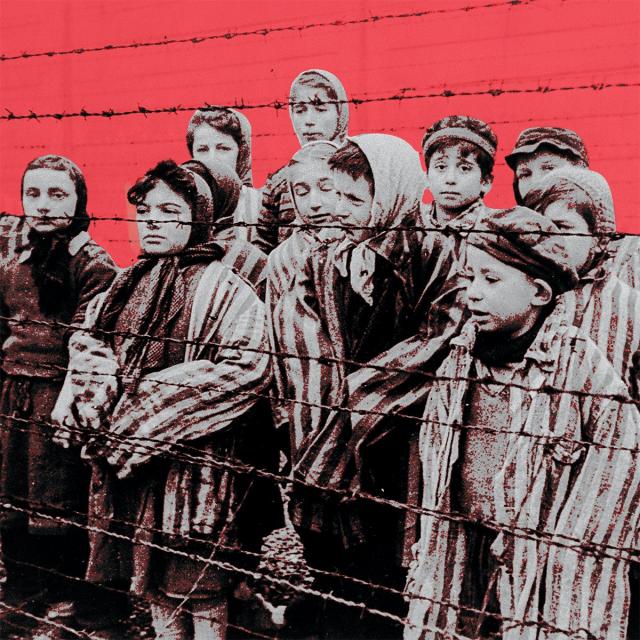
The Holocaust: The Destruction of European Jewry is an adaptation of an on-campus course that has been co-taught by Murray Baumgarten, Distinguished Professor of English and Comparative Literature (Literature Department), and Peter Kenez, Professor Emeritus (History Department), for over 20 years at UC Santa Cruz. In this course, you will explore the Holocaust from the overlapping perspectives of literature and history—through memoirs, historical documents, poetry, documentary footage, filmic representations, and novels.

Jun 1st 2026
5-12 Weeks
Data Science Ethics (Coursera) Coursera
University of Michigan

Data Science Ethics (Coursera)

What are the ethical considerations regarding the privacy and control of consumer information and big data, especially in the aftermath of recent large-scale data breaches? This course provides a framework to analyze these concerns as you examine the ethical and privacy implications of collecting and managing big data. Explore the broader impact of the data science field on modern society and the principles of fairness, accountability and transparency as you gain a deeper understanding of the importance of a shared set of ethical values.

Jun 1st 2026
4 Weeks
The Ancient Greeks (Coursera) Coursera
Wesleyan University

The Ancient Greeks (Coursera)

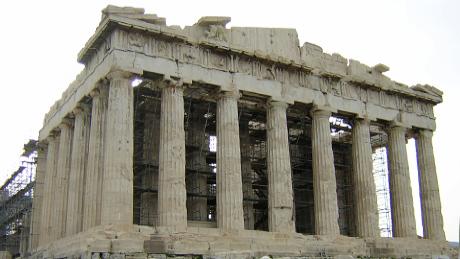
This is a survey of ancient Greek history from the Bronze Age to the death of Socrates in 399 BCE. Along with studying the most important events and personalities, we will consider broader issues such as political and cultural values and methods of historical interpretation.

Jun 1st 2026
5-12 Weeks
Create a Storyboard using Canva (Coursera) Coursera
Coursera Project Network

Create a Storyboard using Canva (Coursera)

By the end of this project, you will learn how to create a storyboard from scratch using the free version of Canva. Storyboards are sequential breakdowns of each shot for a visual presentation. A visual presentation can include animation, live-action video, sales and marketing pitches. We can use Canva to complete this project because it provides all the tools you need to create an organized and visually appealing product while offering a variety of options for sharing and collaboration.

Jun 1st 2026
Self-Paced
Roman Art and Archaeology (Coursera) Coursera
University of Arizona

Roman Art and Archaeology (Coursera)

The objective of this course is to provide an overview of the culture of ancient Rome beginning about 1000 BCE and ending with the so-called "Fall of Rome". We will look at some of the key people who played a role in Rome, from the time of the kings through the Roman Republic and the Roman Empire. We will also focus on the city of Rome itself, as well as Rome's expansion through Italy, the Mediterranean, and beyond.

Jun 1st 2026
5-12 Weeks
Paradoxes of War (Coursera) Coursera
Princeton University

Paradoxes of War (Coursera)

The Paradoxes of War teaches us to understand that war is not only a normal part of human existence, but is arguably one of the most important factors in making us who we are. Through this course, I hope that you will come to appreciate that war is both a natural expression of common human emotions and interactions and a constitutive part of how we cohere as groups. That is, war is paradoxically an expression of our basest animal nature and the exemplar of our most vaunted and valued civilized virtues.

Jun 1st 2026
13-24 Weeks
Digital Information Literacy (Coursera) Coursera
The State University of New York

Digital Information Literacy (Coursera)

A Digital Artifact is an object that represents one’s learning. In today’s changing educational landscape, more courses call for a visual item as opposed to a “traditional” assignment or project. There are a multitude of free tools and software at our fingertips. This online course will provide tips, suggestions, and strategies for creating an interesting digital artifact in select, intuitive platforms. In this course you will learn to identify and define a Digital Artifact so you may create an infographic, slide show, website or video. You will also learn best practices in digital media design and about Creative Commons licensing and citing your sources.

Jun 1st 2026
5-12 Weeks
Magna Carta and its Legacies: Freedom and protest (Coursera) Coursera
University of London

Magna Carta and its Legacies: Freedom and protest (Coursera)

This course examines the roles that Magna Carta has played historically as well as the importance of Magna Carta today. It aims to equip students with a critical understanding of Magna Carta and its significance around the globe. Students will find out what Magna Carta is, how it came about, and why many believe that it remains one of the most significant documents in history.

Jun 1st 2026
5-12 Weeks
Print and Digital Elements of Design: Branding and User Experience (Coursera) Coursera
University of Colorado Boulder

Print and Digital Elements of Design: Branding and User Experience (Coursera)

Graphic design projects can be delivered in either a printed format or a digital format, or both. This course will look at how to work with creative professionals to get the ideal usage out of a design to use in print medium such as logos, brochures and larger printed projects that will also carry over as seamlessly as possible into the digital realm of websites and social media. We will also cover the user experience and how to keep the end result in mind when working on creative endeavors.

Jun 1st 2026
3 Weeks