Ecology and Wildlife Conservation (FutureLearn)

Offered by University of Leeds,
Ecology and Wildlife Conservation (FutureLearn)

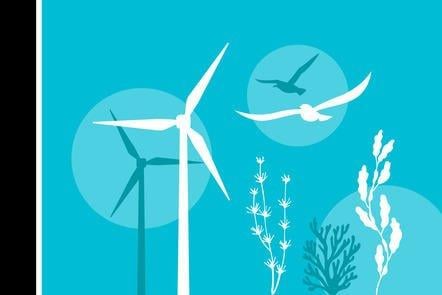
Discover ecology and how we can protect wildlife and conserve the natural world. Do you worry about the effects of climate change on nature? This course will show you how the work of conservation biologists and study of ecosystems can help with conserving the world’s biodiversity. You’ll explore the impact that the presence of wind farms on populations of seabirds and understand how the use of advanced techniques can be used to study different populations.

Class Deals by MOOC List - Click here and see FutureLearn's Active Discounts, Deals, and Promo Codes.

In Week 2, you’ll learn about ecosystems and how they are influenced by human activity. Case studies will explore the reasons behind the bee decline across the world, and examine fish species in tropical seas to see at first-hand how climate change damages coral reefs.

What topics will you cover?

  • The moral and economic arguments for nature conservation.
  • The impact of human activity on the natural environment.
  • Why the conservation of populations and communities are essential for human life.
  • How conservation biologists are helping to protect seabirds from offshore wind turbines.
  • The impact of climate change on coral reef ecosystems.
  • How the loss of coral can lead to ecosystem collapse.
  • How large-scale studies are used to understand environmental issues.
  • The impact of bee decline across the world.
  • How new technology is helping to conserve nature and biodiversity.

Learning on this course
You can take this self-guided course and learn at your own pace. On every step of the course you can meet other learners, share your ideas and join in with active discussions in the comments.

What will you achieve?
By the end of the course, you'll be able to...

  • Identify, through research, the key threats faced by seabirds, pollinators, and coral reefs
  • Explore the impact of global environmental change on two key species and two key ecosystems
  • Evaluate real data taken from a field study to investigate the conservation of a group of animals or plants
  • Investigate the advanced techniques and technology which are used to study and conserve biodiversity by conservation scientists

Who is the course for?
The course is for anyone with a general interest in ecology and wildlife conservation but it will be particularly useful for students at high school who want to study conservation biology, zoology or biology at university level. The course is part of the Going to University collection and completing it can help improve your university application by broadening your understanding of wildlife conservation and developing your independent learning skills. The course can also be used as a teachers’ classroom enrichment resource.

Go to Class
MOOC List is learner-supported. When you buy through links on our site, we may earn an affiliate commission.

Related Courses

Planet Earth: Understanding and Protecting our Environment (FutureLearn) FutureLearn
University of Leeds

Planet Earth: Understanding and Protecting our Environment (FutureLearn)

Learn about the physical geography of Earth and discover how to use this knowledge to protect our natural environment. Discover the Earth’s natural systems and how human activity affects them. On this two-week course from the University of Leeds, you will discover the processes of the hydrosphere, the geosphere, and the biosphere and explore the impact of human activity and climate change on our planet.

Self Paced
2 Weeks
Environmental Challenges: Human Impact in the Natural Environment (FutureLearn) FutureLearn
University of Leeds

Environmental Challenges: Human Impact in the Natural Environment (FutureLearn)

Complexity in nature arises from a myriad of simple interactions. How can this lead to an unpredictable dynamism? Complex patterns in ecology are not always causal and predictable. Populations have their own dynamics that can be independent of external environmental conditions. In this course we look at the way that natural systems are organised; although living systems are complex, there are also some fairly constant patterns and relationships.

Self Paced
2 Weeks
Aeroecology: Exploring Biodiversity with Radar (Coursera) Coursera
University of Leeds

Aeroecology: Exploring Biodiversity with Radar (Coursera)

Learn how aeroecology, a discipline that studies airborne life forms, has been revolutionised with the use of radar with this unique course. This course is designed to help scientists, researchers as well as ecology enthusiasts to develop skills in using radar to explore biodiversity. You will explore the origins and evolution of radar from a military technology to a powerful tool with multiple scientific applications, including aeroecology. You will then be introduced to studying global biodiversity trends and learn how to evaluate traditional methods and emerging technologies used by scientists to monitor the natural world.

Aug 10th 2026
2 Weeks
Evolution Today (Coursera) Coursera
Leiden University,Naturalis Biodiversity Center

Evolution Today (Coursera)

In this course you will learn how evolution works. You will develop an understanding of evolutionary processes and their formative power. You will see how evolution has shaped biodiversity, and continuously influences our daily life. Evolution impacts human endeavors as varied as medicine, agriculture, psychology, economy, and culture. It is the major unifying principle for biology and a fundamental natural law.

Aug 10th 2026
5-12 Weeks
Valuing Nature: Should We Put a Price on Ecosystems? (FutureLearn) FutureLearn
University of Exeter

Valuing Nature: Should We Put a Price on Ecosystems? (FutureLearn)

Discover the many ways that we benefit from the natural world through ecosystem services. There are many services that ecosystems provide that we never even consider, until we destroy them. Natural ecosystems help alleviate flooding, improve food security and protect our coastlines. Yet we consistently replace these ecosystems with manmade alternatives.

Available now
2 Weeks
Nature Connectedness with the University of Derby (FutureLearn) FutureLearn
University of Derby

Nature Connectedness with the University of Derby (FutureLearn)

Learn to establish a new relationship with nature to help improve your wellbeing and tackle larger issues such as climate change. Explore the relationship between nature connection and the climate crisis. Too often we see nature as something to use, control, or as a threat to us. The climate crisis and wildlife emergency show that the existing relationship between people and the rest of nature is breaking down. It has become too disconnected and narrow.

Jul 26th 2021
4 Weeks
Extinctions: Past and Present (FutureLearn) FutureLearn
University of Cape Town

Extinctions: Past and Present (FutureLearn)

Discover the diversity of life on earth, the impacts of five past mass extinctions and the prospect of a sixth extinction today. This free online course explores how life on earth has been shaped by five mass extinction events in the distant past. At present, biodiversity is facing a crisis, with the prospect of a sixth extinction event today.

Jul 25th 2022
5-12 Weeks
Environmental Challenges: Scarcity and Conflict in the Natural Environment (FutureLearn) FutureLearn
University of Leeds

Environmental Challenges: Scarcity and Conflict in the Natural Environment (FutureLearn)

War and conflict can severely disrupt the governance of the environment. What is the impact on both people and the environment? This course explores three aspects of conflict and resource scarcity, and applies these to explore decision making and negotiation skills. Human conflict has both short and long term effects on the natural world.

Self Paced
2 Weeks
The Earth in My Pocket: an Introduction to Geology (FutureLearn) FutureLearn
The Open University

The Earth in My Pocket: an Introduction to Geology (FutureLearn)

Get an introduction to geology. Discover where materials that make up everyday objects come from and how to use them sustainably. Everything we use that has not been grown either contains or relies on materials that have been sourced by a geoscientist. Whether we are standing out in the wilderness, in the middle of a city or in our home, geology and the Earth’s natural resources are all around us, forming an integral part of our everyday lives.

No sessions available
4 Weeks
Fashion Values: Nature (FutureLearn) FutureLearn
London College of Fashion

Fashion Values: Nature (FutureLearn)

Understand biodiversity in the context of fashion and create a plan for fashion that protects our earth’s systems. Discover fashion practices that can protect, restore, and regenerate ecosystems. Nature is the life force that provides us with the air, water, soil, and minerals that sustain life on earth. These elements come together in the clothes we wear. This course will help you build the knowledge, skills, and connections to reimagine fashion’s practices and develop a plan to put nature first.

Available now
4 Weeks
Christianity & Ecology (Coursera) Coursera
Yale University

Christianity & Ecology (Coursera)

There is a need for broader literacy and deeper knowledge of the world’s religions and their ecological contributions. This course is designed as a gateway to the rich ecological dimensions of the Christian religious tradition. We delve into unique contributions from Orthodox, Catholic, and Protestant Christianity, exploring views on and relationship with the natural world.

Aug 17th 2026
5-12 Weeks
Western Religions & Ecology (Coursera) Coursera
Yale University

Western Religions & Ecology (Coursera)

At first glance the fields of religion and ecology may seem and unlikely pairing, but a deeper consideration reveals the two have a great deal to contribute to one another and are indeed inextricably linked. Religions recognize the unity and interdependence of humans with nature. Ecological sciences affirm this deep interconnection with the natural world. This partnership can inspire work for the wellbeing of the Earth community

Aug 3rd 2026
5-12 Weeks