Environmental Challenges: Scarcity and Conflict in the Natural Environment (FutureLearn)

Offered by University of Leeds,
Environmental Challenges: Scarcity and Conflict in the Natural Environment (FutureLearn)

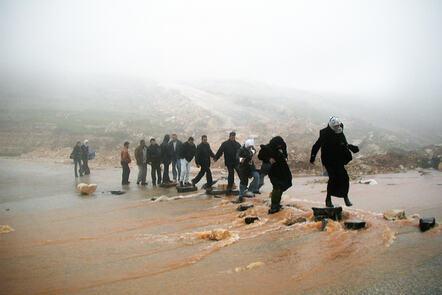
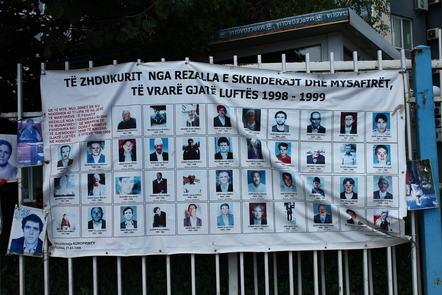
War and conflict can severely disrupt the governance of the environment. What is the impact on both people and the environment? This course explores three aspects of conflict and resource scarcity, and applies these to explore decision making and negotiation skills. Human conflict has both short and long term effects on the natural world.

Class Deals by MOOC List - Click here and see FutureLearn's Active Discounts, Deals, and Promo Codes.

The environment is directly impacted by pollution and explosions; and can be used as a weapon of war. In the longer term, sustainable environmental management is disrupted when conflict destabilises social systems and people are denied access to natural resources. As resources become scarcer, it might be expected that people come into conflict about access to natural resources.

Syllabus

Week 1: The principles of scarcity and conflict
Week 2: Applying the principles

Learning on this course
You can take this self-guided course and learn at your own pace. On every step of the course you can meet other learners, share your ideas and join in with active discussions in the comments.

What will you achieve?
By the end of the course, you'll be able to...

  • Compare the ‘cowboy’ economy with the circular ‘spaceman’ economy, through technological advances and resource exploitation.
  • Discuss the extent that resource demands can lead to conflict between different users.
  • Explore the way that conflicting forces subdue populations by denying them access to environmental resources.
  • Develop understanding of conflict resolution and negotiation techniques.

Who is the course for?
The course is suitable for anyone with a general interest in conflict and environmental decision-making; no previous knowledge or experience is required.
If you are working in environmental management, or wish to learn more about it, this course is designed to support you as a professional. By completing all aspects of the course you will have achieved 14 hours of CPD time.


Go to Class
MOOC List is learner-supported. When you buy through links on our site, we may earn an affiliate commission.

Related Courses

Environmental Challenges: Rights and Values in Ecosystem Services (FutureLearn) FutureLearn
University of Leeds

Environmental Challenges: Rights and Values in Ecosystem Services (FutureLearn)

Differences in values can create conflict. How can we learn to manage our natural resources with integrity? Humans are very innovative, but we’ve also created many ecological problems. We’ve changed the face of the planet, fished the oceans, and we’re causing climate change through emissions. Designing institutional arrangements that recognise ecosystem services in the values we place upon natural systems will be an important way to help governing the planet, for both present and future generations.

Self Paced
2 Weeks
Global Health, Conflict and Violence (FutureLearn) FutureLearn
University of Bergen

Global Health, Conflict and Violence (FutureLearn)

Understand the role of medical peace work, and consider the role of healthcare workers in times of conflict and violence. Explore the role of medics and healthcare workers in promoting peace. On this course you will learn about the key principles and different forms of medical peace work in the context of global health, conflict and violence.

Self Paced
3 Weeks
Innovation in Arable Farming: Technologies for Sustainable Farming Systems (FutureLearn) FutureLearn
University of Reading,EIT Food,EIT

Innovation in Arable Farming: Technologies for Sustainable Farming Systems (FutureLearn)

Explore how innovative, digital technologies can help achieve sustainable intensification of arable farming systems. Consider ways arable farmers in the EU can use agri-tech to benefit business. On this course, you’ll explore evidence-based information that outlines the benefits and challenges of adopting new technologies within the EU, and have the chance to read case study examples of some of these applications.

Jan 2nd 2023
3 Weeks
Drugs, Peace, and Development: Rethinking Policy (FutureLearn) FutureLearn
SOAS University of London

Drugs, Peace, and Development: Rethinking Policy (FutureLearn)

Gain insights into the relationships between illicit drug economies, peacebuilding, and development in borderland regions. Explore new ways to tackle drugs, development, and peacebuilding challenges. There is growing awareness that the ‘war on drugs’ has failed and that there is a need for reformed drug policies. But what does this mean in practice? On this five-week course from SOAS University of London, you’ll delve into the latest debates in global drug policy and the current efforts to integrate drugs, development, and peacebuilding policies.

Jun 6th 2022
5-12 Weeks
Chemometrics in Air Pollution (FutureLearn) FutureLearn
University of Malaya

Chemometrics in Air Pollution (FutureLearn)

This course briefly introduces the causes and effects of air pollution in Asian, chemometric models and chemometric application. This course briefly introduces the causes and effects of air pollution. Air pollution is a growing concern the we experience in our daily life. But not everyone has a clear understanding of what the sources of air pollution are. Here, you will not only learn how to identify them, but also understand the potential impact air pollution has in our present and future.

Self Paced
3 Weeks
Environmental Challenges: Human Impact in the Natural Environment (FutureLearn) FutureLearn
University of Leeds

Environmental Challenges: Human Impact in the Natural Environment (FutureLearn)

Complexity in nature arises from a myriad of simple interactions. How can this lead to an unpredictable dynamism? Complex patterns in ecology are not always causal and predictable. Populations have their own dynamics that can be independent of external environmental conditions. In this course we look at the way that natural systems are organised; although living systems are complex, there are also some fairly constant patterns and relationships.

Self Paced
2 Weeks
Accounting for Death in War: Separating Fact from Fiction (FutureLearn) FutureLearn
Royal Holloway, University of London,Every Casualty Counts

Accounting for Death in War: Separating Fact from Fiction (FutureLearn)

Discover the main methods used to account for war deaths, how they've been used and practice using them yourself. Calculating the number of deaths during a war is a difficult, but necessary, task - having accurate information is crucial for political and societal debates and decisions. On this course you will explore the methods currently used to account for war deaths and then apply these methods to particular wars.

Self Paced
3 Weeks
Qualitative Research Methods for Mental Health in War and Conflict (FutureLearn) FutureLearn
King's College London,Birzeit University

Qualitative Research Methods for Mental Health in War and Conflict (FutureLearn)

Understand the importance of mental health research in areas of war and conflict and strengthen your qualitative research skills. Learn about the effects of conflict on people’s mental health. There is a prevalence of ill mental health due to conflict and war-affected populations worldwide. Yet, we lack locally relevant and reliable mental health information as research capacity and resources are insufficient. This four-week course will expose you to various research methodologies, skills and resources.

Self Paced
4 Weeks
Planet Partners: Tackling the Climate Crisis Together (FutureLearn) FutureLearn
University of Reading

Planet Partners: Tackling the Climate Crisis Together (FutureLearn)

Investigate the impact of climate change, the research being done to tackle it, and what you can do to take meaningful action. Explore the different areas affected by climate change. The impacts of climate change are being felt worldwide and across many areas of life. This includes our food, our physical and mental health, where and how we live, wildlife and environmental systems, and political direction.

Self Paced
2 Weeks
One Health: Connecting Humans, Animals and the Environment (FutureLearn) FutureLearn
University of Basel

One Health: Connecting Humans, Animals and the Environment (FutureLearn)

BBecome familiar with One Health, a promising concept, and the effective solutions it provides for urgent health problems. Expand how you address health issues, learning from top One Health experts. In today’s globalised world, old diseases persist and new illnesses spread faster than ever thanks to interconnected ecosystems and the close ties between humans and animals.

Oct 9th 2023
5-12 Weeks