Sustainable Urban Regeneration (Coursera)

Offered by Università Bocconi,
Sustainable Urban Regeneration (Coursera)

The transformation of land use, functions, and services in cities represents an opportunity to foster sustainable development, contributing to local and global challenges. Urban regeneration is a key area to govern change, attract investments, engage stakeholders, and generate multiple benefits in both developed and developing countries.

Class Deals by MOOC List - Click here and see Coursera's Active Discounts, Deals, and Promo Codes.

The course explores sustainable urban regeneration considering its contribution to sustainability through an integrated and multidisciplinary approach. This allows for planning, assessing, and evaluating urban regeneration processes and projects considering different stakeholders’ perspectives.
Students will acquire knowledge to identify and assess the values generated by urban regeneration at the urban scale. Specific worldwide case studies will be analyzed to individuate policy and business models for successful urban regeneration. The course will be delivered by both Bocconi faculty and international experts.
The course has been realized by the Sustainable Urban Regeneration Lab (SUR Lab) of Bocconi University powered by Hines, Intesa Sanpaolo, Prelios, and Milanosesto.

What You Will Learn

  • Understand the role of cities in global dynamics and the main drivers of sustainable urban development.
  • Identify and assess the main elements of sustainable urban regeneration projects, considering their impact on the environment and society.
  • Evaluate key phases, actors, and mechanisms that operate in urban regeneration projects to create value.
  • Appraise the main funding and financial instruments to support urban regeneration projects.

Syllabus

WEEK 1
Week 1 - Urban Regeneration: Context and Approaches
The week aims to frame the main challenges and opportunities linked to urban development. In this context, the concept of sustainable urban regeneration and its impacts will be described also through the use of worldwide urban regeneration case studies. Guest speakers: Javier Torner, UN-Habitat; Lamia Kamal-Chaoui, OECD; David Miller, C40; Ricky Burdett, LSE Cities

WEEK 2
Week 2 - Towards Climate Neutral and Resilient Cities
The week is focused on one of the main challenges cities are facing nowadays climate change. After the description of the main impacts of climate change at the urban scale, policies and measures to improve urban resilience will be presented with a particular focus on the role of regeneration processes. Guest speakers: Federica Ranghieri, The World Bank; Eero Ailio, European Commission; Wolfgang Teubner, ICLEI

WEEK 3
Week 3 - Impacts of Urban Regeneration
Urban regeneration can improve quality of life in cities generating impacts on economic, environmental, and social domains. The week is dedicated to the analysis of the impacts of urban regeneration processes and their capacity to create private and social value.
Guest speakers: Andy Bow, Foster and Partners; Mario Abbadessa, Hines Italy; Nicolas Buchoud, Grand Paris Alliance for Metropolitan Development

WEEK 4
Week 4 - Assessing Urban Regeneration
Several standards and protocols have been developed to assess impacts of policies and measures implemented in cities. The week aims to highlight the main potential of those standards focusing on their scale of application, factors, criteria, scores, etc. A specific focus is dedicated on how ESG investment criteria are applied in urban regeneration projects. Guest speakers: Alejandro Gutierrez, Arup; Giuliano Dall’O’, Politecnico of Milan and GBC Italy; Erica Abisso, Intesa Sanpaolo.

WEEK 5
Week 5 - Institutional Framework and Business Models for Urban Regeneration
Cities can adopt different governance models to support urban regeneration processes, capture the value created, and to engage stakeholders. At this purpose, the policies, instruments and business models for urban regeneration will be presented and analyzed during the week. Guest speakers: Rogier van den Berg, WRI Ross Center; Riccardo Serrini, Prelios; Daniela Rizzi, ICLEI Europe

WEEK 6
Week 6 - Final assessment
This week is dedicated to the final assessment of the course.

Go to Class
MOOC List is learner-supported. When you buy through links on our site, we may earn an affiliate commission.

Related Courses

Discover Best Practice Farming for a Sustainable 2050 (Coursera) Coursera
University of Western Australia

Discover Best Practice Farming for a Sustainable 2050 (Coursera)

The Discover Best Practice Farming for a Sustainable 2050 Course is based on a clear vision: imagine best practice farming for 2050, start to implement these strategies now, all the while making sure it will still be profitable. At UWA we're doing just that with the Future Farm 2050 Project, set on a mixed-enterprise farm in Western Australia and we want you to learn how it can be done in your part of the world.

Oct 5th 2026
5-12 Weeks
Herramientas de la Economía Circular (Coursera) Coursera
Universidad de los Andes

Herramientas de la Economía Circular (Coursera)

La Economía Circular representa una perspectiva de mejoramiento continuo para la transformación de sistemas de producción y consumo sostenibles. Aprender de sus herramientas, agrega un valor agregado concreto, a las competencias de profesionales interesados en la sostenibilidad ambiental y social. El presente curso ofrece aprender de la importancia de la Economía Circular a través de sus herramientas, útiles para el diseño de proyectos.

Sep 28th 2026
5-12 Weeks
Ecosystem Services: a Method for Sustainable Development (Coursera) Coursera
University of Geneva

Ecosystem Services: a Method for Sustainable Development (Coursera)

Ecosystem services are a way of thinking about – and evaluating – the goods and services provided by nature that contribute to the well-being of humans. This MOOC will cover scientific (technical), economic, and socio-political dimensions of the concept through a mix of theory, case-studies, interviews with specialists and a serious-game.

Oct 5th 2026
5-12 Weeks
Aeroecology: Exploring Biodiversity with Radar (Coursera) Coursera
University of Leeds

Aeroecology: Exploring Biodiversity with Radar (Coursera)

Learn how aeroecology, a discipline that studies airborne life forms, has been revolutionised with the use of radar with this unique course. This course is designed to help scientists, researchers as well as ecology enthusiasts to develop skills in using radar to explore biodiversity. You will explore the origins and evolution of radar from a military technology to a powerful tool with multiple scientific applications, including aeroecology. You will then be introduced to studying global biodiversity trends and learn how to evaluate traditional methods and emerging technologies used by scientists to monitor the natural world.

Oct 5th 2026
2 Weeks
Wind resources for renewable energies (Coursera) Coursera
École Polytechnique

Wind resources for renewable energies (Coursera)

The main goal of this course is to get the necessary knowledge on atmospheric and fluid dynamics in order to quantify the wind resource of a local or regional area. We’ll learn about basic meteorology, the specific dynamics of turbulent boundary layers and some standard techniques to estimate wind resources regardless of the type of turbine used or the level of efficiency achieved.

Oct 5th 2026
4 Weeks
Natural Attenuation of Groundwater Contaminants: New Paradigms, Technologies, and Applications (Coursera) Coursera
Rice University

Natural Attenuation of Groundwater Contaminants: New Paradigms, Technologies, and Applications (Coursera)

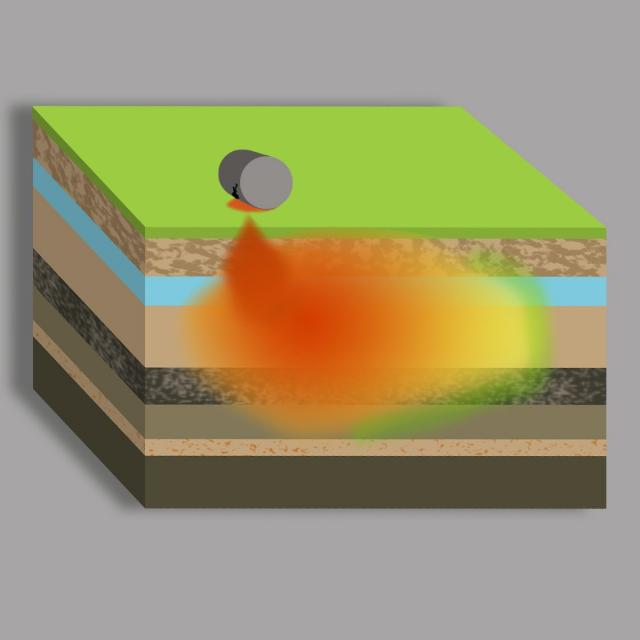
Cleaning up the large number of groundwater contamination sites is a significant and complex environmental challenge. The environmental industry is continuously looking for remediation methods that are both effective and cost-efficient. Over the past 10 years there have been amazing, important developments in our understanding of key attenuation processes and technologies for evaluating natural attenuation processes, and a changing institutional perspective on when and where Monitored Natural Attenuation (MNA) may be applied.

Sep 28th 2026
5-12 Weeks
Introduction to Household Water Treatment and Safe Storage (Coursera) Coursera
École Polytechnique Fédérale de Lausanne

Introduction to Household Water Treatment and Safe Storage (Coursera)

It is well known that water treatment at the household level can lead to dramatic improvements in drinking water quality. But does Household Water Treatment and Safe Storage (HWTS) also have global relevance? What are the potential treatment solutions and how do they function? Is there a standard strategy for successful HWTS implementation, or can we identify key components which make programs more likely to succeed? In this course you will learn about the most important water treatment methods at household level, successful implementation strategies and about assessing the impact of HWTS.

Oct 1st 2026
5-12 Weeks
Circular Economy - Sustainable Materials Management (Coursera) Coursera
Lund University,Delft University of Technology,EIT RawMaterials,VITO,Geological Survey of Denmark and Greenland - GEUS,National Technical University of Athens - NTUA,Ghent University

Circular Economy - Sustainable Materials Management (Coursera)

This course looks at where important materials in products we use every day come from and how these materials can be used more efficiently, longer, and in closed loops. This is the aim of the Circular Economy, but it doesn’t happen on its own. It is the result of choices and strategies by suppliers, designers, businesses, policymakers and all of us as consumers.

Oct 5th 2026
5-12 Weeks
Greening the Economy: Lessons from Scandinavia (Coursera) Coursera
Lund University

Greening the Economy: Lessons from Scandinavia (Coursera)

How can we live a good life on one planet with over seven billion people? This course will explore greening the economy on four levels – individual, business, city, and nation. We will look at the relationships between these levels and give many practical examples of the complexities and solutions across the levels. Scandinavia, a pioneering place advancing sustainability and combating climate change, is a unique starting point for learning about greening the economy. We will learn from many initiatives attempted in Scandinavia since the 1970s, which are all potentially helpful and useful for other countries and contexts.

Oct 5th 2026
5-12 Weeks
Climate Change and Water in Mountains: A Global Concern (Coursera) Coursera
University of Geneva

Climate Change and Water in Mountains: A Global Concern (Coursera)

What is climate change? How are mountain regions affected by the evolution of water resources and their uses? What kind of risks need to be considered? Mountains are recognized as particularly sensitive physical environments where intense and rapid changes have in the past, and may increasingly in the future, place pressure on their resource base.

Oct 5th 2026
5-12 Weeks
Corporate Sustainability. Understanding and Seizing the Strategic Opportunity (Coursera) Coursera
Università Bocconi

Corporate Sustainability. Understanding and Seizing the Strategic Opportunity (Coursera)

In this course, thought leaders in a wide variety of management and economics fields illustrate how to assess and seize the opportunities offered by these global emergencies. They will offer new ways to understand the purpose and the logic of success of the business enterprise in this new context, providing ideas and examples on how to manage the transition process to realize the value creation potential from corporate sustainability for all involved stakeholders.

Oct 5th 2026
5-12 Weeks