Herramientas de la Economía Circular (Coursera)

Herramientas de la Economía Circular (Coursera)

La Economía Circular representa una perspectiva de mejoramiento continuo para la transformación de sistemas de producción y consumo sostenibles. Aprender de sus herramientas, agrega un valor agregado concreto, a las competencias de profesionales interesados en la sostenibilidad ambiental y social. El presente curso ofrece aprender de la importancia de la Economía Circular a través de sus herramientas, útiles para el diseño de proyectos.

Class Deals by MOOC List - Click here and see Coursera's Active Discounts, Deals, and Promo Codes.

Al finalizar el curso, los participantes estarán en la capacidad de:

  • Identificar oportunidades de Economía Circular como estrategia para el desarrollo económico sostenible.
  • Aplicar herramientas para la identificación de proyectos de Economía Circular.
  • Aplicar metodologías de formulación de proyectos para diseñar iniciativas circulares de uso eficiente de recursos.

La estructura del curso contempla 5 módulos, cada uno requiere una dedicación de 3 a 5 horas de estudio y práctica. El primer módulo introduce el concepto de la Economía Circular como un nuevo lenguaje global, sus prioridades de su aplicación, e importancia en países de América Latina, e identifica las estrategias empresariales para su implementación. Los siguientes módulos introducen las diversas herramientas de Economía Circular útiles para el diseño de proyectos aplicados, cálculo de beneficios económicos, ambientales y sociales, y metodologías para la estructuración de la presentación de proyectos.
El curso está orientado a profesionales de áreas de operación de empresas, universitarios de pregrado en carreras de ingeniera y/o administración de empresas, estudiantes de posgrado y tecnólogos.

What You Will Learn

  • Identificar oportunidades de Economía Circular como estrategia para el desarrollo económico sostenible.
  • Aplicar las herramientas Eco-Mapa, Eco-Balance y Costos de Ineficiencia, para la identificación de proyectos de economía circular.
  • Aplicar metodologías de formulación de proyectos para diseñar iniciativas circulares de uso eficiente de recursos.

Syllabus

WEEK 1
Introducción
La esencia de la Economía Circular
Bienvenido al primer módulo del curso Herramientas de la Economía Circular. En este módulo aprenderemos qué es la Economía Circular, su esencia, los conceptos que la fundamentan y las implicaciones para América Latina. Además, conocerás cuáles son los actores de la Economía Circular, sus roles y junto con algunos invitados especiales revisaremos el contexto actual en la región, los retos y oportunidades para el futuro.

WEEK 2
Herramientas de la Economía Circular I
Bienvenidos al segundo módulo del curso Herramientas de la Economía Circular. En este módulo aplicaremos dos herramientas que son de mucha importancia y utilidad a la hora de diseñar proyectos de Economía Circular. Estas herramientas son el Eco-Mapa y el Eco-Balance, con ellas podremos identificar puntos críticos, hacer un análisis de flujo de recursos, materiales y energía, además de hacer un diagnóstico de la eficiencia en la transformación de recursos.

WEEK 3
Herramientas de la Economía Circular II

WEEK 4
Alternativas preventivas e indicadores
En este módulo revisaremos cómo se llega a propuestas de alternativas preventivas y circulares, y cómo podemos analizar y evaluar la viabilidad económica, ambiental y social de estas mediante el uso de indicadores. Esto será un aspecto importante para complementar la caja de herramientas de Economía Circular y formular un proyecto.

WEEK 5
Proyecto de Economía Circular
En este último módulo aprenderás a estructurar una presentación de una propuesta de alternativa de Economía Circular que presentarás a la junta directiva para su aprobación. Estudiaremos el contenido de esta presentación y el tipo de información que le interesa a la junta directiva para tomar decisiones sobre esta propuesta.
Go to Class
MOOC List is learner-supported. When you buy through links on our site, we may earn an affiliate commission.

Related Courses

Energy, Environment, and Everyday Life (Coursera) Coursera
University of Illinois at Urbana-Champaign

Energy, Environment, and Everyday Life (Coursera)

This course teaches you everything you need to know about energy, the environment, and at least a number of things in everyday life. It starts by talking about energy itself and where it comes from. This includes how much we have, who has it, who uses it, and what that all means. The video clips are produced in a fast-paced multimedia format during which Professor Ruzic throws in fun and demonstrations. There are multiple-choice questions to check your understanding and some more in-depth exercises to guide you deeper into the subject.

Sep 28th 2026
5-12 Weeks
Arctic Development (Coursera) Coursera
University of Alberta

Arctic Development (Coursera)

Welcome to Arctic: Development! In this third in a series of Arctic MOOCs, brought to you by a unique partnership between the University of Alberta and UiT The Arctic University of Norway, we will be exploring regional development in a changing arctic. In this 4-week course, you will investigate the role that natural resources play across the Indigenous, Nordic, Russian and North American Arctics, different strategies for resource management in different regions, and how these affect community planning and development efforts in an increasingly populated part of the world.

Oct 5th 2026
4 Weeks
Greening the Economy: Lessons from Scandinavia (Coursera) Coursera
Lund University

Greening the Economy: Lessons from Scandinavia (Coursera)

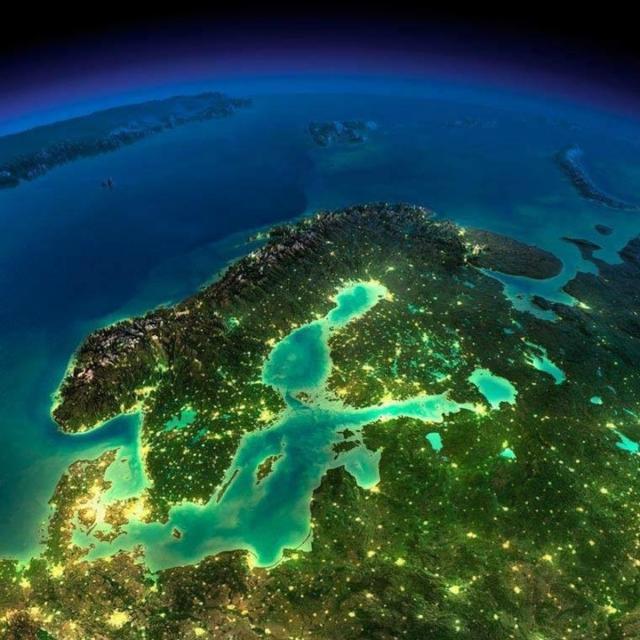
How can we live a good life on one planet with over seven billion people? This course will explore greening the economy on four levels – individual, business, city, and nation. We will look at the relationships between these levels and give many practical examples of the complexities and solutions across the levels. Scandinavia, a pioneering place advancing sustainability and combating climate change, is a unique starting point for learning about greening the economy. We will learn from many initiatives attempted in Scandinavia since the 1970s, which are all potentially helpful and useful for other countries and contexts.

Oct 5th 2026
5-12 Weeks
Introduction to Household Water Treatment and Safe Storage (Coursera) Coursera
École Polytechnique Fédérale de Lausanne

Introduction to Household Water Treatment and Safe Storage (Coursera)

It is well known that water treatment at the household level can lead to dramatic improvements in drinking water quality. But does Household Water Treatment and Safe Storage (HWTS) also have global relevance? What are the potential treatment solutions and how do they function? Is there a standard strategy for successful HWTS implementation, or can we identify key components which make programs more likely to succeed? In this course you will learn about the most important water treatment methods at household level, successful implementation strategies and about assessing the impact of HWTS.

Oct 1st 2026
5-12 Weeks
Discover Best Practice Farming for a Sustainable 2050 (Coursera) Coursera
University of Western Australia

Discover Best Practice Farming for a Sustainable 2050 (Coursera)

The Discover Best Practice Farming for a Sustainable 2050 Course is based on a clear vision: imagine best practice farming for 2050, start to implement these strategies now, all the while making sure it will still be profitable. At UWA we're doing just that with the Future Farm 2050 Project, set on a mixed-enterprise farm in Western Australia and we want you to learn how it can be done in your part of the world.

Oct 5th 2026
5-12 Weeks
Oceanography: a key to better understand our world (Coursera) Coursera
University of Barcelona,Barcelona Foundation for Ocean Sailing - FNOB

Oceanography: a key to better understand our world (Coursera)

The course for a round the world regatta leads the boats through the Mediterranean Sea and the Atlantic, Southern Indian and South Pacific Oceans. On their voyage, the skippers come across a large variety of oceanographic situations: strong currents, floating ice, wave formations of every kind and biological diversity. In this course the student will learn about the foundations of the science of oceanography. You'll learn about the classification and formation of the ocean floor, how current sea satellite analysis systems work, the chemistry of the oceans and the processes that led to its formation.

Sep 28th 2026
5-12 Weeks
Introduction to Faecal Sludge Management (Coursera) Coursera
École Polytechnique Fédérale de Lausanne

Introduction to Faecal Sludge Management (Coursera)

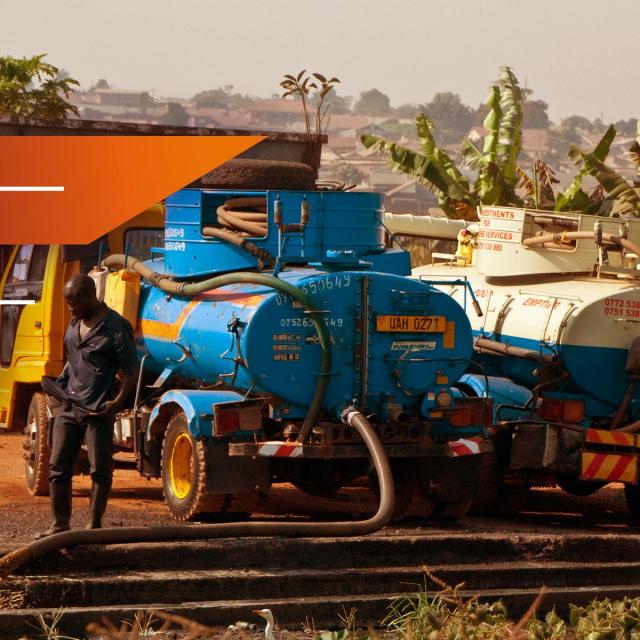
Do you want learn how to apply concepts of sustainable faecal sludge management (FSM) on a city-wide scale? This course starts with an overview of what faecal sludge is and an introduces you to the engineering fundamentals and required information for the design and selection of technologies. Sanitation solutions are prone to failure if an integrated planning approach that includes stakeholder involvement and the development of appropriate institutional, management and financial arrangements is not implemented.

Oct 5th 2026
5-12 Weeks
Climate Change and Water in Mountains: A Global Concern (Coursera) Coursera
University of Geneva

Climate Change and Water in Mountains: A Global Concern (Coursera)

What is climate change? How are mountain regions affected by the evolution of water resources and their uses? What kind of risks need to be considered? Mountains are recognized as particularly sensitive physical environments where intense and rapid changes have in the past, and may increasingly in the future, place pressure on their resource base.

Oct 5th 2026
5-12 Weeks
Ecosystem Services: a Method for Sustainable Development (Coursera) Coursera
University of Geneva

Ecosystem Services: a Method for Sustainable Development (Coursera)

Ecosystem services are a way of thinking about – and evaluating – the goods and services provided by nature that contribute to the well-being of humans. This MOOC will cover scientific (technical), economic, and socio-political dimensions of the concept through a mix of theory, case-studies, interviews with specialists and a serious-game.

Oct 5th 2026
5-12 Weeks
Deploying the circular economy within organisations (Coursera) Coursera
ESSEC Business School

Deploying the circular economy within organisations (Coursera)

How can companies act in the fight against global warming? This is an increasingly pressing question for all actors of our society. Big companies, SMEs, start-ups but also charities and public actors, the circular economy is part of solutions to be deployed at a large scale by all these actors, to promote an economy that respects planet boundaries, consumes less natural resources, emits less greenhouse gases and produces less waste. With this MOOC, you will understand the limits of the linear economy, based on the "Take-Make-Waste" principle, as well as the need for a shift towards circular economy.

Oct 5th 2026
4 Weeks
Sustainable Food Systems (Coursera) Coursera
University of Illinois at Urbana-Champaign

Sustainable Food Systems (Coursera)

Throughout this course, you will delve into the intricate details of the food production system through a system-thinking lens. You will examine the grand challenges faced by the food, fiber, and natural resource industries, and their repercussions on people, the planet, and profit. By the end of this course, you will have a clear understanding of the concept of systems thinking, be able to explain the three key pillars of sustainability and link these pillars to social, environmental, and economic systems.

Oct 5th 2026
5-12 Weeks