Perspectives in Digital Transformation: Agribusiness (Coursera)

Perspectives in Digital Transformation: Agribusiness (Coursera)

In this course, you will be learn how to apply the best practices that have been tested by global companies to make the most of the potentialities of digital transformation and its application to your business. Discover what the level of digital maturity is for your organization by identifying current trends in digital transformation, the use of technologies, and the impact on sustainability in the agribusiness sector in Latin America.

Class Deals by MOOC List - Click here and see Coursera's Active Discounts, Deals, and Promo Codes.

Enroll to learn about best practices that companies in the sector are using to improve their operations, compete better in the global market, and capitalize on the numerous opportunities offered by this new era of digital agriculture.

What you'll learn

  • Recognize the importance of digital transformation in the agricultural business sector based on current challenges, pressures, and opportunities.
  • Identify current trends in digital transformation in order to facilitate and accelerate a digital change in the agro-industrial sector.
  • Identify how the use of technologies generates an impact on both the sustainability and productivity of agribusiness.
  • Identificar tu nivel de madurez digital a través de una herramienta de autodiagnóstico elaborada por BID Invest

Syllabus

Start here
We warmly welcome you to the Perspectives in Digital Transformation: Agribusiness course. In this introductory module, we will identify the course objectives, structure, assessments, and guidance material. The introductory video will give you an overview of the course and the topics we will cover; we will review the learning objectives that you will master after successfully completing the course; We will share the link to the participant guide, a useful document which will help you navigate the course; We will explain how you will be evaluated; We will familiarize you with the course instructions and introduce you to the design team responsible for its content. Finally, we invite you to answer an initial survey.

Module 1: Understanding the Current Reality of Agribusiness and Digital Transformation
Welcome to our first module of the course. In this module we will understand the importance of digital transformation in the agribusiness sector by identifying the main challenges facing the sector and analyzing the opportunities and benefits that digital transformation brings allowing us to solve current problems with innovative approaches. To do this, we will consult some resources that will help us better understand internal and external pressures facing the agricultural sector today. We will also learn about innovative solutions based on the use of technology and we will listen to experts share their experiences about the digital transformation processes of their organizations and their lessons learned.

Module 2: Identification of Trends and Courses of Action Paths in Digital Transformation
In this module we will identify the current trends in digital transformation for agribusiness that will enable and accelerate digital change in the sector. To do this, you will learn about the key trends in agribusiness and the future of agriculture, as well as hear the experience of an expert implementing digital transformation.

Module 3: Understanding the Use of Technology for Sustainability
In this module, we will identify how the use of technologies generates an impact on both the sustainability and productivity of agribusiness. To do this, we will focus on sustainability and digitalization, and learn about the initiatives of some corporations that support and promote sustainable digital transformation.

Go to Class
MOOC List is learner-supported. When you buy through links on our site, we may earn an affiliate commission.

Related Courses

Climate Change and Water in Mountains: A Global Concern (Coursera) Coursera
University of Geneva

Climate Change and Water in Mountains: A Global Concern (Coursera)

What is climate change? How are mountain regions affected by the evolution of water resources and their uses? What kind of risks need to be considered? Mountains are recognized as particularly sensitive physical environments where intense and rapid changes have in the past, and may increasingly in the future, place pressure on their resource base.

Oct 5th 2026
5-12 Weeks
Circular Economy - Sustainable Materials Management (Coursera) Coursera
Lund University,Delft University of Technology,EIT RawMaterials,VITO,Geological Survey of Denmark and Greenland - GEUS,National Technical University of Athens - NTUA,Ghent University

Circular Economy - Sustainable Materials Management (Coursera)

This course looks at where important materials in products we use every day come from and how these materials can be used more efficiently, longer, and in closed loops. This is the aim of the Circular Economy, but it doesn’t happen on its own. It is the result of choices and strategies by suppliers, designers, businesses, policymakers and all of us as consumers.

Oct 5th 2026
5-12 Weeks
Natural Attenuation of Groundwater Contaminants: New Paradigms, Technologies, and Applications (Coursera) Coursera
Rice University

Natural Attenuation of Groundwater Contaminants: New Paradigms, Technologies, and Applications (Coursera)

Cleaning up the large number of groundwater contamination sites is a significant and complex environmental challenge. The environmental industry is continuously looking for remediation methods that are both effective and cost-efficient. Over the past 10 years there have been amazing, important developments in our understanding of key attenuation processes and technologies for evaluating natural attenuation processes, and a changing institutional perspective on when and where Monitored Natural Attenuation (MNA) may be applied.

Sep 28th 2026
5-12 Weeks
Our Earth's Future (Coursera) Coursera
American Museum of Natural History

Our Earth's Future (Coursera)

Our Earth’s Future is about the science of climate change and how to talk about it. You will learn from scientists in the fields of climatology, oceanography, Earth science, and anthropology who study how climate change is affecting people, populations, and ways of life. Explore the multiple lines of evidence for the human-induced climate change that is happening today, and consider what that means for the future of our planet. At the end of this course you will be able to understand key scientific principles, identify and address misconceptions, and contribute confidently to conversations about climate change.

Oct 5th 2026
5-12 Weeks
La transformation numérique (Coursera) Coursera
University of Virginia,Boston Consulting Group - BCG

La transformation numérique (Coursera)

La transformation numérique est un sujet brûlant, mais en quoi consiste-t-elle exactement et que signifie-t-elle pour les entreprises ? Dans ce cours, développé à la Darden School of Business à l'Université de Virginie, et encadré par les meilleurs experts en gestion globale de la faculté de Darden et du Boston Consulting Group, nous abordons la transformation numérique de deux manières. Nous analysons tout d'abord le rythme du changement et les impératifs que cela crée pour les entreprises.

Oct 5th 2026
4 Weeks
Sustainable Food Systems (Coursera) Coursera
University of Illinois at Urbana-Champaign

Sustainable Food Systems (Coursera)

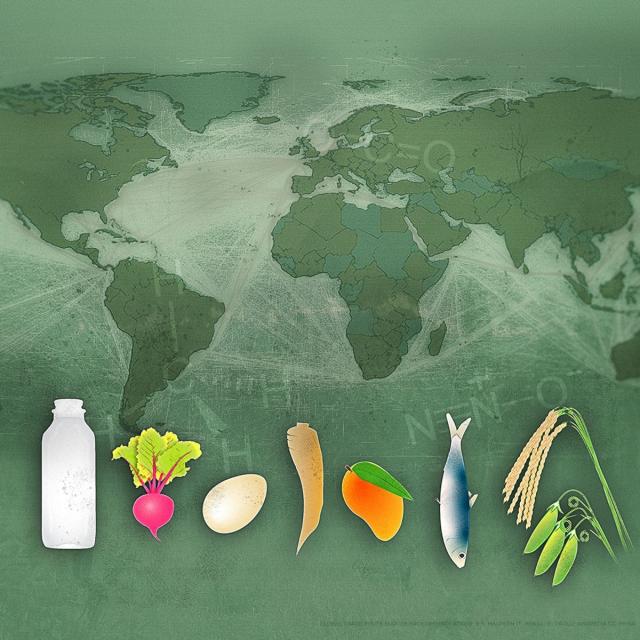
Throughout this course, you will delve into the intricate details of the food production system through a system-thinking lens. You will examine the grand challenges faced by the food, fiber, and natural resource industries, and their repercussions on people, the planet, and profit. By the end of this course, you will have a clear understanding of the concept of systems thinking, be able to explain the three key pillars of sustainability and link these pillars to social, environmental, and economic systems.

Oct 5th 2026
5-12 Weeks
Wood Science: Beyond Building (Coursera) Coursera
West Virginia University

Wood Science: Beyond Building (Coursera)

The central question of this course: “why study wood?” If “why study wood” is the question, one answer would be that it is the only raw material available to us that is truly renewable in human life span terms. Wood is as important to society today as it ever was, despite the development of many man-made substitute materials, changing resource availability, and the changing needs of society.

Oct 5th 2026
4 Weeks
Introduction to Sustainability (Coursera) Coursera
University of Illinois at Urbana-Champaign

Introduction to Sustainability (Coursera)

This course introduces the academic approach of Sustainability and explores how today’s human societies can endure in the face of global change, ecosystem degradation and resource limitations. The course focuses on key knowledge areas of sustainability theory and practice, including population, ecosystems, global change, energy, agriculture, water, environmental economics and policy, ethics, and cultural history.

Sep 28th 2026
5-12 Weeks
Introduction to Household Water Treatment and Safe Storage (Coursera) Coursera
École Polytechnique Fédérale de Lausanne

Introduction to Household Water Treatment and Safe Storage (Coursera)

It is well known that water treatment at the household level can lead to dramatic improvements in drinking water quality. But does Household Water Treatment and Safe Storage (HWTS) also have global relevance? What are the potential treatment solutions and how do they function? Is there a standard strategy for successful HWTS implementation, or can we identify key components which make programs more likely to succeed? In this course you will learn about the most important water treatment methods at household level, successful implementation strategies and about assessing the impact of HWTS.

Oct 1st 2026
5-12 Weeks
Act on Climate: Steps to Individual, Community, and Political Action (Coursera) Coursera
University of Michigan

Act on Climate: Steps to Individual, Community, and Political Action (Coursera)

Are you concerned about climate change? Would you like to learn how to address and respond to this challenge? If so, this course is for you. Act on Climate: Steps to Individual, Community, and Political Action is intended to help learners understand, address and respond to climate change as individuals and in partnership with their communities and political leaders.

Oct 5th 2026
5-12 Weeks
Greening the Economy: Lessons from Scandinavia (Coursera) Coursera
Lund University

Greening the Economy: Lessons from Scandinavia (Coursera)

How can we live a good life on one planet with over seven billion people? This course will explore greening the economy on four levels – individual, business, city, and nation. We will look at the relationships between these levels and give many practical examples of the complexities and solutions across the levels. Scandinavia, a pioneering place advancing sustainability and combating climate change, is a unique starting point for learning about greening the economy. We will learn from many initiatives attempted in Scandinavia since the 1970s, which are all potentially helpful and useful for other countries and contexts.

Oct 5th 2026
5-12 Weeks
Sustainable Food Production Through Livestock Health Management (Coursera) Coursera
University of Illinois at Urbana-Champaign

Sustainable Food Production Through Livestock Health Management (Coursera)

Learn about the impact of infectious disease on sustainable animal-based food production by understanding the science of growth, immunity, and infection and by learning the problem-solving skills needed to advance animal health and food production through optimal management practices. In this course we will explore the effect of infectious disease on sustainable animal-based food production. The content and learning outcomes of this new course will be designed to be relevant across different food production sectors (i.e., beef, dairy, poultry, and pigs).

Oct 5th 2026
5-12 Weeks