Unravelling solutions for Future Food problems (Coursera)

Offered by Universiteit Utrecht,
Unravelling solutions for Future Food problems (Coursera)

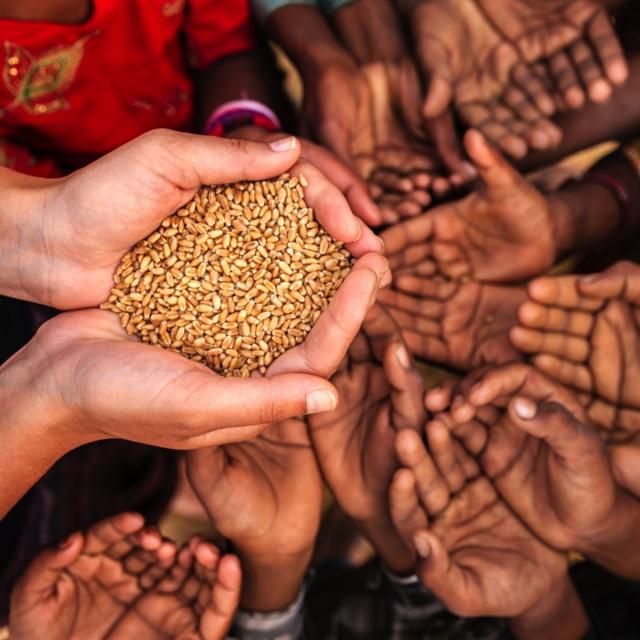
Our society depends on the availability of food and accessibility to it. According to the United Nations nearly 800 million people are hungry and on the other hand, over 650 million people are obese. While many people in developing countries experience food shortage, in industrialized countries people are throwing food away. These facts show how paradoxical and complex the world’s food problem is.

Class Deals by MOOC List - Click here and see Coursera's Active Discounts, Deals, and Promo Codes.

ln this course, more than 10 food researchers from Utrecht University will address the main issues of food consumption. They will handle two interrelated themes; Food shortage and Healthy choices. You will learn to identify the key ingredients of the world’s food challenges and to think about the solutions for enabling changes in the current food system.
We will also look at the possible sustainable solutions for several accut issues: the demands of the growing human population, the role of nutrition, and the need to understand food choices in order to have healthier diet and consider the possibilities of alternative foods.
We invite you to join us on an interdisciplinary journey through the world food problems. You will gain new knowledge and insights that will help you form your own opinion on these subjects and make better choices in your food consumption.
We hope you will enjoy the course!

Syllabus

WEEK 1
Introduction Future Food & Food Shortage Part I

WEEK 2
Food Shortage Part II: Sustainable solutions

WEEK 3
Healthy Choices Part I: Food & Health

WEEK 4
Healthy Choices Part II: Food-related behavior and interventions

WEEK 5
An interdisciplinary approach to food

Go to Class
MOOC List is learner-supported. When you buy through links on our site, we may earn an affiliate commission.

Related Courses

Water Supply and Sanitation Policy in Developing Countries Part 1: Understanding Complex Problems (Coursera) Coursera
University of Manchester

Water Supply and Sanitation Policy in Developing Countries Part 1: Understanding Complex Problems (Coursera)

Our course explores what can be done to solve the complex problem that half a billion people worldwide do not have improved water supplies and two billion do not have improved sanitation. We look forward to you joining us. We want to help you develop the skills you need to address this major global challenge of the 21st century.

Jun 8th 2026
5-12 Weeks
Genomics: Decoding the Universal Language of Life (Coursera) Coursera
University of Illinois at Urbana-Champaign

Genomics: Decoding the Universal Language of Life (Coursera)

What is a genome? A genome contains all of the information that a cell needs to develop, function, and reproduce itself, and all the information needed for those cells to come together to form a person, plant, or animal. Genomes contain an organism’s complete set of genes, and also the even tinier genetic structures that help regulate when and how those genes are used. The ability to regrow a torn ligament, the clues that might predict the onset of mental illness, the nutritional potential of crops, and even the history of life itself, are all encoded in genomes. By taking this course, you will discover how scientists are deciphering the language of genomes to learn how to develop sustainable food and fuel supplies, improve disease treatment and prevention, and protect our environment.

Jun 8th 2026
5-12 Weeks
HI-FIVE: Health Informatics For Innovation, Value & Enrichment (Administrative/IT Perspective) (Coursera) Coursera
Columbia University

HI-FIVE: Health Informatics For Innovation, Value & Enrichment (Administrative/IT Perspective) (Coursera)

HI-FIVE (Health Informatics For Innovation, Value & Enrichment) Training is an approximately 10-hour online course designed by Columbia University in 2016, with sponsorship from the Office of the National Coordinator for Health Information Technology (ONC). The training is role-based and uses case scenarios. No additional hardware or software are required for this course. Our nation’s healthcare system is changing at a rapid pace.

Jun 8th 2026
4 Weeks
Health Across the Gender Spectrum (Coursera) Coursera
Stanford University

Health Across the Gender Spectrum (Coursera)

This course offers an intimate, story-based introduction to the experiences of six transgender children and their families. Through illustrated stories and short teaching videos, learners will gain a better understanding of gender identity and the gender spectrum. Stanford physicians, K-12 educators, and transgender faculty members offer practical tips for parents, teachers, healthcare providers and anyone who wants to help create a more gender-expansive environment - one in which all people can live authentically. As a global community of unique individuals, we can begin to build a world that is ready to nurture and love each and every child.

Jun 8th 2026
3 Weeks
An Introduction to Global Health (Coursera) Coursera
University of Copenhagen

An Introduction to Global Health (Coursera)

This course will provide you with an overview of the most important health challenges facing the world today. You will gain insight into how challenges have changed over time, we will discuss the likely determinants of such changes and examine future projections. Successful international strategies and programs promoting human health will be highlighted and global health governance structures will be mapped and the role of the key actors explored.

Jun 8th 2026
5-12 Weeks
Introduction to Sustainability (Coursera) Coursera
University of Illinois at Urbana-Champaign

Introduction to Sustainability (Coursera)

This course introduces the academic approach of Sustainability and explores how today’s human societies can endure in the face of global change, ecosystem degradation and resource limitations. The course focuses on key knowledge areas of sustainability theory and practice, including population, ecosystems, global change, energy, agriculture, water, environmental economics and policy, ethics, and cultural history.

Jun 8th 2026
5-12 Weeks
Energy, Environment, and Everyday Life (Coursera) Coursera
University of Illinois at Urbana-Champaign

Energy, Environment, and Everyday Life (Coursera)

This course teaches you everything you need to know about energy, the environment, and at least a number of things in everyday life. It starts by talking about energy itself and where it comes from. This includes how much we have, who has it, who uses it, and what that all means. The video clips are produced in a fast-paced multimedia format during which Professor Ruzic throws in fun and demonstrations. There are multiple-choice questions to check your understanding and some more in-depth exercises to guide you deeper into the subject.

Jun 8th 2026
5-12 Weeks
Securing Investment Returns in the Long Run (Coursera) Coursera
University of Geneva

Securing Investment Returns in the Long Run (Coursera)

In this course, you will learn about the famous dichotomy between active and passive investing, how to appropriately measure and analyze investment performance and what the future trends in the investment management industry are. You will first learn about absolute and relative performance, risk-adjusted returns and how to decompose investment performance. The focus will then shift to the two main categories of investment vehicles, active and passive funds, and what they entail in terms of expected performance.

Jun 8th 2026
4 Weeks
Beyond the Sustainable Development Goals (SDGs): Addressing Sustainability and Development (Coursera) Coursera
University of Michigan

Beyond the Sustainable Development Goals (SDGs): Addressing Sustainability and Development (Coursera)

We’re excited you’re here! This course, “Beyond the Sustainable Development Goals (SDGs): Addressing Sustainability and Development,” is the first course in the upcoming Sustainability and Development MasterTrack Certificate program (Fall 2020), but you can also take this course as a stand-alone learning opportunity.

Jun 10th 2026
5-12 Weeks
Introduction to the Biology of Cancer (Coursera) Coursera
Johns Hopkins University

Introduction to the Biology of Cancer (Coursera)

Over 500,000 people in the United States and over 8 million people worldwide are dying every year from cancer. As people live longer, the incidence of cancer is rising worldwide and the disease is expected to strike over 20 million people annually by 2030. This open course is designed for people who would like to develop an understanding of cancer and how it is prevented, diagnosed, and treated.

Jun 8th 2026
5-12 Weeks
Public Involvement in Research (Coursera) Coursera
Imperial College London

Public Involvement in Research (Coursera)

This course focuses on participatory approaches in research, known as 'public involvement' in the UK. You'll specifically, consider why citizens and patients would be involved in research and explore participatory approaches across and within the research cycle in more detail, diving into questions such as: What kinds of participation can be undertaken at each of the 7 stages of the cycle? How can you utilise participation in research? What examples of using participatory approaches exist in research?

Jun 10th 2026
4 Weeks
Oil & Gas Industry Operations and Markets (Coursera) Coursera
Duke University

Oil & Gas Industry Operations and Markets (Coursera)

The oil and gas industry has an enormous impact on all aspects of daily life. Individuals, corporations, and national governments make financial and policy decisions based on the cost, use, and availability of these two natural resources. This two-week course looks at the two most fundamental aspects of the oil and gas industry, its operations and markets, each of which is addressed as a separate module in the course.

Jun 10th 2026
2 Weeks