Great program managers understand and heal bad communication habits and conflicts that arise within project teams and stakeholders. Learn how by leveraging emotional and cultural intelligence using the Coordinated Management of Meaning (CMM). Every program and project has a social world. The program managers, project managers, project teams, and stakeholders mutually agree on roles and interact based on those roles.
Class Deals by MOOC List - Click here and see EdX's Active Discounts, Deals, and Promo Codes.
Great program managers sense, manage, and influence the social worlds across their projects. They bring order and understanding through conflict management and conflict resolution. Success is not guaranteed, and often teams clash as a new social order is established on every project. They heal divides that can grow under the stress of projects and increase the team’s problem solving ability.
Dr. Pearce, the inventor of the Coordinated Management of Meaning (CMM), explains the social world as a “dance between the two faces of the communication process: coordinating actions and making/managing meaning. A social world is the site where speech acts, episodes and forms of communication, selves and forms of consciousness, and relationships and minds are made.”
Our cultural differences and emotions significantly shape our social worlds.
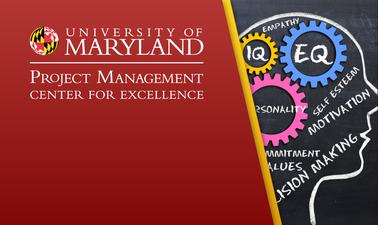
The program and project manager with good emotional intelligence and cultural intelligence (EI/CI) can better understand and navigate the social worlds of the project team and the stakeholders. High EI/CI also aids in creating understanding in program/project management communications. A program manager or project manager with high EI/CI is more adept at creating understanding because they are self-aware while understanding other’s emotions.Thus, the program manager or project manager can test if the recipient of his or her communication has the requisite know-what, know-how, and know-why understanding of the intended messages.
Program managers and project managers with high EI/CI will be perceived as having a high ethos. Team members will see the high emotional intelligence and cultural intelligence even in the manager’s nonverbal communication. Being more aware of our feelings and other people’s feelings helps enhance our connection to others and make us more credible. Program managers and Project managers with high EI/CI can use pathos more effectively and make the logos portion of their communication more effective. The right balance of ethos, pathos, and logos makes the project manager more persuasive.
Along with increasing the program manager or project manager’s EI/CI, this course will aid the manager in using the tools of CMM. Dr. Pearce created Coordinated Management of Meaning (CMM) in the mid-1970s. Over the years, CMM practitioners have created methods and tools to make the communication perspective visible. One such tool is SEAVA, which is an acronym for Storyboarding, Enriching, Analyzing, Visioning, and Acting. You can use the SEAVA tool to examine communication problems among your project team members and to generate a solution.
Understanding the different social worlds of your program and its project team members and stakeholders will help you create persuasive communications, have a positive impact, and increase understanding among the project team members and stakeholders. CMM will help you become a master of communication and persuasion.
This course is part of the Program Management and the Art of Communication Professional Certificate.
What you'll learn
- Social worlds in the context of programs and projects.
- Cultural intelligence and the four steps.
- Emotional intelligence and its five components.
- How to utilize cultural intelligence and emotional intelligence concepts to increase the effectiveness of your program or project management communication.
- How to utilize the CMM tools to diagnose and manage communication problems.
Syllabus
Week One - Emotional Intelligence
Module One - Defining Emotional Intelligence (EI)
Module Two - EI Components One and Two - Self-Perception and Self-Expression
Module Three - EI Component Three - Interpersonal
Module Four - EI Component Four - Decision Making
Module Five - EI Components Five - Stress Management
Week Two - Cultural Intelligence
Module One - Defining Cultural Intelligence (CI)
Module Two - CI Component One - Drive
Module Three - CI Component Two - Knowledge
Module Four - CI Component Three - Strategy
Module Five - CI Component Four - Action
Week Three - The Coordinated Management of Meaning
Module One - What is CMM?
Module Two - Taking the Communication Perspective
Module Three - Social Worlds
Module Four - The Tools of CMM
Module Five - Preparing to Use CMM
Week Four - The CMM Tools
Module One - SEAVA - Part One: Storyboarding and Enriching
Module Two - The LUUUTT Tool for Enriching
Module Three - SEAVA - Part Two: Analyzing and Visioning
Module Four - SEAVA - Part Three: Acting Intentionally
Module Five - SEAVA In Action: Diagnosing a Team Conflict