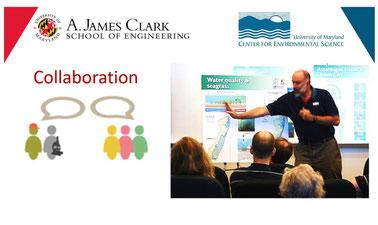
Co-produce outcomes on your environmental projects by effectively engaging and motivating diverse communities to work towards shared environmental goals. In this course you’ll learn about the power of leveraging transdisciplinary (TD) approaches to plan, implement, and govern the co-design of solutions to complex environmental problems impacting environmental justice and public health.
Class Deals by MOOC List - Click here and see EdX's Active Discounts, Deals, and Promo Codes.
First, starting with the TD framework, we can frame and initiate conversations across multiple, geographically dispersed groups and begin to organize a co-designed vision for sustainable outcomes that can be updated and maintained with adaptive governance.
Organizing the group of key stakeholders will require a shared vision. National Park Groups, existing environmental justice organizations, land preservation groups, and grassroots environmental initiatives all share a desire of environmental justice. Whether your topic is environmental protection, climate change, air pollution, landfills, natural resources, pesticides, toxic waste, or the general environmental health of your local communities. That’s why storytelling will be reintroduced from course one in this series to ensure you as a project manager can create compelling visions that are easy to remember, understand, and convey important information about complex topics for positive project outcomes. Storytelling can illustrate the need for fair treatment, regulatory solutions, and addressing the impacts of inequity on communities of color and low-income communities. Then it’ll be time to capture and roadmap the vision, the way we move our current state to the co-designed outcomes creating value at each step along the way. Then establish a decentralized, agile decision-making process to enable its realization, as well as a means of managing input and discoveries across dispersed groups to include areas susceptible to environmental hazards and areas impacted by environmental injustices, with inclusion of low-income, underserved, people of color and working toward environmental quality and sustainability.
Next, using outreach to address environmental justice, we’ll teach management of big events - a series of critical workshops that can bring all interested parties, decision makers, and stakeholders together to create the shared outcome. Through effective tools like collaborative learning we can engage stakeholders with the information they need to help build the shared vision for fair land use and environmental justice. However, collaborating with diverse stakeholders and influencing public engagement is often challenging, especially when addressing as overburdened groups that can have conflicting interests or perspectives on social justice and civil rights for everyone to have a healthy environment. Therefore, we also cover managing conflicts and how to find ways to resolve them in order to move forward with the project.
With solid plans and agreement, there will still be risks to identify, escalate, and manage across the complex stakeholder groups. The environmental justice movement begins with meaningful involvement, a focus on the environmental issues, clear communication, engaging all communities impacted - reducing inequity - and co-designing a vision for sustainable outcomes and environmental health. This course will wrap with a discussion on how to incorporate risk identification and action planning across a complex group to help successful navigate through execution and achieve lasting sustainable change.
This course is part of the Environmental Project Management: Co-Creating Sustainable Solutions Professional Certificate.
What you'll learn
- Identify and target different groups of stakeholders for environmental management projects
- Develop a shared vision for environmental outcomes with diverse stakeholders
- Collaborate, manage conflicts and employ persuasion and presence with diverse stakeholders in person, and in a virtual or hybrid work environments
- Embrace digital approaches with stakeholder engagement practices
- Drive stakeholders to a co-production mode of collaboration that can span geographical boundaries
Syllabus
Module 1 Stakeholder engagement and environmental management
Why stakeholder engagement?
Classifying problems
Socio-environmental systems
Transdisciplinary approaches
Planning and implementing
Adaptive governance
Module 2 Creating a shared vision for greater outcomes
Enabling conditions
Stakeholder analysis
Envisioning & Evangelizing, Incomplete
Product Strategy & Roadmaps, Incomplete
Designing Decisions
Going slow to go fast
Knowledge Management
Module 3 Tools for engagement
Collaborative learning
Workshop Planning (Including virtual)
Facilitation and engagement
Ethnographic approaches
Identifying Values and Threats (IAN tools)
Socio-environmental Tools
Causal loop diagrams
Social Network Analysis
Managing stakeholder with stories - Finding stories that resonate
Module 4 Managing conflict
Emotional intelligence 1
Cultural intelligence 1
Coordinated Management of Meaning
CMM Tools
Persuasion and presence 1
Persuasion and presence 2
Module 5 Risk management, evaluation and maintaining relationships
Negotiation Field Guide
Advanced Negotiation Techniques
Basics of risk management
Telling risk management stories
Evaluating TD approaches
Theory of change
Using stories to capture lessons learned for programs