EdX

Models in Architecture – design through physical & digital models (edX)

Models in Architecture – design through physical & digital models (edX)

Learn to develop your architectural designs by using scale models as well as Virtual Reality representations. Physical and digital design skills are key to practitioners in art, design, and engineering, as well as many other creative professions. Models are essential in architecture. In design practice all kinds of physical scale models and digital models are used side by side.

Class Deals by MOOC List - Click here and see EdX's Active Discounts, Deals, and Promo Codes.

In this architecture course, you will gain experience that will help and inspire you to advance in your personal and professional development. You will attain skills in a practical way. First, we will focus on sketch models for the early stages of a design process, then we will continue with virtual representations for design communication and finally more precise and detailed models will be used for further development of the ideas.
In the theoretical part of the course, you will learn about many different sorts of models: how architects use these and how they are essential in the design process.
The practical part of the course addresses a number of challenges. In small steps we will guide you through technical and creative difficulties in exciting, playful, and pleasant ways.

What you'll learn

  • Creative Thinking: learn how to develop an architectural idea by using physical and digital models.
  • Design Knowledge: explore ‘the concept of scale’ to relate to context and to further develop details.
  • Learning by Doing: experiment to get a sense for spatial composition, materials and ergonomics.
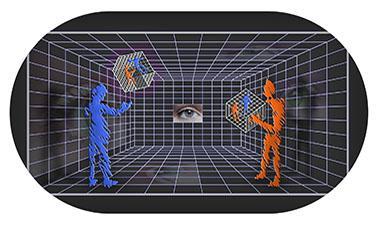
  • Digital Technology: experience the potential of Virtual and Augmented Reality in architectural design.

Syllabus

Week 1: Your Dream House
Create a simple scale model for your dream house.

Week 2: Models OF & Models FOR
Create and present a 3D digital model of your scale model by using photogrammetry.

Week 3: Scale & Context
Create a simple scale model of the setting of your dream house and make a 360-degree background image.

Week 4: Scale & Detail
Create a simple CAD model for a detail of your dream house and present it with annotations.

Week 5: The Whole Picture
Develop a presentation blog with images and an embedded 3D model or a link to your online 3D model.

Week 6: Your Model Exhibition
Pose questions to your fellow learners. Take on the role of the client, while they serve as the architects – and the other way around.
Though all six steps may sound challenging, the course instructions will guide you through and build your confidence.
You will need some simple tools like scissors, glue and scrap materials. To develop the digital models, we selected free software that runs on a laptop or desktop computer. You will also need a smartphone with a camera.

Go to Class
MOOC List is learner-supported. When you buy through links on our site, we may earn an affiliate commission.

Related Courses

Digital Transformation Strategy: Discovering and Reaching New Markets (edX) EdX
University of Maryland, College Park,University System of Maryland - USM,USMx,UMD

Digital Transformation Strategy: Discovering and Reaching New Markets (edX)

Learn key concepts of strategy, IT, and Innovation to bring emerging technologies to market through digital channels. This course is different – it’s a sample of the most important key concepts and techniques needed to develop digital strategies and bring them to market.

Self Paced
Self-Paced
Interpreting Vernacular Architecture in Asia (edX) EdX
University of Hong Kong,HKUx

Interpreting Vernacular Architecture in Asia (edX)

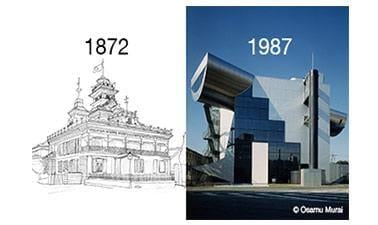
Discover the value of local peoples' traditional built environments in Asia, find inspiration in these buildings, and learn how to conserve them for future generations. This course is about architecture. But it’s not about grand structures such as monuments or royal palaces. Rather, it is about the built environment that the ordinary people live in. Instead of the architectural techniques, we use stories to understand the processes through which people make their building decisions.

Self Paced
Self-Paced
Cultural Heritage in Transformation (edX) EdX
RWTH Aachen,RWTHx

Cultural Heritage in Transformation (edX)

Learn how to define, explore, conserve, utilize and manage cultural heritage. In recent decades the sustainable conservation of cultural heritage has become a crucial global challenge. In this context, the trend towards largescale urbanization raises questions as to how new development can take place which respects and maintains the intrinsic values and unique qualities which have been handed down from previous generations, particularly within urban areas.

Self Paced
Self-Paced
Revit for Structural Engineers (edX) EdX
University System of Maryland - USM,USMx

Revit for Structural Engineers (edX)

Learn how to model basic building structural systems in Autodesk Revit. Building Information Modeling (BIM) has initiated a sea change in the way that buildings are designed and constructed. Old methods rooted in two-dimensional thinking have been pushed aside to make way for new three-dimensional approaches that leverage the latest advancements in computing technology.

Self Paced
Self-Paced
Leaders of Learning (edX) EdX
HarvardX,Harvard University

Leaders of Learning (edX)

Explore and understand your own theories of learning and leadership. Gain the tools to imagine and build the future of learning. All of us carry explicit or implicit theories of learning. They manifest themselves in the ways we learn, the ways we teach, and the ways we think about leadership and learning. In Leaders of Learning, you will identify and develop your personal theory of learning, and explore how it fits into the shifting landscape of learning. This isn’t just about schools, it’s about the broader and bigger world of learning.

Self Paced
Self-Paced
Sustainable Urban Development (edX) EdX
Wageningen University,Delft University of Technology,DelftX,WageningenX

Sustainable Urban Development (edX)

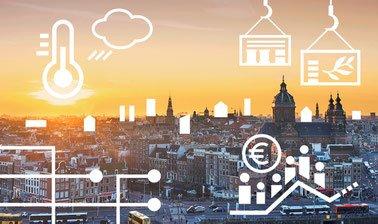
Learn why cities are key in resolving global urbanization and sustainability challenges and how you can engineer tomorrow’s cities today. Did you know that cities take up less than 3% of the earth’s land surface, but more than 50% of the world’s population live in them? And, cities generate more than 70% of the global emissions? Large cities and their hinterlands (jointly called metropolitan regions) greatly contribute to global urbanization and sustainability challenges, yet are also key to resolving these same challenges.

Self Paced
Self-Paced