EdX

The Architectural Imagination (edX)

The Architectural Imagination (edX)

Learn fundamental principles of architecture — as an academic subject or a professional career — by studying some of history’s most important buildings. Architecture engages a culture’s deepest social values and expresses them in material, aesthetic form. This course will teach you how to understand architecture as both cultural expression and technical achievement. Vivid analyses of exemplary buildings, and hands-on exercises in drawing and modeling, will bring you closer to the work of architects and historians.

Class Deals by MOOC List - Click here and see EdX's Active Discounts, Deals, and Promo Codes.

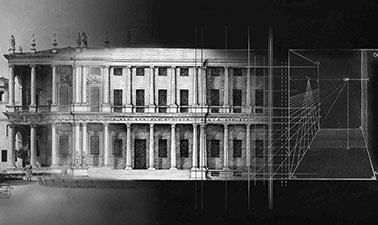
The first part of the course introduces the idea of the architectural imagination. Perspective drawing and architectural typology are explored and you will be introduced to some of the challenges in writing architectural history.
Then we address technology as a component of architecture. You will discover ways that innovative technology can enable and promote new aesthetic experiences, or disrupt age-old traditions. Technological advances changed what could be built, and even what could even be thought of as architecture.
Finally, we'll confront architecture’s complex relationship to its social and historical contexts and its audiences, achievements, and aspirations. You will learn about architecture’s power of representation and see how it can produce collective meaning and memory.
Architecture is one of the most complexly negotiated and globally recognized cultural practices, both as an academic subject and a professional career. Its production involves all of the technical, aesthetic, political, and economic issues at play within a given society. Join us as we examine how architecture engages, mediates, and expresses a culture’s complex aspirations.
This course is eligible for American Institute of Architects (AIA) continuing education units (CEUs). Enroll in the course to learn more about options for earning credit.

What you'll learn:

  • How to read, analyze, and understand different forms of architectural representation
  • Social and historical contexts behind major works of architecture
  • Basic principles to produce your own architectural drawings and models
  • Pertinent content for academic study or a professional career as an architect

Syllabus

Part I: Form and History
Module 1: The Architectural Imagination: An Introduction
Module 2: Reading Architecture: Column and Wall
Module 3: Hegel and Architectural History
Module 4: Aldo Rossi and Typology

Part II: The Technology Effect
Module 5: The Crystal Palace: Infrastructure and Detail
Module 6: The Dialectics of Glass and Steel
Module 7: Technology Tamed: Le Corbusier’s Machines for Living

Part III: Representation and Context
Module 8: Drawing Utopia: Visionary Architecture of the 18th Century
Module 9: The Pompidou Center in the City of Paris
Module 10: Presenting the Unrepresentable


Go to Class
MOOC List is learner-supported. When you buy through links on our site, we may earn an affiliate commission.

Related Courses

Sustainability in Architecture: An Interdisciplinary Introduction (edX) EdX
Universitat Politècnica de València,UPValenciaX

Sustainability in Architecture: An Interdisciplinary Introduction (edX)

This course introduces the basic elements and trends that define sustainability practices in Architecture today. It follows an interdisciplinary approach that includes performance assessment and urban policies. This course offers an interdisciplinary approach to sustainability in Architecture. Learners will be introduced to the basic elements of sustainability assessments (first model layer), as well as trends informing the space today.

Self Paced
Self-Paced
Coexistence in Medieval Spain: Jews, Christians, and Muslims (Coursera) Coursera
University of Colorado System

Coexistence in Medieval Spain: Jews, Christians, and Muslims (Coursera)

This course explores Jewish, Christian, and Muslim intercultural relations in Iberia from the Visigothic era (6th century CE) until the creation of Queen Isabel I and King Ferdinand II Catholic Spain (late 15th century). We evaluate the many identities of the peninsula known as Christian Hispania, Jewish Sefarad, and Islamic al-Andalus. We trace the origins and trajectory of conflict between these communities (the Muslim conquest of Spain, Christian Reconquista, prohibitions blocking intermixing of peoples, and expulsions).

Jun 22nd 2026
5-12 Weeks
Railway History: The Rise of the Railway Station (FutureLearn) FutureLearn
University of Strathclyde

Railway History: The Rise of the Railway Station (FutureLearn)

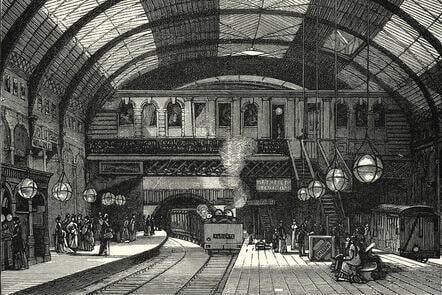
Gain a unique insight into British history as you explore the heritage and uses of railway stations from the 19th century to now. Go behind the scenes of York Railway Museum with the University of Strathclyde. Railway stations are an integral part of British history, helping to shape the economy and Britain’s built environment. On this four-week course, you’ll discover the heritage of railway stations and their significance in British history and culture.

May 1st 2023
4 Weeks
Four Facets of Contemporary Japanese Architecture: Theory (edX) EdX
The University of Tokyo,UTokyoX

Four Facets of Contemporary Japanese Architecture: Theory (edX)

Learn the history, ideas and concepts behind contemporary Japanese architecture through four architectural facets and five generations of architects. This series will explore four facets of contemporary Japanese architecture; theory, technology, city, and humans. It will also span five generations of architects since Kenzo Tange. Through lectures by instructors and discussions with the most influential Japanese architects, the course will trace the development of contemporary Japanese architecture and will consider its future direction.

Self Paced
Self-Paced
Autodesk Certified Professional: Revit for Structural Design Exam Prep (Coursera) Coursera
Autodesk

Autodesk Certified Professional: Revit for Structural Design Exam Prep (Coursera)

Prove to potential employers that you’re up to the task by becoming an Autodesk Certified Professional. This online course from Autodesk® introduces you to the advanced features of Revit™ for Structure, a tool to support Building Information Modeling and delivery of 3D digital models and related documentation. The course prepares you by offering an overview of skills that match what is covered on the Autodesk Certified Professional: Revit for Structural Design exam.

Jun 24th 2024
2 Weeks
Experiencing Malaysian Architecture (OpenLearning) OpenLearning
Taylor's University

Experiencing Malaysian Architecture (OpenLearning)

The MOOC “Experiencing Malaysian Architecture” introduces the diverse approaches to contemporary Malaysian architecture, and explores the rhetorical questions on Malaysian architecture and identity. It emphasizes on the theoretical and design rigor within the process of design through the documentation, analysis and discussion of Malaysian architecture.

Self Paced
Self-Paced
Structures en architecture (FUN) FUN
Ecole Nationale Supérieure d’Architecture de Montpellier

Structures en architecture (FUN)

Ce MOOC est une introduction aux notions de base de mécanique des structures en architecture. L’équipe pédagogique a souhaité renouveler l’approche de l’enseignement des structures en tenant compte des profonds changements en matière d’apprentissage des étudiants, mais elle n’en a pas pour autant abandonné les exigences de rigueur indispensables aux notions abordées. Cette approche est sensible et progressive, et partira des propres intuitions de chacun pour aller étape par étape vers la compréhension des phénomènes physiques en jeu.

Nov 14th 2022
5-12 Weeks
Design: Creation of Artifacts in Society (Coursera) Coursera
University of Pennsylvania

Design: Creation of Artifacts in Society (Coursera)

This is a course aimed at making you a better designer. The course marries theory and practice, as both are valuable in improving design performance. Lectures and readings will lay out the fundamental concepts that underpin design as a human activity. Weekly design challenges test your ability to apply those ideas to solve real problems.

Mar 30th 2026
5-12 Weeks