FUN

Structures en architecture (FUN)

Structures en architecture (FUN)

Ce MOOC est une introduction aux notions de base de mécanique des structures en architecture. L’équipe pédagogique a souhaité renouveler l’approche de l’enseignement des structures en tenant compte des profonds changements en matière d’apprentissage des étudiants, mais elle n’en a pas pour autant abandonné les exigences de rigueur indispensables aux notions abordées. Cette approche est sensible et progressive, et partira des propres intuitions de chacun pour aller étape par étape vers la compréhension des phénomènes physiques en jeu.

Chaque développement théorique est mis en lien avec des exemples de structures réelles, des expériences de la vie quotidienne. Le cours exploite toutes sortes de modèles, qu’il s’agisse de structures existantes, de simulations numériques, ou de maquettes pédagogiques.

Format
Chaque session est composée de 8 séquences de 8 semaines et la participation hebdomadaire demandée des inscrits est de 2h30 à 3h. Chaque semaine, sauf la semaine 7 et la semaine 8 dédiées aux bilans aborde une thématique particulière et comprend de 3 à 7 cours vidéo, des quiz, et des activités dont deux co-évaluées. Une attestation de suivi avec succès à l’issue des 8 semaines est délivrée à toute personne ayant participé aux évaluations (quiz et activités de co-évaluation).
Ce MOOC est "joué" c’est-à-dire animé, encadré du lundi 14 septembre au vendredi 13 novembre 2020. Tous ceux qui souhaitent obtenir une attestation de réussite doivent impérativement s’inscrire avant le vendredi 26 septembre 2020 à 20h. Les ressources pédagogiques sont en libre accès pour toute personne voulant apprendre à son rythme sans avoir à respecter les échéances demandées pour les deux activités de co-évaluation. Dans ce cas, aucune attestation de suivi avec succès ne pourra être délivrée.

Types d'activités proposées
Les activités proposées sont diverses selon les séquences : productions à faire évaluer par les pairs, exercices d'entrainement, échanges sur les forums, participation au glossaire. Le calcul n'intervient qu'à la toute fin de la dernière séquence.

Prérequis
Ce cours s’adresse aux étudiants des écoles d’architecture en début de cursus et leur permet d'acquérir les notions indispensables à toute démarche de conception qui tienne compte des enjeux structurels dès les premières idées et esquisses. Il s’adresse également à tous ceux qui sont curieux de comprendre les phénomènes qui ont inspiré dès l’origine les fascinantes structures des architectes. Les prérequis sont ceux d'un niveau fin de lycée.

Plan du cours

Semaine 0 : Découverte de l'environnement de formation
Semaine 1 : Structure et architecture
Semaine 2 : Fonctions structurelles : "franchir"
Semaine 3 : Fonctions structurelles : "Porter", "contreventer", "Fonder"
Semaine 4 : Fonction "franchir"
Semaine 5 : Fonction "Porter" et "Fonder"
Semaine 6 : Fonction "contreventer"
Semaine 7 : Bilan, restitutions des productions finales. Descente de charges ( en option )
Semaine 8 : quiz final

Lectures recommandées
Introductions générales à la mécanique des structures :

Ouvrage méthodologique général :

Go to Class
MOOC List is learner-supported. When you buy through links on our site, we may earn an affiliate commission.

Related Courses

BIM: from sketch to digital twin (Coursera) Coursera
Peter the Great St. Petersburg Polytechnic University

BIM: from sketch to digital twin (Coursera)

If you want to master the basic tools of the modern design and civil engineer and to look into the future of architectural design, construction and maintenance of buildings, this course is for you. Building information models and digital twins became a necessity in planning, design, building design and building operations. During the course, you will acquire basic building information modeling skills, create your own project, learn how to draw up architectural and construction drawings and develop a construction schedule using modern software systems such as Autodesk Revit and Navisworks. As you explore advanced BIM tools, you will learn how to script in Dynamo and how to collaborate on projects and construction in BIM360.

Jul 18th 2022
5-12 Weeks
The Architectural Imagination (edX) EdX
HarvardX,Harvard University

The Architectural Imagination (edX)

Learn fundamental principles of architecture — as an academic subject or a professional career — by studying some of history’s most important buildings. Architecture engages a culture’s deepest social values and expresses them in material, aesthetic form. This course will teach you how to understand architecture as both cultural expression and technical achievement. Vivid analyses of exemplary buildings, and hands-on exercises in drawing and modeling, will bring you closer to the work of architects and historians.

Self Paced
Self-Paced
Caer o No caer. El secreto de las estructuras (edX) EdX
Universidad Carlos III de Madrid - UC3M,UC3Mx

Caer o No caer. El secreto de las estructuras (edX)

Las estructuras están presentes en todos los sistemas que nos rodean. Descubrirlas y comprender cómo funcionan es sencillo y fascinante. Las estructuras están implicadas en nuestras vidas: las plantas, los animales, casi todo lo que fabrica el ser humano, incluso nuestro propio cuerpo, deben soportar una serie de fuerzas sin romperse, y por lo tanto prácticamente cualquier elemento de nuestro entorno es una estructura de una clase u otra.

Self Paced
Self-Paced
Railway History: The Rise of the Railway Station (FutureLearn) FutureLearn
University of Strathclyde

Railway History: The Rise of the Railway Station (FutureLearn)

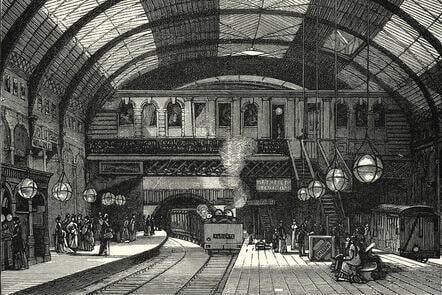
Gain a unique insight into British history as you explore the heritage and uses of railway stations from the 19th century to now. Go behind the scenes of York Railway Museum with the University of Strathclyde. Railway stations are an integral part of British history, helping to shape the economy and Britain’s built environment. On this four-week course, you’ll discover the heritage of railway stations and their significance in British history and culture.

Self Paced
4 Weeks
Service-Oriented Architecture (Coursera) Coursera
University of Alberta

Service-Oriented Architecture (Coursera)

Based on an understanding of architectural styles, you will review architectures for web applications, then explore the basics of Service-Oriented Architecture (SOA) in two approaches: Web Services (WS*) and Representational State Transfer (REST) architecture. In the Capstone Project you will connect a Java-based Android application with Elasticsearch, a web service with a REST application programmer interface (API).

Jul 27th 2026
4 Weeks
Making Architecture (Coursera) Coursera
IE Business School,IE School of Architecture & Design

Making Architecture (Coursera)

Making architecture offers a unique insight into the mind and work of an Architect, starting with the basics of the profession and culminating with the production of a scaled site model. The course should act as ideal preparation for those interested in undertaking an undergraduate degree in Architecture, although its flexible, intriguing and enjoyable content makes it accessible for all those looking to increase their knowledge in the field.

Jul 20th 2026
4 Weeks
Autodesk Certified Professional: Revit for Structural Design Exam Prep (Coursera) Coursera
Autodesk

Autodesk Certified Professional: Revit for Structural Design Exam Prep (Coursera)

Prove to potential employers that you’re up to the task by becoming an Autodesk Certified Professional. This online course from Autodesk® introduces you to the advanced features of Revit™ for Structure, a tool to support Building Information Modeling and delivery of 3D digital models and related documentation. The course prepares you by offering an overview of skills that match what is covered on the Autodesk Certified Professional: Revit for Structural Design exam.

Jun 24th 2024
2 Weeks
Software Architecture (Coursera) Coursera
University of Alberta

Software Architecture (Coursera)

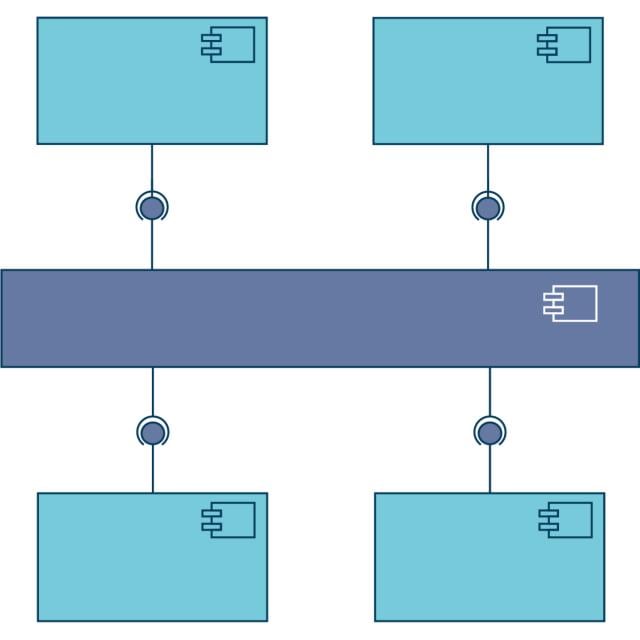
The way that software components — subroutines, classes, functions, etc. — are arranged, and the interactions between them, is called architecture. In this course you will study the ways these architectures are represented, both in UML and other visual tools. We will introduce the most common architectures, their qualities, and tradeoffs. We will talk about how architectures are evaluated, what makes a good architecture, and an architecture can be improved. We'll also talk about how the architecture touches on the process of software development.

Jul 27th 2026
4 Weeks
The Engineering of Structures Around Us (edX) EdX
DartmouthX,Dartmouth College

The Engineering of Structures Around Us (edX)

Explore how engineers design bridges and buildings in our communities and iconic structures around the world. In this introductory course, you’ll learn some engineering principles that can be applied to structural systems everywhere: in nature, in furniture, in mechanical and aerospace systems, and in any solid object that resists a load. Together we’ll explore how structures work, why they were designed the way they were designed, how they support loads, and where forces flow through them.

Self Paced
Self-Paced