Age of Cathedrals (Coursera)

Offered by Yale University,
Age of Cathedrals (Coursera)

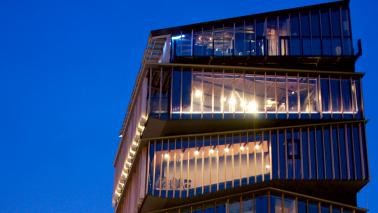
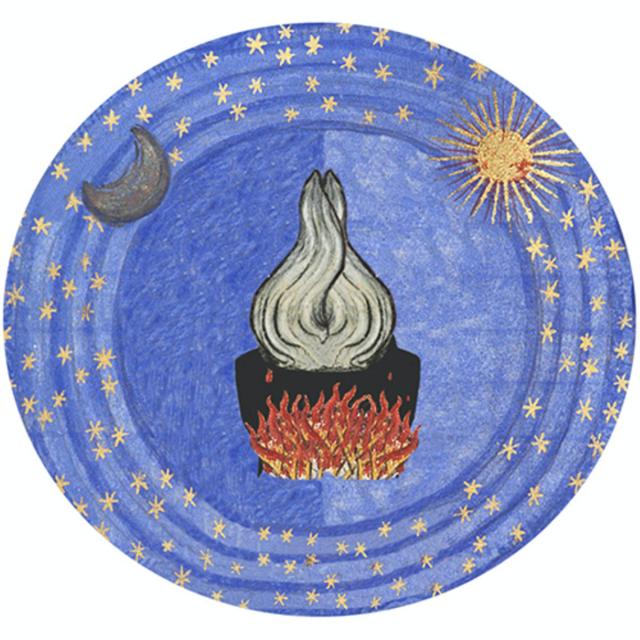
An introduction to some of the most astonishing architectural monuments the world has ever known—Gothic cathedrals. We shall study the art, literature, intellectual life, economics, and new social arrangements that arose in the shadow of the cathedrals and that were such an important part of the revival of cities in the twelfth and thirteenth centuries. The goal of the course is a better appreciation of the High Middle Ages, a world that is still recognizably our own.

Class Deals by MOOC List - Click here and see Coursera's Active Discounts, Deals, and Promo Codes.

Syllabus

WEEK 1
Introduction & Saint-Denis I
An introduction to the history of Paris in the centuries of chaos following the death of Charlemagne in 814 and the building of the first Gothic cathedral at Saint-Denis, just north of Paris. The old abbey church, where the kings of France were buried, was inadequate, and so a new building project was undertaken by Abbot Suger, who financed the new building through efficient land management and the commercial Fair of Lendit along a trade route between northern and southern Europe.

WEEK 2
Saint-Denis
Here we encounter the portrait of Abbot Suger via his account of how and why he built Saint-Denis, what is portrayed on the West façade of the cathedral, and how the doctrine of God as light, encountered in a book which had come from Byzantium to the abbey centuries earlier, was translated into architectural form. We see some of the objects that are part of the treasury of Saint-Denis and discuss the Abbot’s notion of “anagogical uplift” as a way of moving—via stained glass—between the Old and New Testaments and from the material to the spiritual plane.

WEEK 3
Architectural Innovation
Filling in the background of Romanesque churches that preceded Gothic buildings, we discuss the origins and engineering innovations of the new style of religious architecture. These include ribbed vaults, reinforced pillars, pointed arches, flying buttresses, and a modular system of bay construction; all of which permits the construction of higher and lighter, thinner walls filled with stained glass.

WEEK 4
Notre Dame de Paris
Moving to the heart of Paris, we explore the initial construction of Notre-Dame and the innovations that were undertaken almost as soon as the building began. We discuss the sculptural programs of Notre-Dame’s West façade, including the portal which depicts the life of Saint Anne, Christ’s grandmother, and Mary, his mother and the central portal of the Last Judgment. Along the south side, we discover the story of the stoning of Saint Stephen; and, along the North, the miracle of Theophilus and the Virgin. Moving inside the cathedral, we encounter the stunning rose windows of Notre-Dame.

WEEK 5
Intellectual and Everyday Life
Here we examine the cathedral in terms of surrounding intellectual and everyday life. A reading of Peter Abelard’s autobiography, The Story of my Misfortunes, testifies to the growth of the scholastic method in the context of the earliest university culture; and two verse comic tales, “The Crucified Priest” and “The Peekaboo Priest” introduce the new mentality of the inhabitant of towns with emphasis on cleverness, quick thinking, and timing along with an anti-clerical spirit.

WEEK 6
Our Lady of Chartres
In Module 6 we move West of Paris to the cathedral of Chartres where Gothic architecture hits its stride. We explore the history of Chartres, its unique and mysterious architectural features, and its miraculous relic—the Holy Tunic. We discuss the financing of Chartres as seen in the windows donated by merchant which depict the various urban trades alongside the sculpture of the West façade, the rose and lancet stained glass windows, and the secular Zodiac and Charlemagne windows, the latter of which is linked to important literary works of the period.

WEEK 7
Cathedrals and Crusades
In Module 7 we examine in some detail The Song of Roland, portions of which are depicted in the stained glass of Chartres, and we explore the relationship of relics from the Middle East to cathedral building.

WEEK 8
Saints and Kings
In Module 8 we explore Saint Louis’s building of the Sainte-Chapelle in Paris as a house of glass, a new Ark of the Covenant, to house the relics he had amassed. Using Jean de Joinville’s Life of Saint-Louis as our source, we encounter the Saint King’s life as a crusader, his death, canonization, and the miracles performed by his body on his way to sainthood.

WEEK 9
Conclusion
By way of conclusion, we explore the history of Gothic cathedrals from the Middle Ages to the present.

Go to Class
MOOC List is learner-supported. When you buy through links on our site, we may earn an affiliate commission.

Related Courses

Architecting and Installing the Apigee Hybrid API Platform (Coursera) Coursera
Google Cloud

Architecting and Installing the Apigee Hybrid API Platform (Coursera)

This course introduces you to the fundamentals and practices used to install and manage Google Cloud's Apigee API Platform for hybrid cloud. Through a combination of lectures, hands-on labs, and supplemental materials, you will learn how to install and operate the Apigee API Platform. What you will learn: develop a good understanding of Apigee hybrid architecture; understand the Apigee hybrid terminology and organizational model; learn how to install and operate the hybrid platform.

Sep 21st 2026
2 Weeks
Interpreting Vernacular Architecture in Asia (edX) EdX
University of Hong Kong,HKUx

Interpreting Vernacular Architecture in Asia (edX)

Discover the value of local peoples' traditional built environments in Asia, find inspiration in these buildings, and learn how to conserve them for future generations. This course is about architecture. But it’s not about grand structures such as monuments or royal palaces. Rather, it is about the built environment that the ordinary people live in. Instead of the architectural techniques, we use stories to understand the processes through which people make their building decisions.

Self Paced
Self-Paced
Deciphering Secrets: The Illuminated Manuscripts of Medieval Europe (Coursera) Coursera
University of Colorado System

Deciphering Secrets: The Illuminated Manuscripts of Medieval Europe (Coursera)

Perhaps no other relic of the European Middle Ages captures our imagination more than illuminated medieval manuscripts, or those documents decorated with images and colored pigments. Serving as windows unto a lost world of kings, ladies, faith, war, and culture, they communicate complex visual and textual narratives of Europe’s collective cultural heritage and patrimony. In this fashion, illuminated manuscripts are dynamic messages from our communal past that are still relevant today in fields like graphic design and typography.

Jul 8th 2024
5-12 Weeks
Coexistence in Medieval Spain: Jews, Christians, and Muslims (Coursera) Coursera
University of Colorado System

Coexistence in Medieval Spain: Jews, Christians, and Muslims (Coursera)

This course explores Jewish, Christian, and Muslim intercultural relations in Iberia from the Visigothic era (6th century CE) until the creation of Queen Isabel I and King Ferdinand II Catholic Spain (late 15th century). We evaluate the many identities of the peninsula known as Christian Hispania, Jewish Sefarad, and Islamic al-Andalus. We trace the origins and trajectory of conflict between these communities (the Muslim conquest of Spain, Christian Reconquista, prohibitions blocking intermixing of peoples, and expulsions).

Sep 14th 2026
5-12 Weeks
Historia del Arte: Del Arte Prehistórico al Renacimiento (Coursera) Coursera
Universidad de Palermo

Historia del Arte: Del Arte Prehistórico al Renacimiento (Coursera)

El arte deriva de un deseo de la persona para comunicarse con otros” (Edvard Munch). Y es desde la prehistoria que el humano ha dejado impresas sus huellas a través del arte. ¿Qué características tienen esas huellas artísticas? ¿Qué nos comunican sobre el periodo de tiempo al que pertenecen? Sumergite en la historia del arte recorriendo este curso.

Sep 28th 2026
4 Weeks
The Architectural Imagination (edX) EdX
HarvardX,Harvard University

The Architectural Imagination (edX)

Learn fundamental principles of architecture — as an academic subject or a professional career — by studying some of history’s most important buildings. Architecture engages a culture’s deepest social values and expresses them in material, aesthetic form. This course will teach you how to understand architecture as both cultural expression and technical achievement. Vivid analyses of exemplary buildings, and hands-on exercises in drawing and modeling, will bring you closer to the work of architects and historians.

Self Paced
Self-Paced
Greek and Roman Mythology (Coursera) Coursera
University of Pennsylvania

Greek and Roman Mythology (Coursera)

Myths are traditional stories that have endured over a long time. Some of them have to do with events of great importance, such as the founding of a nation. Others tell the stories of great heroes and heroines and their exploits and courage in the face of adversity. Still others are simple tales about otherwise unremarkable people who get into trouble or do some great deed. What are we to make of all these tales, and why do people seem to like to hear them? This course will focus on the myths of ancient Greece and Rome, as a way of exploring the nature of myth and the function it plays for individuals, societies, and nations. We will also pay some attention to the way the Greeks and Romans themselves understood their own myths.

Sep 21st 2026
5-12 Weeks
BIM: from sketch to digital twin (Coursera) Coursera
Peter the Great St. Petersburg Polytechnic University

BIM: from sketch to digital twin (Coursera)

If you want to master the basic tools of the modern design and civil engineer and to look into the future of architectural design, construction and maintenance of buildings, this course is for you. Building information models and digital twins became a necessity in planning, design, building design and building operations. During the course, you will acquire basic building information modeling skills, create your own project, learn how to draw up architectural and construction drawings and develop a construction schedule using modern software systems such as Autodesk Revit and Navisworks. As you explore advanced BIM tools, you will learn how to script in Dynamo and how to collaborate on projects and construction in BIM360.

Jul 18th 2022
5-12 Weeks
Historia del Arte: Del Barroco al Arte Posmoderno (Coursera) Coursera
Universidad de Palermo

Historia del Arte: Del Barroco al Arte Posmoderno (Coursera)

El arte deriva de un deseo de la persona para comunicarse con otros” (Edvard Munch). Y es desde la prehistoria que el humano ha dejado impresas sus huellas a través del arte. ¿Qué características tienen esas huellas artísticas? ¿Qué nos comunican sobre el periodo de tiempo al que pertenecen? Sumergite en la historia del arte recorriendo este curso, partiendo desde la construcción del Arte Moderno y realizando un camino por los diferentes sistemas de representación dominantes de distintos períodos hasta llegar a la Muerte del Arte.

Oct 5th 2026
4 Weeks
Service-Oriented Architecture (Coursera) Coursera
University of Alberta

Service-Oriented Architecture (Coursera)

Based on an understanding of architectural styles, you will review architectures for web applications, then explore the basics of Service-Oriented Architecture (SOA) in two approaches: Web Services (WS*) and Representational State Transfer (REST) architecture. In the Capstone Project you will connect a Java-based Android application with Elasticsearch, a web service with a REST application programmer interface (API).

Sep 21st 2026
4 Weeks