Deciphering Secrets: The Illuminated Manuscripts of Medieval Europe (Coursera)

Deciphering Secrets: The Illuminated Manuscripts of Medieval Europe (Coursera)

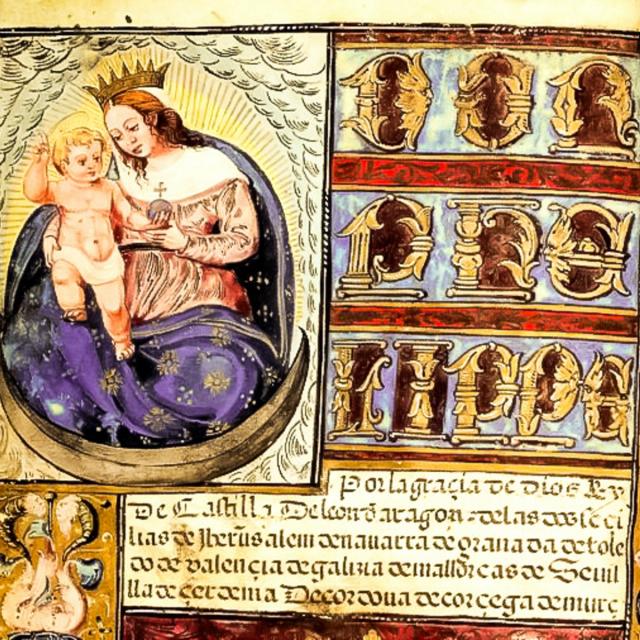
Perhaps no other relic of the European Middle Ages captures our imagination more than illuminated medieval manuscripts, or those documents decorated with images and colored pigments. Serving as windows unto a lost world of kings, ladies, faith, war, and culture, they communicate complex visual and textual narratives of Europe’s collective cultural heritage and patrimony. In this fashion, illuminated manuscripts are dynamic messages from our communal past that are still relevant today in fields like graphic design and typography.

Class Deals by MOOC List - Click here and see Coursera's Active Discounts, Deals, and Promo Codes.

In this seven-week course, students will explore the material creation, content, and historical context of illuminated medieval European manuscripts. Students will acquire an introductory knowledge of their distinguishing characteristics, their cataloguing and periodization (when they were created), the methods utilized to produce them, and their historical context and value.
Student achievement will be assessed using not only traditional multiple-choice quizzes, but more importantly will be evaluated based on individual student projects. In their final projects students will either (1) produce a board of commented images about medieval manuscripts or (2) prepare a physical manuscript using medieval methods. The best of these peer-evaluated projects will be posted on the Deciphering Secrets website, which is our collective citizen scholarship web presence that encourages and supports our global citizen scholars appreciation and contributions to transcription of medieval manuscripts.
Finally, we wish to highlight that this course is an exciting international collaboration between the University of Colorado (USA) and Universidad Complutense Madrid (Spain).

Syllabus

WEEK 1: Course Introduction. Introduction to medieval world and manuscript studies
WEEK 2: Medieval European Kingdoms (Part 1) and Writing Supports and Book Formats
WEEK 3: Medieval European Kingdoms (Part 2) and the Writing case and the Architecture of the Codex
WEEK 4: A Glimpse of Spain's King Alfonso X "The Wise" and preparing the page for Writing
WEEK 5: Paleography and a historical case study and writing the codex
WEEK 6: Exploring the global middle ages and online collections and codex decoration
WEEK 7: Bookbinding and course completion

Go to Class
MOOC List is learner-supported. When you buy through links on our site, we may earn an affiliate commission.

Related Courses

Unión Europea: Historia, Instituciones y Políticas (Coursera) Coursera
Universitat Autònoma de Barcelona

Unión Europea: Historia, Instituciones y Políticas (Coursera)

La Unión Europea (UE) representa una de las experiencias más avanzadas en materia de integración económica y unión política a escala global. Desde su surgimiento en los años 50 del siglo XX hasta la explosión de la actual pandemia provocada por el COVID-19, la UE no ha cesado de ampliar su radio de acción llegando a difuminar, en muchas áreas, la tradicional distinción entre asuntos internos y externos de los Estados nacionales.

Jun 1st 2026
5-12 Weeks
The Ancient Greeks (Coursera) Coursera
Wesleyan University

The Ancient Greeks (Coursera)

This is a survey of ancient Greek history from the Bronze Age to the death of Socrates in 399 BCE. Along with studying the most important events and personalities, we will consider broader issues such as political and cultural values and methods of historical interpretation.

Jun 1st 2026
5-12 Weeks
Fashion as Design (Coursera) Coursera
The Museum of Modern Art

Fashion as Design (Coursera)

Among all objects of design, our clothes are the most universal and intimate. Like other kinds of design, fashion thrives on productive tensions between form and function, automation and craftsmanship, standardization and customization, universality and self-expression, and pragmatism and utopian vision. It exists in the service of others, and it can have profound consequences—social, political, cultural, economic, and environmental.

Jun 1st 2026
5-12 Weeks
The Talmud: A Methodological Introduction (Coursera) Coursera
Northwestern University

The Talmud: A Methodological Introduction (Coursera)

The Talmud is one of the richest and most complicated works of literature the world has ever known. Since being composed around 1500 years ago it has inspired not only religious reverence but significant intellectual engagement. In this course learners will be introduced to the unique characteristics of this text and the challenges that inhere in studying it while studying a chapter of the Talmud.

Jun 1st 2026
5-12 Weeks
Recovering the Humankind's Past and Saving the Universal Heritage (Coursera) Coursera
Sapienza University of Rome

Recovering the Humankind's Past and Saving the Universal Heritage (Coursera)

Archaeology has as its objective the recovery and revival of humankind past, and as its aim the rescue and preservation of cultural heritage. Archaeology is, among human sciences, the discipline with the strongest importance for the rediscovery, but also for the preservation and protection of cultural heritage, as Humankind’s universal patrimony. You will be introduced to the way we ourselves reflect on and are engaged with the study of human past: from the practical and material recovery of ancient traces in the field to the study and interpretation. On the other hand, the discovery of human past implies the correct conservation and presentation for both experts and general public: the study and protection of the past we share every day prevent from any possible destruction, misuse, abuse and thus cancellation of human memory.

Jun 1st 2026
5-12 Weeks
Greek and Roman Mythology (Coursera) Coursera
University of Pennsylvania

Greek and Roman Mythology (Coursera)

Myths are traditional stories that have endured over a long time. Some of them have to do with events of great importance, such as the founding of a nation. Others tell the stories of great heroes and heroines and their exploits and courage in the face of adversity. Still others are simple tales about otherwise unremarkable people who get into trouble or do some great deed. What are we to make of all these tales, and why do people seem to like to hear them? This course will focus on the myths of ancient Greece and Rome, as a way of exploring the nature of myth and the function it plays for individuals, societies, and nations. We will also pay some attention to the way the Greeks and Romans themselves understood their own myths.

Jun 1st 2026
5-12 Weeks
Seeing Through Photographs (Coursera) Coursera
The Museum of Modern Art

Seeing Through Photographs (Coursera)

Although taking, sharing, and viewing photographs has become second nature for many of us, our regular engagement with images does not necessarily make us visually literate. This course aims to address the gap between seeing and truly understanding photographs by introducing a diversity of ideas, approaches, and technologies that inform their making. In this course you will look closely at 100 photographs from the collection of The Museum of Modern Art, going behind the scenes of the Museum and into artist studios through original films and audio interviews.

Jun 1st 2026
5-12 Weeks
Miracles of Human Language: An Introduction to Linguistics (Coursera) Coursera
Leiden University,Meertens Instituut - KNAW

Miracles of Human Language: An Introduction to Linguistics (Coursera)

Everywhere, every day, everybody uses language. There is no human society, no matter how small or how isolated, which does not employ a language that is rich and diverse. This course introduces you to linguistics, featuring interviews with well-known linguists and with speakers of many different languages. Join us to explore the miracles of human language!

May 25th 2026
5-12 Weeks
Roman Art and Archaeology (Coursera) Coursera
University of Arizona

Roman Art and Archaeology (Coursera)

The objective of this course is to provide an overview of the culture of ancient Rome beginning about 1000 BCE and ending with the so-called "Fall of Rome". We will look at some of the key people who played a role in Rome, from the time of the kings through the Roman Republic and the Roman Empire. We will also focus on the city of Rome itself, as well as Rome's expansion through Italy, the Mediterranean, and beyond.

Jun 1st 2026
5-12 Weeks
Journey of the Universe: The Unfolding of Life (Coursera) Coursera
Yale University

Journey of the Universe: The Unfolding of Life (Coursera)

Journey of the Universe weaves together the discoveries of the evolutionary sciences together with humanities such as history, philosophy, art, and religion. The course draws on the Emmy-award winning film, Journey of the Universe, and the book from Yale University Press. Journey explores cosmic evolution as a creative process based on connection, interdependence, and emergence. It examines a range of dynamic interactions in the unfolding of galaxies, Earth, life, and human communities. It investigates ways in which we understand evolutionary processes and the implications for humans and our ecological future.

May 25th 2026
5-12 Weeks
Magic in the Middle Ages (Coursera) Coursera
University of Barcelona

Magic in the Middle Ages (Coursera)

Magical thought has always attracted human imagination. In this course we will introduce you to the Middle Ages through a wide conception of magic. Students will have an approach to medieval culture, beliefs and practices from the perspective of History and History of Science. Popular magic, as well as learned magic (alchemy, geomancy and necromancy) will be addressed. Moreover, we will also deal with how eastern practices and texts influenced western culture. In July 2016, the course will contain a brand-new module devoted to astrology. Magic in the Middle Ages offers a captivating overview of medieval society and promotes reflection about certain stereotypes associated with this period.

May 25th 2026
5-12 Weeks
The Holocaust - An Introduction (I): Nazi Germany: Ideology, The Jews and the World (Coursera) Coursera
Tel Aviv University,Yad Vashem

The Holocaust - An Introduction (I): Nazi Germany: Ideology, The Jews and the World (Coursera)

The Holocaust was an inconceivable historical event, which forever robbed Western culture of its innocence. As civilized human beings, we fail to understand how events of such horror could have taken place, and how an idea so inhumanly warped could have spread like wildfire through an entire continent, instigating the systematic annihilation of millions of Jews. This free online course was produced jointly by Tel Aviv University and Yad Vashem – the World Holocaust Remembrance Center. The course tracks the history of the Holocaust and has two parts.

Jun 1st 2026
3 Weeks