EdX

A Global History of Architecture (edX)

Offered by MIT, MITx,
A Global History of Architecture (edX)

Learn about humanity’s rich architectural history on this journey around the globe – from 100,000 BCE to ca. 1,600 CE. How do we understand architecture? One way of answering this question is by looking through the lens of history, beginning with First Societies and extending to the 16th century. This course in architectural history is not intended as a linear narrative, but rather aims to provide a more global view, by focusing on different architectural "moments."

Class Deals by MOOC List - Click here and see EdX's Active Discounts, Deals, and Promo Codes.

How did the introduction of iron in the ninth century BCE impact regional politics and the development of architecture? How did new religious formations, such as Buddhism and Hinduism, produce new architectural understandings? What were the architectural consequences of the changing political landscape in northern Italy in the 14th century? How did rock-cut architecture move across space and time from West Asia to India to Africa? How did the emergence of corn impact the rise of religious and temple construction in Mexico?

Each lecture analyzes a particular architectural transformation arising from a dynamic cultural situation. Material covered in lectures will be supplemented by readings from the textbook A Global History of Architecture.
Join us on a journey around the globe and learn how architecture has developed and interacted with the world’s culture, religion, and history.

What you'll learn:

  • History and context of the important buildings that shaped our culture
  • History of technological advances that significantly impacted the development of architecture
  • Impacts of certain cultural and religious traditions on architecture
  • History of climate and geographical changes that shaped human civilization and its architecture

Syllabus

Lecture 1: The First Societies
Lecture 2: The Gravettians and the Hunting Traditions of the North
Lecture 3: The Holocene and the Agro-Pastoral Emergence
Lecture 4: Agricultural Emergence
Lecture 5: Stone – Between Life and Death
Lecture 6: Cities and Temples
Lecture 7: After the Cataclysm and the Rise of the Eastern Mediterranean
Lecture 8: Iron and the New World Order
Lecture 9: Persia and Greece
Lecture 10: India and China
Lecture 11: Buddhism - India and Beyond
Lecture 12: Americas - Shaping/Harvesting the Land
Lecture 13: Rome
Lecture 14: Roman Architecture
Lecture 15: Early Christian Architecture
Lecture 16: Christianity and the Roman East
Lecture 17: Early Islamic Architecture
Lecture 18: Early Hindu Architecture
Lecture 19: Borobudur, Angkor, and SE Asia
Lecture 20: The 13th Century - Inner Asia and Beyond
Lecture 21: Medieval Christian Architecture
Lecture 22: Italy - 13th to the 15th Century
Lecture 23: Colonial Transitions
Lecture 24: Time


Go to Class
MOOC List is learner-supported. When you buy through links on our site, we may earn an affiliate commission.

Related Courses

English for Doing Business in Asia - Speaking (edX) EdX
The Hong Kong University of Science and Technology - HKUST,HKUSTx

English for Doing Business in Asia - Speaking (edX)

Introducing strategies for developing your spoken English communication skills in the context of doing business in Asia. The use of English for doing business in multinational settings is a fact of life for many business people. As Asian economies expand and become more involved in the global economy, a lingua franca – a language used to communicate among groups of people who do not share a mother tongue – is needed to exchange information.

Self Paced
Self-Paced
Buddhism Through Its Scriptures (edX) EdX
HarvardX,Harvard University

Buddhism Through Its Scriptures (edX)

Learn about the rich and diverse beliefs and practices of Buddhists across time and place. Experience Buddhism through its scriptures, both relationally as well as academically. Whether you are new to the study of Buddhism or have been studying it or practicing it for years, this course will provide you with the opportunity to become acquainted with a variety of Buddhist teachings while guiding you to think about them, and yourself, in new ways.

Self Paced
Self-Paced
Sustainability in Architecture: An Interdisciplinary Introduction (edX) EdX
Universitat Politècnica de València,UPValenciaX

Sustainability in Architecture: An Interdisciplinary Introduction (edX)

This course introduces the basic elements and trends that define sustainability practices in Architecture today. It follows an interdisciplinary approach that includes performance assessment and urban policies. This course offers an interdisciplinary approach to sustainability in Architecture. Learners will be introduced to the basic elements of sustainability assessments (first model layer), as well as trends informing the space today.

Self Paced
Self-Paced
Global China: From the Mongols to the Ming (edX) EdX
HarvardX,Harvard University

Global China: From the Mongols to the Ming (edX)

Explore the impact of the conquest dynasties and the world of the Ming. In the 13th century, by force of arms, the Mongols created the greatest empire in human history. Yet by the end of the Ming dynasty in the late 16th century, a new global economy emerged. New World silver brought together the Americas, Europe, and East Asia, and the intellectuals of East and West began to speak to each other directly.

Self Paced
Self-Paced
Globalization: Past and Future (edX) EdX
SDGAcademyX,SDG Academy

Globalization: Past and Future (edX)

Is globalization a new phenomenon or a cyclical pattern throughout human history? In this four-part mini-course, Professor Jeffrey Sachs argues that we have always lived in a global world. He takes students on a historical and anthropological tour of six distinct waves of globalization and outlines the key factors that drove innovation, technology dispersal and development during these epochs.

Self Paced
Self-Paced
Four Facets of Contemporary Japanese Architecture: Theory (edX) EdX
The University of Tokyo,UTokyoX

Four Facets of Contemporary Japanese Architecture: Theory (edX)

Learn the history, ideas and concepts behind contemporary Japanese architecture through four architectural facets and five generations of architects. This series will explore four facets of contemporary Japanese architecture; theory, technology, city, and humans. It will also span five generations of architects since Kenzo Tange. Through lectures by instructors and discussions with the most influential Japanese architects, the course will trace the development of contemporary Japanese architecture and will consider its future direction.

Self Paced
Self-Paced
Creating Modern China: The Republican Period to the Present (edX) EdX
HarvardX,Harvard University

Creating Modern China: The Republican Period to the Present (edX)

Explore the birth of modern China with a focus on the time between the fall of the Qing and the end of World War II. What does it mean to be modern? What constitutes modern politics, modern institutions, a modern military, and modern infrastructure? In this period of great excitement and experimentation, the country is asking itself: How do you become modern and remain true to the Chinese national identity?

Self Paced
Self-Paced
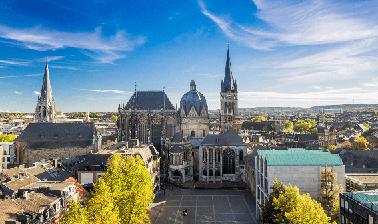
Cultural Heritage in Transformation (edX) EdX
RWTH Aachen,RWTHx

Cultural Heritage in Transformation (edX)

Learn how to define, explore, conserve, utilize and manage cultural heritage. In recent decades the sustainable conservation of cultural heritage has become a crucial global challenge. In this context, the trend towards largescale urbanization raises questions as to how new development can take place which respects and maintains the intrinsic values and unique qualities which have been handed down from previous generations, particularly within urban areas.

Self Paced
Self-Paced
China Humanities: The Individual in Chinese Culture (edX) EdX
HarvardX,Harvard University

China Humanities: The Individual in Chinese Culture (edX)

Explore Chinese history and culture from the perspective of the individual through philosophical texts, literary works, and art. In China’s history, there has been a longstanding belief that being cultured and being moral are necessary for a person to participate in public life. We often think of China in political terms – and focus on the history of government – or in social terms – and study the role of the family in society. But this course looks at the individual and the striving for culture and morality.

Self Paced
Self-Paced