EdX

The Civil War and Reconstruction - 1850-1861: A House Divided (edX)

The Civil War and Reconstruction - 1850-1861: A House Divided (edX)

Discover how the issue of slavery came to dominate American politics, and how political leaders struggled and failed to resolve the growing crisis in the nation. A House Divided: The Road to Civil War, 1850-1861 begins by examining how generations of historians have explained the crisis of the Union. After discussing the institution of slavery and its central role in the southern and national economies, it turns to an account of the political and social history of the 1850s.

Class Deals by MOOC List - Click here and see EdX's Active Discounts, Deals, and Promo Codes.

It traces how the issue of the expansion of slavery came to dominate national politics, and how political leaders struggled, unsuccessfully, to resolve the growing crisis. We will examine the impact of key events such as Bleeding Kansas, the Dred Scott decision, the Lincoln-Douglas debates, and John Brown’s raid on Harper’s Ferry, and end with the dissolution of the Union in the winter of 1860-61.
This course is part of theThe Civil War and Reconstruction XSeries, which introduces students to the most pivotal era in American history. The Civil War transformed the nation by eliminating the threat of secession and destroying the institution of slavery. It raised questions that remain central to our understanding of ourselves as a people and a nation – the balance of power between local and national authority, the boundaries of citizenship, and the meanings of freedom and equality. This X Series will examine the causes of the war, the road to secession, the conduct of the Civil War, the coming of emancipation, and the struggle after the war to breathe meaning into the promise of freedom for four million emancipated slaves. One theme throughout the series is what might be called the politics of history – how the world in which a historian lives affects his or her view of the past, and how historical interpretations reinforce or challenge the social order of the present.

What you'll learn:

  • An overview of the political and social history of the 1850s
  • How generations of historians have explained the crisis of the Union
  • Slavery’s central role in the southern and national economies
  • How the issue of the expansion of slavery came to dominate national politics
  • Reasons for Lincoln’s rise to national prominence
  • How political leaders struggled, unsuccessfully, to resolve the growing crisis in the nation. Key events in history, such as:

Bleeding Kansas
The Dred Scott decision
The Lincoln-Douglas debates
John Brown’s raid on Harpers Ferry
Dissolution of the Union in the winter of 1860-61

  • Interrogation of primary sources using material from Columbia's Rare Book and Manuscript Library.

Syllabus

  • Setting the Stage
  • American Slavery
  • Historians and the Coming of the Civil War
  • Territorial Expansion and Sectional Conflict
  • Immigration and Nativism
  • Rise of the Republican Party
  • The Buchanan Administration
  • The Emergence of Lincoln
  • The Gathering Storm
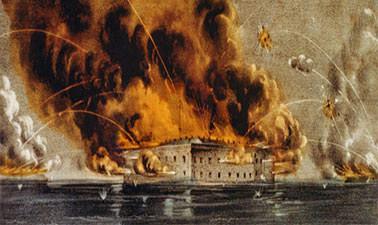
  • The Secession Crisis
Go to Class
MOOC List is learner-supported. When you buy through links on our site, we may earn an affiliate commission.

Related Courses

Cosmopolitan Tang: Aristocratic Culture in China (edX) EdX
HarvardX,Harvard University

Cosmopolitan Tang: Aristocratic Culture in China (edX)

Explore the reunification of China under the Tang with a focus on aristocratic culture — from poetry to calligraphy to literature. By the Tang period, China was divided into northern and southern dynasties with different rulers and political systems. The north was conquered by relatively unsophisticated barbarians, but in the south, the aristocratic families established a refined appreciation of writing and literature.

Self Paced
Self-Paced
Arab-Islamic History: From Tribes to Empires (edX) EdX
Tel Aviv University,IsraelX,TAUx

Arab-Islamic History: From Tribes to Empires (edX)

Learn about the history of the Arab and Muslim world during its first millennium, including political, social and cultural aspects. You will study this course in two parts. The first presents the main political events that set the chronological framework for the course, namely 6th century to the arrival of the Ottomans in the Middle East in the beginning of the 16th century. The second part delves into social and cultural realities of the medieval Middle East.

Self Paced
Self-Paced
The Emergence of the Modern Middle East - Part I (Coursera) Coursera
Tel Aviv University

The Emergence of the Modern Middle East - Part I (Coursera)

This course will review the emergence of the modern Middle East from the fall of the Ottoman Empire, at the end of the First World War to the present. We will discuss the Ottoman legacy in the region and the Western imperial impact on the creation of the Arab state system. The course will review the rise and retreat of Arab nationalism, the problems of internal cohesion of the Arab states, issues of religion and state, and the evolution of Islamist politics. We will also focus on the evolution of the Arab-Israeli conflict and its impact on the region and will conclude with an in depth analysis of the “Arab Spring” by placing these contemporary revolutionary events in their historical context.

Jun 1st 2026
4 Weeks
Claves para leer imágenes (edX) EdX
Universidad Autonoma de Madrid,UAMx

Claves para leer imágenes (edX)

Vivimos en la era de la revolución icónica. Necesitamos métodos para comprender las imágenes. Los mapas, los paisajes, las obras de arte, los medios de masas, las películas de cine y las páginas de internet nos hablan, por lo que debemos conocer sus códigos para entenderlas. Conoce las claves para analizar las imágenes históricas que hemos producido los seres humanos. Tenemos dos objetivos: enseñar a utilizarlas como documentos históricos y emplearlas como recursos didácticos.

Self Paced
Self-Paced
Teaching Historical Inquiry with Objects (edX) EdX
Smithsonian,SmithsonianX

Teaching Historical Inquiry with Objects (edX)

This course will give middle and high school history teachers new techniques to engage and motivate students with an inquiry-based approach to learning. How can you help your students to see history as a living, breathing record of the past? How can you motivate students to ask probing questions and seek complex answers? How can you bridge their historical knowledge with a lifelong commitment to civic action?

This course is archived
5-12 Weeks
Biblical Archaeology: The archaeology of ancient Israel and Judah (edX) EdX
IsraelX

Biblical Archaeology: The archaeology of ancient Israel and Judah (edX)

Join me as I share with you my passion for archaeological discovery and learn about the exciting methods of modern archaeology. Explore how archaeology illuminates biblical Israel and Judah, and the archaeological finds relate to the bible. Join me for an introductory course on biblical archaeology of ancient Israel and Judah during the Iron Age (ca. 1200-586 BCE).

Nov 1st 2022
5-12 Weeks
Global Media, War, and Technology (edX) EdX
University of Queensland,UQx

Global Media, War, and Technology (edX)

Explore the intersection of information technology, violent conflict, and resistance. The experience of war has changed fundamentally – not only for those fighting and reporting, but also for those on the home front. High-tech nations wage wars from a distance using satellite-guided weaponry while non-state military actors, terrorist organizations, and citizen journalists have increasingly added new voices and visual perspectives to the conversation about conflict.

Self Paced
Self-Paced