EdX

Invasions, Rebellions, and the Fall of Imperial China (edX)

Invasions, Rebellions, and the Fall of Imperial China (edX)

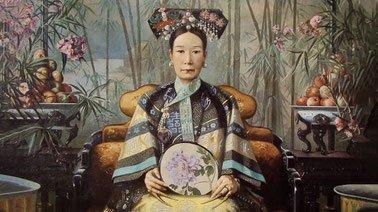
An overview of modern Chinese history, including the fall of the Qing and the end of imperial China. In the 18th century, the Qing Dynasty is at its height; it is the wealthiest, most powerful, most civilized state on earth. And yet the 19th century brought enormous challenges for the Qing and for the place we call China. By the 20th century, a 2,000-year imperial tradition is gone. What happened?

Class Deals by MOOC List - Click here and see EdX's Active Discounts, Deals, and Promo Codes.

In this overview of modern Chinese history, you’ll learn about the Qing was forced to engage with the West, the impact of imperialism and dynastic decline, and, ultimately, the causes of the Qing dynasty’s fall. This course will cover the effects of opium, how the Qing responded to that epidemic, and how the opium war brought fundamental changes to the country. You’ll also learn about the introduction of Christianity in this period, and about the ideology of Chinese salvation.

This is a time when intellectuals were wrestling with new western ideas and new western technologies. This course will help you to understand how China engaged with the West, and how this confrontation still resonates today.
This course is part of the History of China: The Modern Era XSeries program.

What you'll learn:

  • An overview of modern Chinese history.
  • About the Qing’s forced re-encounter and engagement with the West.
  • The impact of imperialism and dynastic decline.
  • What ultimately caused the fall of the Qing dynasty.
  • How intellectuals wrestled with the confrontation of western ideas and technology.
  • The historiography of periodization and how one can define the modern period.
Go to Class
MOOC List is learner-supported. When you buy through links on our site, we may earn an affiliate commission.

Related Courses

English for Doing Business in Asia - Speaking (edX) EdX
The Hong Kong University of Science and Technology - HKUST,HKUSTx

English for Doing Business in Asia - Speaking (edX)

Introducing strategies for developing your spoken English communication skills in the context of doing business in Asia. The use of English for doing business in multinational settings is a fact of life for many business people. As Asian economies expand and become more involved in the global economy, a lingua franca – a language used to communicate among groups of people who do not share a mother tongue – is needed to exchange information.

Self Paced
Self-Paced
China’s First Empires and the Rise of Buddhism (edX) EdX
HarvardX,Harvard University

China’s First Empires and the Rise of Buddhism (edX)

Learn about the Qin and Han dynasties, and how Buddhism and ideas of self-realization influenced the medieval period. This course, the second in a collection on Chinese history and culture, addresses how the Qin dynasty conquered China and established a new system of government and how the Han dynasty built a stable, centralized empire that lasted for hundreds of years. We cover the early history of Buddhism in China and how the rising feudal aristocracy responded to the loss of empire by looking inward.

Self Paced
Self-Paced
Chinese Politics Part 2 - China and the World (Coursera) Coursera
The Hong Kong University of Science and Technology - HKUST

Chinese Politics Part 2 - China and the World (Coursera)

One of the most significant changes in the world in the past 30 years is the opening of China to the outside world and its engagement with that world. In the initial years of the opening, external forces influenced China’s economy, regional balances, bureaucracy, as well as the political authority of local leaders in the coastal areas.

Aug 17th 2026
5-12 Weeks
Chinese History From Warring States to the Tang Dynasty | 资治通鉴 (edX) EdX
Tsinghua University,TsinghuaX

Chinese History From Warring States to the Tang Dynasty | 资治通鉴 (edX)

Guides you through the Chinese masterpiece _Zizhi Tongjian, _an unprecedented work of governance and philosophical thinking spanning from the Warring States Period to the Tang Dynasty. Through the teacher's guided reading, students can go deep into the interior of this classic text, gain an overview of thousands of years of history, and improve their literacy in Chinese studies.

Self Paced
Self-Paced
Chinese Culture: Interaction (edX) EdX
The Hong Kong Polytechnic University,HKPolyUx

Chinese Culture: Interaction (edX)

This compact course introduces 5 interesting aspects of Chinese cultural exchange and interaction with other countries in history. They are (a) China and the West, (b) China and Central Asia (c) China and Vietnam, (d) Colonialism, Anti-Colonialism and Pan-Asianism, and (e) Chinese Food and Cuisine. This dynamic course forms part of the HKPolyUx series on Chinese culture.

Self Paced
Self-Paced
Modern China’s Foundations: The Manchus and the Qing (edX) EdX
HarvardX,Harvard University

Modern China’s Foundations: The Manchus and the Qing (edX)

Learn how the Manchus conquered the Qing and established the last of the imperial dynasties. This course, part of a comprehensive series on China, looks at the Qing state in the early 1600s and the challenges that the Manchus faced as minority rulers. While living in Chinese cities and surrounded by Chinese culture — a culture that was far more sophisticated than their own — the Manchus struggled to hold onto their identity as a conquesting people.

Self Paced
Self-Paced
International Politics in the Korean Peninsula (edX) EdX
Seoul National University,SNUx

International Politics in the Korean Peninsula (edX)

Explore the genesis, expansion, projection and challenges of the Chinese World Order in China and East Asia. This course is divided into three parts. First, you’ll learn how the Chinese World Order emerged in the ancient world, focusing on the concept of the "heavenly mandate" (天命) as the ultimate source of political power.

Self Paced
Self-Paced
Will China Rise as a Disruptive Force? The Insiders' Perspective (edX) EdX
Tsinghua University,TsinghuaX

Will China Rise as a Disruptive Force? The Insiders' Perspective (edX)

An insiders’ perspective on the economic, social and political impact of China’s rise on the world stage. China, one of the world’s oldest countries, is currently undergoing massive political, social and economic changes. The rapid emergence of China as a key player in the global political and economic landscape has led many to question how China’s decision makers perceive today’s world.

Self Paced
Self-Paced
A Global History of Architecture (edX) EdX
MIT,MITx

A Global History of Architecture (edX)

Learn about humanity’s rich architectural history on this journey around the globe – from 100,000 BCE to ca. 1,600 CE. How do we understand architecture? One way of answering this question is by looking through the lens of history, beginning with First Societies and extending to the 16th century. This course in architectural history is not intended as a linear narrative, but rather aims to provide a more global view, by focusing on different architectural "moments."

Oct 18th 2023
5-12 Weeks
Humanity and Nature in Chinese Thought (edX) EdX
University of Hong Kong,HKUx

Humanity and Nature in Chinese Thought (edX)

We make ethical or behaviour guiding right / wrong judgments all the time but have you ever wondered where Ethics comes from, what it is about and why it is important? This course provides an introduction to traditional Chinese ethical thought and focuses on the pervasive contrast in the way Chinese and Westerners think about ethical guidance or guidance concerning what is right and what is wrong, good or bad.

No sessions available
5-12 Weeks
Cosmopolitan Tang: Aristocratic Culture in China (edX) EdX
HarvardX,Harvard University

Cosmopolitan Tang: Aristocratic Culture in China (edX)

Explore the reunification of China under the Tang with a focus on aristocratic culture — from poetry to calligraphy to literature. By the Tang period, China was divided into northern and southern dynasties with different rulers and political systems. The north was conquered by relatively unsophisticated barbarians, but in the south, the aristocratic families established a refined appreciation of writing and literature.

Self Paced
Self-Paced