EdX

Mandarin Chinese Level 3 (edX)

Offered by MandarinX,
Mandarin Chinese Level 3 (edX)

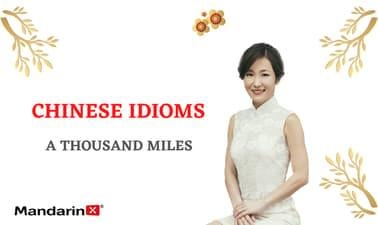
Advance your Mandarin Chinese by tackling different topics in dynamic business scenarios with extensive vocabulary and compound sentence structures. Drawing from the skills you developed inpreviouscourses in this series, you will learn how to address yourself more properly in different business circumstances.

Class Deals by MOOC List - Click here and see EdX's Active Discounts, Deals, and Promo Codes.

In Mandarin Chinese Level 3, you will advance your Mandarin Chinese with extensive vocabulary and complex sentence structures based on dynamic business scenarios.

You will not only learn to respond correctly but also to deliver your point of view and convey a clear idea in Mandarin Chinese.
If you enroll in the verified track, you will be able to participate in the Webinar lectured by Dr. Estella Y. Chen, who will lead the discussion with a wide variety of popular topics to accompany you to the world of chinese business culture and trend.
What's more, in the verified track, we'll give you three pronunciation lessons that will help you communicate more smoothly and effectively in a business environment.
Previous knowledge of Mandarin Chinese is needed.
This course is pat of the Mandarin Communication Professional Certificate.

What you'll learn:

  • Spoken Mandarin phrases and vocabulary for complex scenarios
  • Greater insight to Chinese culture
  • Intermediate level of Chinese grammar and sentence patterns
  • Develop your Chinese language skills in a business environment
  • Build your confidence to communicate effectively with colleagues, clients and friends in Chinese
Go to Class
MOOC List is learner-supported. When you buy through links on our site, we may earn an affiliate commission.

Related Courses

Invasions, Rebellions, and the Fall of Imperial China (edX) EdX
HarvardX,Harvard University

Invasions, Rebellions, and the Fall of Imperial China (edX)

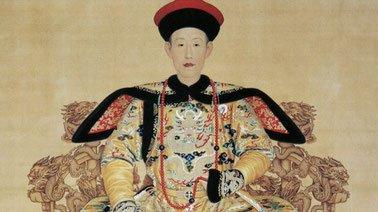
An overview of modern Chinese history, including the fall of the Qing and the end of imperial China. In the 18th century, the Qing Dynasty is at its height; it is the wealthiest, most powerful, most civilized state on earth. And yet the 19th century brought enormous challenges for the Qing and for the place we call China. By the 20th century, a 2,000-year imperial tradition is gone. What happened?

Self Paced
Self-Paced
China Humanities: The Individual in Chinese Culture (edX) EdX
HarvardX,Harvard University

China Humanities: The Individual in Chinese Culture (edX)

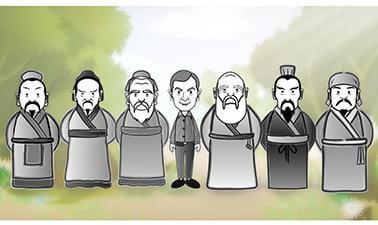
Explore Chinese history and culture from the perspective of the individual through philosophical texts, literary works, and art. In China’s history, there has been a longstanding belief that being cultured and being moral are necessary for a person to participate in public life. We often think of China in political terms – and focus on the history of government – or in social terms – and study the role of the family in society. But this course looks at the individual and the striving for culture and morality.

Self Paced
Self-Paced
Mao to Now: On Chinese Marxism (edX) EdX
The University of Newcastle, Australia,NewcastleX

Mao to Now: On Chinese Marxism (edX)

An insightful study of Chinese Marxism, socialism and capitalism - critical for anyone who wishes to engage with China today. To make sense of modern China, you simply cannot ignore Marxism. ‘From Mao to Now’ presents current topics that anyone who wishes to engage with China should know. Rather than praising or condemning, the course focuses on building a deeper understanding of this history through two interwoven elements.

No session available
5-12 Weeks
Literati China: Examinations, Neo-Confucianism, and Later Imperial China (edX) EdX
HarvardX,Harvard University

Literati China: Examinations, Neo-Confucianism, and Later Imperial China (edX)

Explore China’s imperial period, with a focus on the Song dynasty and the role of the exam system in government. Fundamental changes in government, the economy, and broader society took place between the 8th and 11th centuries in China. The state aristocracy gave way to new literati elite: educated men who sought to enter government through competitive examinations. A new kind of Confucianism also took shape, which prized the moral autonomy of individuals. With this, the later imperial period of China’s history begins.

Self Paced
Self-Paced
Humanity and Nature in Chinese Thought (edX) EdX
University of Hong Kong,HKUx

Humanity and Nature in Chinese Thought (edX)

We make ethical or behaviour guiding right / wrong judgments all the time but have you ever wondered where Ethics comes from, what it is about and why it is important? This course provides an introduction to traditional Chinese ethical thought and focuses on the pervasive contrast in the way Chinese and Westerners think about ethical guidance or guidance concerning what is right and what is wrong, good or bad.

No sessions available
5-12 Weeks
Chinese Language in Culture: Level 2 (edX) EdX
MIT,MITx

Chinese Language in Culture: Level 2 (edX)

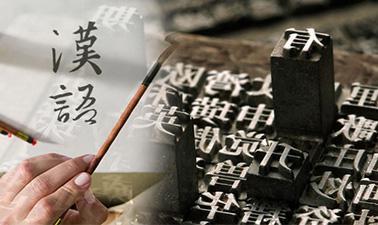
Learn both cultural competence and language proficiency for successful participation in Mandarin-speaking societies. This subject is the second of a series that forms an introduction to modern standard Chinese, commonly called Mandarin, the language with the largest number of native speakers in the world. Course objectives are to master Mandarin pronunciation, including the recognition and writing of Pinyin romanization, basic reading and writing skills, and to develop the ability to participate in simple, practical conversations on everyday topics.

No sessions available
5-12 Weeks
Modern China’s Foundations: The Manchus and the Qing (edX) EdX
HarvardX,Harvard University

Modern China’s Foundations: The Manchus and the Qing (edX)

Learn how the Manchus conquered the Qing and established the last of the imperial dynasties. This course, part of a comprehensive series on China, looks at the Qing state in the early 1600s and the challenges that the Manchus faced as minority rulers. While living in Chinese cities and surrounded by Chinese culture — a culture that was far more sophisticated than their own — the Manchus struggled to hold onto their identity as a conquesting people.

Self Paced
Self-Paced