EdX

China Humanities: The Individual in Chinese Culture (edX)

China Humanities: The Individual in Chinese Culture (edX)

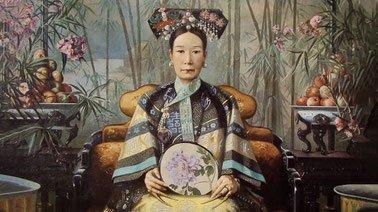
Explore Chinese history and culture from the perspective of the individual through philosophical texts, literary works, and art. In China’s history, there has been a longstanding belief that being cultured and being moral are necessary for a person to participate in public life. We often think of China in political terms – and focus on the history of government – or in social terms – and study the role of the family in society. But this course looks at the individual and the striving for culture and morality.

Class Deals by MOOC List - Click here and see EdX's Active Discounts, Deals, and Promo Codes.

In China Humanities, you will explore the idea of China as a country of individuals who create the thing we call Chinese culture through their own art, literature, and philosophy. The course will focus on how individuals pursue unique forms of expression, act upon their distinct experiences, and follow their own desires, creating enduring works that we continue to look to for inspiration and wisdom.

You will discuss the theories of early Chinese thinkers like Confucius and Zhuangzi, explore the poetry of writers like Tao Yuanming and Du Fu, read from novels such as the Dream of the Red Chamber, and learn how to see painting and calligraphy – all with a particular focus on how these works have shaped Chinese culture as we know it today.

What you'll learn

  • Cultural traditions that are revered in China today.
  • How to interpret Chinese philosophical texts.
  • How to analyze and appreciate masterpieces of Chinese literature.
  • How to see the “individual voice” in visual works.

Syllabus

Unit 1: Early Chinese Thinkers and Writers and their Notion of Self
Unit 2: Revealing the Individual in Chinese Poetry
Unit 3: Love and Literature: Yingying’s Story
Unit 4: Neo-Confucianism
Unit 5: Chinese Art: How to Paint the Inner Voice?
Unit 6: Love and Illusion in the Story of the Stone
Unit 7: Humanities Past and Present
Unit 8: Roundtable Discussion, on the Individual and Society
Go to Class
MOOC List is learner-supported. When you buy through links on our site, we may earn an affiliate commission.

Related Courses

Chinese Culture: Transformation (edX) EdX
The Hong Kong Polytechnic University,HKPolyUx

Chinese Culture: Transformation (edX)

This compact course introduces 5 interesting aspects of Chinese culture in transformation. They are (a) The Four Great Classical Chinese Novels, (b) the art of Chinese opera, (c) private Confucian academies since the Song dynasty, (d) New Confucianism in the 20th century, and (e) gender politics in early New China. This dynamic course forms part of the HKPolyUx series on Chinese culture.

Self Paced
Self-Paced
Chinese Politics Part 2 - China and the World (Coursera) Coursera
The Hong Kong University of Science and Technology - HKUST

Chinese Politics Part 2 - China and the World (Coursera)

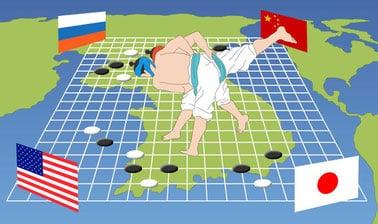
One of the most significant changes in the world in the past 30 years is the opening of China to the outside world and its engagement with that world. In the initial years of the opening, external forces influenced China’s economy, regional balances, bureaucracy, as well as the political authority of local leaders in the coastal areas.

Aug 17th 2026
5-12 Weeks
Humanity and Nature in Chinese Thought (edX) EdX
University of Hong Kong,HKUx

Humanity and Nature in Chinese Thought (edX)

We make ethical or behaviour guiding right / wrong judgments all the time but have you ever wondered where Ethics comes from, what it is about and why it is important? This course provides an introduction to traditional Chinese ethical thought and focuses on the pervasive contrast in the way Chinese and Westerners think about ethical guidance or guidance concerning what is right and what is wrong, good or bad.

No sessions available
5-12 Weeks
Mao to Now: On Chinese Marxism (edX) EdX
The University of Newcastle, Australia,NewcastleX

Mao to Now: On Chinese Marxism (edX)

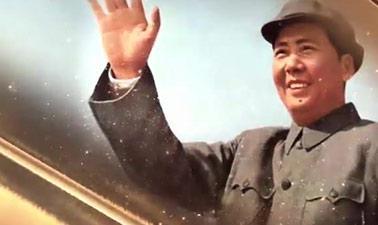
An insightful study of Chinese Marxism, socialism and capitalism - critical for anyone who wishes to engage with China today. To make sense of modern China, you simply cannot ignore Marxism. ‘From Mao to Now’ presents current topics that anyone who wishes to engage with China should know. Rather than praising or condemning, the course focuses on building a deeper understanding of this history through two interwoven elements.

No session available
5-12 Weeks
Chinese Language in Culture: Level 1 (edX) EdX
MIT,MITx

Chinese Language in Culture: Level 1 (edX)

Learn both cultural competence and language proficiency for successful participation in Mandarin-speaking societies. This subject is the first of a series that forms an introduction to modern standard Chinese, commonly called Mandarin, the language with the largest number of native speakers in the world. It is the official language of Mainland China and Taiwan, and one of the official languages of Singapore.The course presupposes no prior background in the language.

Apr 21st 2022
5-12 Weeks
A Global History of Architecture (edX) EdX
MIT,MITx

A Global History of Architecture (edX)

Learn about humanity’s rich architectural history on this journey around the globe – from 100,000 BCE to ca. 1,600 CE. How do we understand architecture? One way of answering this question is by looking through the lens of history, beginning with First Societies and extending to the 16th century. This course in architectural history is not intended as a linear narrative, but rather aims to provide a more global view, by focusing on different architectural "moments."

Oct 18th 2023
5-12 Weeks
Contemporary China: The People's Republic, Taiwan, and Hong Kong (edX) EdX
HarvardX,Harvard University

Contemporary China: The People's Republic, Taiwan, and Hong Kong (edX)

Use the case study method to study China from the rise of Deng Xiaoping to the present. Using case studies from the Harvard Business School, this course will cover the contemporary Chinese scene by focusing on five main themes in China’s development: agriculture, entrepreneurship, education, environment, and literature.

Self Paced
Self-Paced