EdX

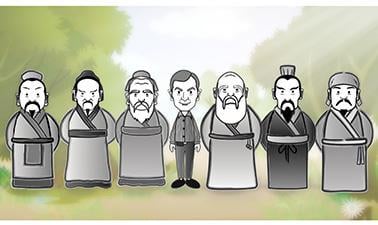
Humanity and Nature in Chinese Thought (edX)

Humanity and Nature in Chinese Thought (edX)

We make ethical or behaviour guiding right / wrong judgments all the time but have you ever wondered where Ethics comes from, what it is about and why it is important? This course provides an introduction to traditional Chinese ethical thought and focuses on the pervasive contrast in the way Chinese and Westerners think about ethical guidance or guidance concerning what is right and what is wrong, good or bad.

Class Deals by MOOC List - Click here and see EdX's Active Discounts, Deals, and Promo Codes.

Traditional Western orthodoxy uses the metaphor of a law – in its most familiar popular form, the command of a supernatural being backed by a threat of eternal punishment or reward – to explain ethical guidance. The Classical Chinese philosophers by contrast were all naturalists. They talked about ethical guidance using a path metaphor – a natural dào.

We will look at two rival directions this natural dào model took in ancient China. The first direction views ethical paths as generated from human sources such as human history and past social practices. The other Confucian version views guidance as arising from a distinctly human guiding organ, something like a combination of our faculties of heart and mind. This organ issues the right/wrong or this/not-that judgements naturally. This internal map to moral choices branches, like a plant, as we mature. The alternative to human-based naturalism in China treated normative guidance as natural in a broader sense, such as the dào of water or one guided by what is beneficial vs harmful. Finally, we will take a brief look at a development after the classical period that resulted from the invasion of the more super-naturalist, Indo-European way of thinking about guidance – Medieval Chinese Buddhism.
Although Chinese concepts will be the focus of our discussion, all the content of this course is intended to be accessible to beginner students. For those who are beginners in Philosophy, we will include a brief introduction to the ideas of logic that further shape the Western metaphor of a law and help us understand its role in Western ethics, science and psychology so you can better understand the different ways these two philosophical metaphors explain where norms of behaviour come from, what they are about and why they are important.
What you'll learn:

  • Describe various conceptions of the relation between humanity and nature presented in classical Chinese philosophical thought
  • Critically examine these conceptions and identify their strengths and weaknesses
  • Reflect on the relation between humanity and nature
  • Demonstrate interpretive, analytical and argumentative skills
Go to Class
MOOC List is learner-supported. When you buy through links on our site, we may earn an affiliate commission.

Related Courses

Contemporary China: The People's Republic, Taiwan, and Hong Kong (edX) EdX
HarvardX,Harvard University

Contemporary China: The People's Republic, Taiwan, and Hong Kong (edX)

Use the case study method to study China from the rise of Deng Xiaoping to the present. Using case studies from the Harvard Business School, this course will cover the contemporary Chinese scene by focusing on five main themes in China’s development: agriculture, entrepreneurship, education, environment, and literature.

Self Paced
Self-Paced
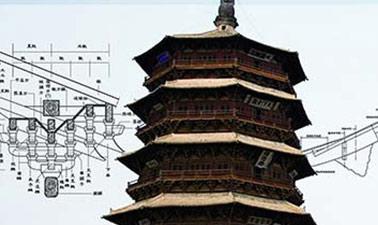
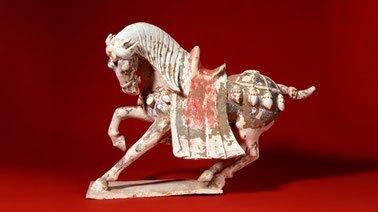
文物精品与文化中国:农业与制造业 | Relics in Chinese History - Part 1: Agriculture and Manufacturing (edX) EdX
Tsinghua University,TsinghuaX

文物精品与文化中国:农业与制造业 | Relics in Chinese History - Part 1: Agriculture and Manufacturing (edX)

Discover manufacturing and agriculture’s role in the history of China as we explore Chinese culture through artifacts and relics. 本课程以精品文物作引子,将学术界探索中华文明的过程作为线索,介绍古代中国在造船、玉器等诸多领域的杰出成就

Self Paced
Self-Paced
Chinese Language in Culture: Level 1 (edX) EdX
MIT,MITx

Chinese Language in Culture: Level 1 (edX)

Learn both cultural competence and language proficiency for successful participation in Mandarin-speaking societies. This subject is the first of a series that forms an introduction to modern standard Chinese, commonly called Mandarin, the language with the largest number of native speakers in the world. It is the official language of Mainland China and Taiwan, and one of the official languages of Singapore.The course presupposes no prior background in the language.

Apr 21st 2022
5-12 Weeks
China’s First Empires and the Rise of Buddhism (edX) EdX
HarvardX,Harvard University

China’s First Empires and the Rise of Buddhism (edX)

Learn about the Qin and Han dynasties, and how Buddhism and ideas of self-realization influenced the medieval period. This course, the second in a collection on Chinese history and culture, addresses how the Qin dynasty conquered China and established a new system of government and how the Han dynasty built a stable, centralized empire that lasted for hundreds of years. We cover the early history of Buddhism in China and how the rising feudal aristocracy responded to the loss of empire by looking inward.

Self Paced
Self-Paced
Chinese Thought: Ancient Wisdom Meets Modern Science - Part 2 (edX) EdX
The University of British Columbia,UBCx

Chinese Thought: Ancient Wisdom Meets Modern Science - Part 2 (edX)

An introduction to early Chinese thought, exploring connections with Western philosophy, spirituality, mindfulness, modern science and everyday life. This course is designed to give students a thorough introduction to early (pre-221 BCE) Chinese thought, its contemporary implications, and the role of religion in human well-being. Important themes to be discussed include the ideal of wu-wei or “effortless action,” the paradox of how one can consciously try not to try, mindfulness techniques and self-cultivation, models of the self and society, rationality versus emotions, trust and human cooperation, and the structure and impact of different spiritual and political ideals.

No sessions available
5-12 Weeks
文物精品与文化中国:天文与医药 | Relics of Chinese History - Part 2: Astronomy and Medicine (edX) EdX
Tsinghua University,TsinghuaX

文物精品与文化中国:天文与医药 | Relics of Chinese History - Part 2: Astronomy and Medicine (edX)

Discover how Astronomy and Medicine impacted the history of China as we use artifacts and relics as a guide to Chinese civilization. 本课程以精品文物作引子,将学术界探索中华文明的过程作为线索,介绍古代中国在造船、玉器等诸多领域的杰出成就

Self Paced
Self-Paced
International Politics in the Korean Peninsula (edX) EdX
Seoul National University,SNUx

International Politics in the Korean Peninsula (edX)

Explore the genesis, expansion, projection and challenges of the Chinese World Order in China and East Asia. This course is divided into three parts. First, you’ll learn how the Chinese World Order emerged in the ancient world, focusing on the concept of the "heavenly mandate" (天命) as the ultimate source of political power.

Self Paced
Self-Paced
Question Reality! Science, philosophy, and the search for meaning (edX) EdX
DartmouthX

Question Reality! Science, philosophy, and the search for meaning (edX)

What is reality? Explore how physics and philosophy have changed our perspective on the nature of the universe, matter, and mind over time. How much can we know of the physical world? Can we know everything? Or are there fundamental limits to how much we can explain? If there are limits, to what extent can we explain the nature of physical reality? RealityX investigates the limits of knowledge and what we can and cannot know of the world and ourselves.

No session available
5-12 Weeks
English for Doing Business in Asia - Speaking (edX) EdX
The Hong Kong University of Science and Technology - HKUST,HKUSTx

English for Doing Business in Asia - Speaking (edX)

Introducing strategies for developing your spoken English communication skills in the context of doing business in Asia. The use of English for doing business in multinational settings is a fact of life for many business people. As Asian economies expand and become more involved in the global economy, a lingua franca – a language used to communicate among groups of people who do not share a mother tongue – is needed to exchange information.

Self Paced
Self-Paced
The Einstein Revolution (edX) EdX
HarvardX,Harvard University

The Einstein Revolution (edX)

Traces Albert Einstein’s engagement with relativity, quantum mechanics, Nazism, nuclear weapons, philosophy, the arts, and technology. Albert Einstein has become the icon of modern science. Following his scientific, cultural, philosophical, and political trajectory, this course aims to track the changing role of physics in the 20th and 21st centuries.

Self Paced
Self-Paced