EdX

US-China Relations: Past, Present and Future (edX)

US-China Relations: Past, Present and Future (edX)

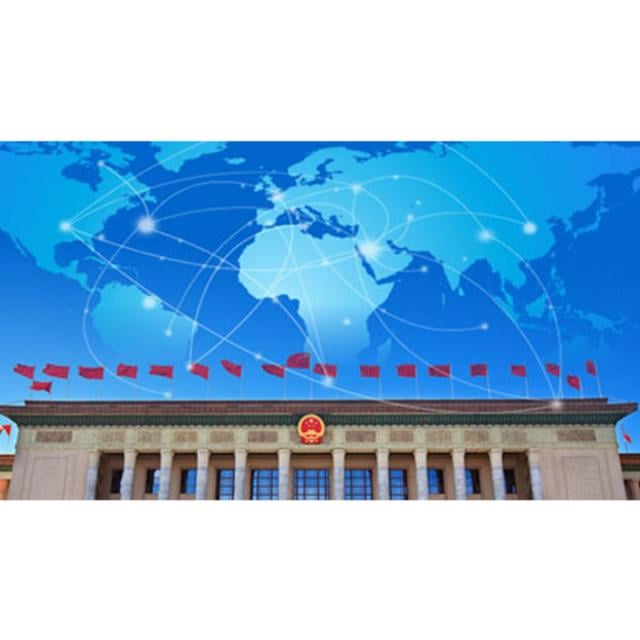
This course will provide an overview of the economic, military, political and cultural dimensions of the rising United States-China geopolitical contest. It will examine the strategic perspectives and mistakes of both countries, and suggest what can be done to prevent further escalation of the contest.

Class Deals by MOOC List - Click here and see EdX's Active Discounts, Deals, and Promo Codes.

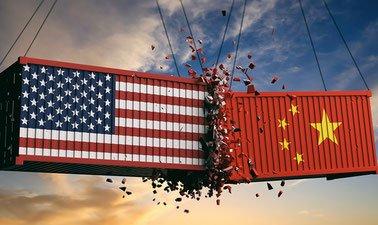
A major geopolitical contest has broken out between the US and China. It will be the main driving force of global geopolitics for the next decade or two. The main goal of “US-China Relations: Past, Present and Future” is to provide a deeper understanding of the historical roots and the structural forces driving the contest. It will elucidate the major misunderstandings between the two countries, and discuss possible alternative approaches that could result in win-win outcomes for America and China.

A major source of misunderstanding between the United States and China arises from the very different historical experiences their people have lived through in recent centuries: a century of humiliation is meeting a century of triumphalism. In this course, you’ll learn how a country’s historical past influences deeply its understanding of international relations and national security and plays a critical role in the formulation of its foreign policies.
This course will discuss in depth the US-China bilateral relationship from 1949 to 2020, covering issues ranging from climate change and foreign affairs, to economic and trade relations. Part of this programme will also consider more recent issues like the Trump Administration and China’s responses to the COVID-19 pandemic, and the US-China trade and technology wars. We will explore in depth the fundamental misunderstandings that have developed between the two powers over the years. The goal is to develop a more objective and accurate understanding of the strategic perspectives and behavioural patterns of the United States and China in the global order.
Join us as we seek to understand how this US-China geopolitical contest is, paradoxically, both inevitable and avoidable.

What you'll learn

Week One:
The clashing histories of US and China that provide the backdrop to this contest – an American Century of Triumphalism vs a Chinese Century of Humiliation

Week Two:
The modern history of US-China relations, including its three phases: hostility; cooperation and ambiguity; and the recent triggers of their contest

Week Three:
The strategic, political and ideological misunderstandings underpinning the US-China geopolitical contest

Week Four:
The reactions of the global community to the contest, and some areas of possible cooperation between the two great powers that may help to mitigate the tensions - and prevent this geopolitical rivalry from escalating to more dangerous levels. They include issues such as Covid-19 and climate change.

Go to Class
MOOC List is learner-supported. When you buy through links on our site, we may earn an affiliate commission.

Related Courses

United States Health Policy (edX) EdX
HarvardX,Harvard University

United States Health Policy (edX)

Learn the essentials of U.S. health care policy from some of the nation's top experts. Many Americans complain that they do not understand the U.S. health reform law called the Affordable Care Act (or Obamacare). They are right, and the main reason is because most Americans do not understand the basics of the U.S. health care system and U.S. health policy.

Self Paced
Self-Paced
Chinese Politics Part 1 - China and Political Science (Coursera) Coursera
The Hong Kong University of Science and Technology - HKUST

Chinese Politics Part 1 - China and Political Science (Coursera)

This course offers a conceptual framework for understanding China that highlights the intersection of politics and economics. It shows that rather than develop into a full blown market economy, state and party officials at all levels of the political system maintain significant influence in economic development. Such a “political” economy has had both positive and negative outcomes, which we will assess in detail.

Aug 17th 2026
5-12 Weeks
Development in Emerging Economies: The Case of China (edX) EdX
Peking University,PekingX

Development in Emerging Economies: The Case of China (edX)

Curious about China's development and the Chinese market but haven't known where to start? Peking University brings you an easy-to-understand primer. Guanghua's professors will unpack China's development over five weeks, first giving an overview of China's economic growth as context before addressing private equity, real estate financing, banking, the stock market, wealth management, and other topics associated with China's financial markets.

Self Paced
Self-Paced
Contemporary China: The People's Republic, Taiwan, and Hong Kong (edX) EdX
HarvardX,Harvard University

Contemporary China: The People's Republic, Taiwan, and Hong Kong (edX)

Use the case study method to study China from the rise of Deng Xiaoping to the present. Using case studies from the Harvard Business School, this course will cover the contemporary Chinese scene by focusing on five main themes in China’s development: agriculture, entrepreneurship, education, environment, and literature.

Self Paced
Self-Paced
Global China: From the Mongols to the Ming (edX) EdX
HarvardX,Harvard University

Global China: From the Mongols to the Ming (edX)

Explore the impact of the conquest dynasties and the world of the Ming. In the 13th century, by force of arms, the Mongols created the greatest empire in human history. Yet by the end of the Ming dynasty in the late 16th century, a new global economy emerged. New World silver brought together the Americas, Europe, and East Asia, and the intellectuals of East and West began to speak to each other directly.

Self Paced
Self-Paced
Creating Modern China: The Republican Period to the Present (edX) EdX
HarvardX,Harvard University

Creating Modern China: The Republican Period to the Present (edX)

Explore the birth of modern China with a focus on the time between the fall of the Qing and the end of World War II. What does it mean to be modern? What constitutes modern politics, modern institutions, a modern military, and modern infrastructure? In this period of great excitement and experimentation, the country is asking itself: How do you become modern and remain true to the Chinese national identity?

Self Paced
Self-Paced
China’s First Empires and the Rise of Buddhism (edX) EdX
HarvardX,Harvard University

China’s First Empires and the Rise of Buddhism (edX)

Learn about the Qin and Han dynasties, and how Buddhism and ideas of self-realization influenced the medieval period. This course, the second in a collection on Chinese history and culture, addresses how the Qin dynasty conquered China and established a new system of government and how the Han dynasty built a stable, centralized empire that lasted for hundreds of years. We cover the early history of Buddhism in China and how the rising feudal aristocracy responded to the loss of empire by looking inward.

Self Paced
Self-Paced
Modern China’s Foundations: The Manchus and the Qing (edX) EdX
HarvardX,Harvard University

Modern China’s Foundations: The Manchus and the Qing (edX)

Learn how the Manchus conquered the Qing and established the last of the imperial dynasties. This course, part of a comprehensive series on China, looks at the Qing state in the early 1600s and the challenges that the Manchus faced as minority rulers. While living in Chinese cities and surrounded by Chinese culture — a culture that was far more sophisticated than their own — the Manchus struggled to hold onto their identity as a conquesting people.

Self Paced
Self-Paced