EdX

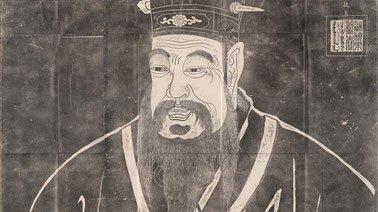
China’s Political and Intellectual Foundations: From Sage Kings to Confucius (edX)

China’s Political and Intellectual Foundations: From Sage Kings to Confucius (edX)

Learn about China’s origins, its integral early thinkers, and competing states and schools of thought. This course, the first in a comprehensive series on China, introduces you to the history, geography, and culture of the country.

Class Deals by MOOC List - Click here and see EdX's Active Discounts, Deals, and Promo Codes.

Time, space, and identity — enduring issues in Chinese history — are explored. You’ll study China’s early dynasties to understand how physical geography impacted its inhabitants and how the many ethnicities within the country affected Chinese identity. You’ll learn about China’s origins as told in ancient texts and through modern archeology. You’ll explore the first dynasties during the Chinese bronze age, the many facets of Confucianism and his Analects, and the competing schools of thought that followed.

New political and moral ideas appear in Chinese culture in this period — ideas that make up the country’s intellectual foundations and still resonate today. Join us to learn about China’s origins and how early concepts in Chinese culture still matter in the 21st century.
This course is part of the History of China: Bronze Age to the Last Dynasties XSeries Program.

What you'll learn

  • China’s history from political, geographic, and cultural perspectives.
  • The beginning of Chinese history in archaeology and mythology.
  • The blossoming of Chinese thought, from Confucius to the Legalists.
  • Historical methods for explaining how complex civilizations are formed.
  • How to analyze texts and artifacts.
  • Methods for the analysis of philosophical and political arguments.
  • A critical appreciation of China’s literary, philosophical, political, and cultural resources.
Go to Class
MOOC List is learner-supported. When you buy through links on our site, we may earn an affiliate commission.

Related Courses

Invasions, Rebellions, and the Fall of Imperial China (edX) EdX
HarvardX,Harvard University

Invasions, Rebellions, and the Fall of Imperial China (edX)

An overview of modern Chinese history, including the fall of the Qing and the end of imperial China. In the 18th century, the Qing Dynasty is at its height; it is the wealthiest, most powerful, most civilized state on earth. And yet the 19th century brought enormous challenges for the Qing and for the place we call China. By the 20th century, a 2,000-year imperial tradition is gone. What happened?

Self Paced
Self-Paced
Oriental Beliefs: Between Reason and Traditions (edX) EdX
LouvainX,Université Catholique de Louvain - UCL

Oriental Beliefs: Between Reason and Traditions (edX)

Explore the spiritual and magical beliefs of cultures, from ancient Egypt to modern Japan, as we discuss gods, the universe, cosmos, dreams and so much more! This course takes a journey through the world of beliefs as they have developed in a great variety of cultures, ranging from Ancient Egypt, the Near East to Central Asia, India, China, and the Far East.

No sessions available
5-12 Weeks
Understanding China, 1700-2000: A Data Analytic Approach, Part 1 (Coursera) Coursera
The Hong Kong University of Science and Technology - HKUST

Understanding China, 1700-2000: A Data Analytic Approach, Part 1 (Coursera)

The purpose of this course is to summarize new directions in Chinese history and social science produced by the creation and analysis of big historical datasets based on newly opened Chinese archival holdings, and to organize this knowledge in a framework that encourages learning about China in comparative perspective. Our course demonstrates how a new scholarship of discovery is redefining what is singular about modern China and modern Chinese history.

Jun 8th 2026
5-12 Weeks
Understanding China, 1700-2000: A Data Analytic Approach, Part 2 (Coursera) Coursera
The Hong Kong University of Science and Technology - HKUST

Understanding China, 1700-2000: A Data Analytic Approach, Part 2 (Coursera)

The purpose of this course is to summarize new directions in Chinese history and social science produced by the creation and analysis of big historical datasets based on newly opened Chinese archival holdings, and to organize this knowledge in a framework that encourages learning about China in comparative perspective. Our course demonstrates how a new scholarship of discovery is redefining what is singular about modern China and modern Chinese history.

Jun 8th 2026
4 Weeks
Global China: From the Mongols to the Ming (edX) EdX
HarvardX,Harvard University

Global China: From the Mongols to the Ming (edX)

Explore the impact of the conquest dynasties and the world of the Ming. In the 13th century, by force of arms, the Mongols created the greatest empire in human history. Yet by the end of the Ming dynasty in the late 16th century, a new global economy emerged. New World silver brought together the Americas, Europe, and East Asia, and the intellectuals of East and West began to speak to each other directly.

Self Paced
Self-Paced
International Politics in the Korean Peninsula (edX) EdX
Seoul National University,SNUx

International Politics in the Korean Peninsula (edX)

Explore the genesis, expansion, projection and challenges of the Chinese World Order in China and East Asia. This course is divided into three parts. First, you’ll learn how the Chinese World Order emerged in the ancient world, focusing on the concept of the "heavenly mandate" (天命) as the ultimate source of political power.

Self Paced
Self-Paced
Literati China: Examinations, Neo-Confucianism, and Later Imperial China (edX) EdX
HarvardX,Harvard University

Literati China: Examinations, Neo-Confucianism, and Later Imperial China (edX)

Explore China’s imperial period, with a focus on the Song dynasty and the role of the exam system in government. Fundamental changes in government, the economy, and broader society took place between the 8th and 11th centuries in China. The state aristocracy gave way to new literati elite: educated men who sought to enter government through competitive examinations. A new kind of Confucianism also took shape, which prized the moral autonomy of individuals. With this, the later imperial period of China’s history begins.

Self Paced
Self-Paced
ChinaX Book Club: Five Authors, Five Books, Five Views of China (edX) EdX
HarvardX,Harvard University

ChinaX Book Club: Five Authors, Five Books, Five Views of China (edX)

An exploration of the dynamics of contemporary China using the tools of close reading, discussion, and analysis. How can literature and literary analysis allow us to understand the dynamics of contemporary China? China’s historical and cultural transformations, and its imaginary and actual engagements in everyday life are vividly dramatized by five Chinese authors featured in this course.

Self Paced
Self-Paced
A Global History of Architecture (edX) EdX
MIT,MITx

A Global History of Architecture (edX)

Learn about humanity’s rich architectural history on this journey around the globe – from 100,000 BCE to ca. 1,600 CE. How do we understand architecture? One way of answering this question is by looking through the lens of history, beginning with First Societies and extending to the 16th century. This course in architectural history is not intended as a linear narrative, but rather aims to provide a more global view, by focusing on different architectural "moments."

Oct 18th 2023
5-12 Weeks
文物精品与文化中国:农业与制造业 | Relics in Chinese History - Part 1: Agriculture and Manufacturing (edX) EdX
Tsinghua University,TsinghuaX

文物精品与文化中国:农业与制造业 | Relics in Chinese History - Part 1: Agriculture and Manufacturing (edX)

Discover manufacturing and agriculture’s role in the history of China as we explore Chinese culture through artifacts and relics. 本课程以精品文物作引子,将学术界探索中华文明的过程作为线索,介绍古代中国在造船、玉器等诸多领域的杰出成就

Self Paced
Self-Paced