EdX

Oriental Beliefs: Between Reason and Traditions (edX)

Oriental Beliefs: Between Reason and Traditions (edX)

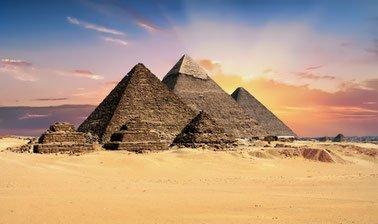
Explore the spiritual and magical beliefs of cultures, from ancient Egypt to modern Japan, as we discuss gods, the universe, cosmos, dreams and so much more! This course takes a journey through the world of beliefs as they have developed in a great variety of cultures, ranging from Ancient Egypt, the Near East to Central Asia, India, China, and the Far East.

Class Deals by MOOC List - Click here and see EdX's Active Discounts, Deals, and Promo Codes.

We will discuss where these beliefs, theories and practices originated from, how they were passed on over the ages and why some are still so central to large communities of believers across the world today, whether it be amongst Jews, Christians, Muslims, Buddhists or Shintoists.

We'll be dealing with everything from gods and spirits, to angels and demons, to afterlife and the netherworld, as well as the great cycles of the universe and the tremendous power of lunar and solar eclipses. The interpretation of dreams and all sorts of magic and miraculous deeds will also be covered during this course.
Students will have the opportunity to travel extensively in time and space. The comparative, critical and contextualized approach of this course will allow for a valuable and thought-provoking experience.
We are a course team of about twenty-five specialists working at, or in close interaction with, the Department of Greek, Latin and Oriental Studies (GLOR) at the University of Louvain. We are all historians or philologists, all passionate about our respective fields of expertise, and all fully determined to help you as much as we can as we progress through this course. Most of all, we're looking forward to "meeting" you and to having lively discussions with you on the forums.
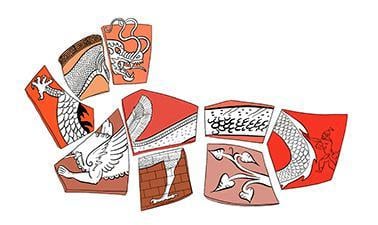
If you're curious about the cultures of this world, past and present, this course is definitely for you. Put your wings on and get ready to ride on our “GLOR-ious” dragon and to enjoy the whole adventure with us!

At the end of this course, you will:

  • Have a panoramic scope of the cultures, societies, languages and belief systems of a wide variety of people
  • Develop a personal and critical approach to understanding the beliefs of cultures

Syllabus

Week 1: Overall presentation

  • Modalities of course
  • Team
  • Geographical introduction
  • Historical introduction

Week 2: Gods and Spirits

  • Nature in Japanese Daily Life
  • The Power of Chinese Hybrids
  • The Gods in Buddhism
  • Egyptian Gods, Cult Centres and the Cosmogony of Heliopolis

Week 3: Angels and Demons

  • Angels in the Hebrew Bible
  • Angels in Islam
  • Demons in Ancient Mesopotamia
  • Fighting the Demons in Egypt: from Texts to Religious Practices

Week 4: Netherworld and Afterlife

  • Concepts of Afterlife in Ancient Egypt
  • The Netherworld in Ancient Mesopotamia
  • The Netherworld in Ancient Anatolia and Iran
  • Underworld and Afterlife in Ancient Greek Epics 1: Tartarus/Erebus
  • Underworld and Afterlife in Ancient Greek Epics 2: Hades
  • Buddha, the Man Who Refuses to Talk About the Afterlife • Ancestor Worship in China

Week 5: Astrology and Heavenly Cycles

  • Eclipses: Beliefs and Theories in the Ancient World 1 - Superstitions
  • Eclipses: Beliefs and Theories in the Ancient World 2 - Theories
  • On World Cycles 1: The Great Year Doctrine in Antiquity
  • On World Cycles 2: The Great Year Doctrine in the Middle Ages
  • Arab Astrology in the Medieval Latin West
  • Astrology and Love in Romance Literatures

Week 6: Magic, Dreams and Miracles

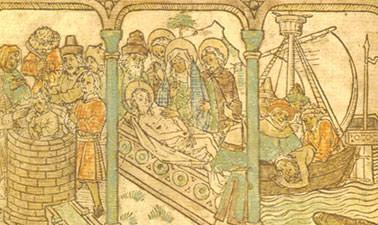
  • The Miraculous Portrait of Jesus
  • The Science of the Letters
  • Alchemy throughout the Ages
  • The Varieties of Magic in Islam
  • Dreams and Meditation in Tibet
  • Forbidden Directions in Japan

Week 7: A Case Study

  • The Miracle of the Moving Muqattam Image

Week 8: Summing up
Go to Class
MOOC List is learner-supported. When you buy through links on our site, we may earn an affiliate commission.

Related Courses

English for Doing Business in Asia - Speaking (edX) EdX
The Hong Kong University of Science and Technology - HKUST,HKUSTx

English for Doing Business in Asia - Speaking (edX)

Introducing strategies for developing your spoken English communication skills in the context of doing business in Asia. The use of English for doing business in multinational settings is a fact of life for many business people. As Asian economies expand and become more involved in the global economy, a lingua franca – a language used to communicate among groups of people who do not share a mother tongue – is needed to exchange information.

Self Paced
Self-Paced
China and Communism (edX) EdX
HarvardX,Harvard University

China and Communism (edX)

Explore the Maoist period of China, from the Communist Party to the death of Mao and the reopening of China. How did the Communists conquer China? What role does culture play? What are the successes and failures of the Chinese Communist Party after seizing power in 1949? What constitutes liberation?

Self Paced
Self-Paced
History of Chinese Architecture | 中国建筑史 (edX) EdX
Tsinghua University,TsinghuaX

History of Chinese Architecture | 中国建筑史 (edX)

This course explores China's rich and varied architectural history. (In Mandarin with English subtitles.) 体味中国古建筑之美,理解中国建筑的重要内涵 China's architectural history spans thousands of years. In this course, we will explore the ancient cities of Chang'an of Han, Luoyang of Northern Wei, Chang'an and Luoyang of Sui and Tang, Kaifeng of Song and Dadu of Yuan, and delve into the history of the awe-inspiring ancient buildings that still grace the landscape of these bustling cities.

No sessions available
13-24 Weeks
China Humanities: The Individual in Chinese Culture (edX) EdX
HarvardX,Harvard University

China Humanities: The Individual in Chinese Culture (edX)

Explore Chinese history and culture from the perspective of the individual through philosophical texts, literary works, and art. In China’s history, there has been a longstanding belief that being cultured and being moral are necessary for a person to participate in public life. We often think of China in political terms – and focus on the history of government – or in social terms – and study the role of the family in society. But this course looks at the individual and the striving for culture and morality.

Self Paced
Self-Paced
Creating Modern China: The Republican Period to the Present (edX) EdX
HarvardX,Harvard University

Creating Modern China: The Republican Period to the Present (edX)

Explore the birth of modern China with a focus on the time between the fall of the Qing and the end of World War II. What does it mean to be modern? What constitutes modern politics, modern institutions, a modern military, and modern infrastructure? In this period of great excitement and experimentation, the country is asking itself: How do you become modern and remain true to the Chinese national identity?

Self Paced
Self-Paced
Development in Emerging Economies: The Case of China (edX) EdX
Peking University,PekingX

Development in Emerging Economies: The Case of China (edX)

Curious about China's development and the Chinese market but haven't known where to start? Peking University brings you an easy-to-understand primer. Guanghua's professors will unpack China's development over five weeks, first giving an overview of China's economic growth as context before addressing private equity, real estate financing, banking, the stock market, wealth management, and other topics associated with China's financial markets.

Self Paced
Self-Paced
Cosmopolitan Tang: Aristocratic Culture in China (edX) EdX
HarvardX,Harvard University

Cosmopolitan Tang: Aristocratic Culture in China (edX)

Explore the reunification of China under the Tang with a focus on aristocratic culture — from poetry to calligraphy to literature. By the Tang period, China was divided into northern and southern dynasties with different rulers and political systems. The north was conquered by relatively unsophisticated barbarians, but in the south, the aristocratic families established a refined appreciation of writing and literature.

Self Paced
Self-Paced
Literati China: Examinations, Neo-Confucianism, and Later Imperial China (edX) EdX
HarvardX,Harvard University

Literati China: Examinations, Neo-Confucianism, and Later Imperial China (edX)

Explore China’s imperial period, with a focus on the Song dynasty and the role of the exam system in government. Fundamental changes in government, the economy, and broader society took place between the 8th and 11th centuries in China. The state aristocracy gave way to new literati elite: educated men who sought to enter government through competitive examinations. A new kind of Confucianism also took shape, which prized the moral autonomy of individuals. With this, the later imperial period of China’s history begins.

Self Paced
Self-Paced
Chinese History From Warring States to the Tang Dynasty | 资治通鉴 (edX) EdX
Tsinghua University,TsinghuaX

Chinese History From Warring States to the Tang Dynasty | 资治通鉴 (edX)

Guides you through the Chinese masterpiece _Zizhi Tongjian, _an unprecedented work of governance and philosophical thinking spanning from the Warring States Period to the Tang Dynasty. Through the teacher's guided reading, students can go deep into the interior of this classic text, gain an overview of thousands of years of history, and improve their literacy in Chinese studies.

Self Paced
Self-Paced
China’s First Empires and the Rise of Buddhism (edX) EdX
HarvardX,Harvard University

China’s First Empires and the Rise of Buddhism (edX)

Learn about the Qin and Han dynasties, and how Buddhism and ideas of self-realization influenced the medieval period. This course, the second in a collection on Chinese history and culture, addresses how the Qin dynasty conquered China and established a new system of government and how the Han dynasty built a stable, centralized empire that lasted for hundreds of years. We cover the early history of Buddhism in China and how the rising feudal aristocracy responded to the loss of empire by looking inward.

Self Paced
Self-Paced