EdX

The Civil War and Reconstruction - 1861 - 1865: A New Birth of Freedom (edX)

The Civil War and Reconstruction - 1861 - 1865: A New Birth of Freedom (edX)

Learn about the political, social, and economic changes in the Union and the Confederacy and the Civil War’s long-term economic and intellectual impact.

Class Deals by MOOC List - Click here and see EdX's Active Discounts, Deals, and Promo Codes.

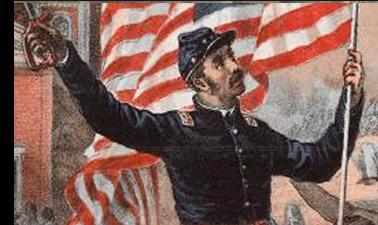
Politics of Freedom: The Civil War, 1861-1865 narrates the history of the American Civil War. While it examines individual engagements and the overall nature of the military conflict, the focus is less on the battlefield than on political, social, and economic change in the Union and the Confederacy. Central to the account are the road to emancipation, the role of black soldiers, the nature of Abraham Lincoln’s wartime leadership, internal dissent in both the North and South, the changing position of women in both societies, and the war’s long-term economic and intellectual impact. We end with a look at the beginnings of Reconstruction during the conflict.
This course is part of the XSeries, Civil War and Reconstruction, which introduces students to the most pivotal era in American history. The Civil War transformed the nation by eliminating the threat of secession and destroying the institution of slavery. It raised questions that remain central to our understanding of ourselves as a people and a nation – the balance of power between local and national authority, the boundaries of citizenship, and the meanings of freedom and equality. This XSeries will examine the causes of the war, the road to secession, the conduct of the Civil War, the coming of emancipation, and the struggle after the war to breathe meaning into the promise of freedom for four million emancipated slaves. One theme throughout the series is what might be called the politics of history – how the world in which a historian lives affects his or her view of the past, and how historical interpretations reinforce or challenge the social order of the present.
This course is part of the The Civil War and Reconstruction XSeries.

What you'll learn

  • Individual engagements and the overall nature of the military conflict
  • Political, social, and economic change in the Union and the Confederacy
  • The road to emancipation
  • The role of black soldiers in the Civil War
  • The nature of Abraham Lincoln’s wartime leadership
  • Internal dissent in both the North and South
  • The changing position of women in both societies
  • The war’s long-term economic and intellectual impact

Syllabus

  1. Introduction to the Civil War
  2. The First Year of the War
  3. The Coming of Emancipation
  4. The Black Soldier
  5. The Confederacy
  6. The Impact of the Civil War
  7. Toward Union Victory
  8. Beginnings of Reconstruction and the End of the War
Go to Class
MOOC List is learner-supported. When you buy through links on our site, we may earn an affiliate commission.

Related Courses

The History of Modern Israel - Part II: Challenges of Israel as a sovereign state (Coursera) Coursera
Tel Aviv University

The History of Modern Israel - Part II: Challenges of Israel as a sovereign state (Coursera)

This course deals with the Israeli politics, economy, society and culture, since its creation in 1948 till today. It analyzes the construction of the Israeli historical narrative as an identity-building narrative, intending to inculcate a collective memory to a diverse society. We will focus on key events and essential components that shaped the Israeli society from the fifties till the present. We will also discuss the changes that the Israeli society experiences in its almost seventy years of existence and how it affects its politics and culture.

Aug 17th 2026
5-12 Weeks
The Changing Landscape of Ancient Rome. Archaeology and History of the Palatine Hill (Coursera) Coursera
Sapienza University of Rome

The Changing Landscape of Ancient Rome. Archaeology and History of the Palatine Hill (Coursera)

Studying ancient - as well as medieval or modern - cities basically means telling local urban stories based on the reconstruction of changing landscapes through the centuries. Given the fragmentary nature of archaeological evidence, it is necessary to create new images that would give back the physical aspect of the urban landscape and that would bring it to life again. We are not just content with analyzing the many elements still visible of the ancient city.

Aug 17th 2026
5-12 Weeks
PredictionX: Diviner’s Guide (edX) EdX
HarvardX,Harvard University

PredictionX: Diviner’s Guide (edX)

This course is an overview of divination systems, ranging from ancient Chinese bone burning to modern astrology. Humans have always sought to know their own future, be it the destiny of an empire or an individual's fate. Across cultures and history, we find people trying to find their place in the Universe by attempting to gaze into the future.

Self Paced
Self-Paced
Søren Kierkegaard - Subjectivity, Irony and the Crisis of Modernity (Coursera) Coursera
University of Copenhagen

Søren Kierkegaard - Subjectivity, Irony and the Crisis of Modernity (Coursera)

In this course created by former associate professor at the Søren Kierkegaard Research Centre, Jon Stewart, we will explore how Kierkegaard deals with the problems associated with relativism, the lack of meaning and the undermining of religious faith that are typical of modern life. His penetrating analyses are still highly relevant today and have been seen as insightful for the leading figures of Existentialism, Post-Structuralism and Post-Modernism.

Aug 17th 2026
5-12 Weeks
Globalization: Past and Future (edX) EdX
SDGAcademyX,SDG Academy

Globalization: Past and Future (edX)

Is globalization a new phenomenon or a cyclical pattern throughout human history? In this four-part mini-course, Professor Jeffrey Sachs argues that we have always lived in a global world. He takes students on a historical and anthropological tour of six distinct waves of globalization and outlines the key factors that drove innovation, technology dispersal and development during these epochs.

Self Paced
Self-Paced
China’s First Empires and the Rise of Buddhism (edX) EdX
HarvardX,Harvard University

China’s First Empires and the Rise of Buddhism (edX)

Learn about the Qin and Han dynasties, and how Buddhism and ideas of self-realization influenced the medieval period. This course, the second in a collection on Chinese history and culture, addresses how the Qin dynasty conquered China and established a new system of government and how the Han dynasty built a stable, centralized empire that lasted for hundreds of years. We cover the early history of Buddhism in China and how the rising feudal aristocracy responded to the loss of empire by looking inward.

Self Paced
Self-Paced
Magic in the Middle Ages (Coursera) Coursera
University of Barcelona

Magic in the Middle Ages (Coursera)

Magical thought has always attracted human imagination. In this course we will introduce you to the Middle Ages through a wide conception of magic. Students will have an approach to medieval culture, beliefs and practices from the perspective of History and History of Science. Popular magic, as well as learned magic (alchemy, geomancy and necromancy) will be addressed. Moreover, we will also deal with how eastern practices and texts influenced western culture. In July 2016, the course will contain a brand-new module devoted to astrology. Magic in the Middle Ages offers a captivating overview of medieval society and promotes reflection about certain stereotypes associated with this period.

Aug 17th 2026
5-12 Weeks
A Global History of Architecture (edX) EdX
MIT,MITx

A Global History of Architecture (edX)

Learn about humanity’s rich architectural history on this journey around the globe – from 100,000 BCE to ca. 1,600 CE. How do we understand architecture? One way of answering this question is by looking through the lens of history, beginning with First Societies and extending to the 16th century. This course in architectural history is not intended as a linear narrative, but rather aims to provide a more global view, by focusing on different architectural "moments."

Oct 18th 2023
5-12 Weeks
Arab-Islamic History: From Tribes to Empires (edX) EdX
Tel Aviv University,IsraelX,TAUx

Arab-Islamic History: From Tribes to Empires (edX)

Learn about the history of the Arab and Muslim world during its first millennium, including political, social and cultural aspects. You will study this course in two parts. The first presents the main political events that set the chronological framework for the course, namely 6th century to the arrival of the Ottomans in the Middle East in the beginning of the 16th century. The second part delves into social and cultural realities of the medieval Middle East.

Self Paced
Self-Paced
Tangible Things: Discovering History Through Artworks, Artifacts, Scientific Specimens, and the Stuff Around You (edX) EdX
HarvardX,Harvard University

Tangible Things: Discovering History Through Artworks, Artifacts, Scientific Specimens, and the Stuff Around You (edX)

Gain an understanding of history, museum studies, and curation by looking at, organizing, and interpreting art, artifacts, scientific curiosities, and the stuff of everyday life. Have you ever wondered about how museum, library, and other kinds of historical or scientific collections all come together? Or how and why curators, historians, archivists, and preservationists do what they do?

Self Paced
Self-Paced