Software Architecture (Coursera)

Offered by University of Alberta,
Software Architecture (Coursera)

The way that software components — subroutines, classes, functions, etc. — are arranged, and the interactions between them, is called architecture. In this course you will study the ways these architectures are represented, both in UML and other visual tools. We will introduce the most common architectures, their qualities, and tradeoffs. We will talk about how architectures are evaluated, what makes a good architecture, and an architecture can be improved. We'll also talk about how the architecture touches on the process of software development.

Class Deals by MOOC List - Click here and see Coursera's Active Discounts, Deals, and Promo Codes.

In the Capstone Project you will document a Java-based Android application with UML diagrams and analyze evaluate the application’s architecture using the Architecture Tradeoff Analysis Method (ATAM).
After completing this course, you will be able to:
• Compare and contrast the components, connections, protocols, topologies, constraints, tradeoffs, and variations of different types of architectural styles used in the design of applications and systems (e.g., main program and subroutine, object-oriented, interpreters, pipes and filters, database centric, event-based).
• Describe the properties of layered and n-tier architectures.
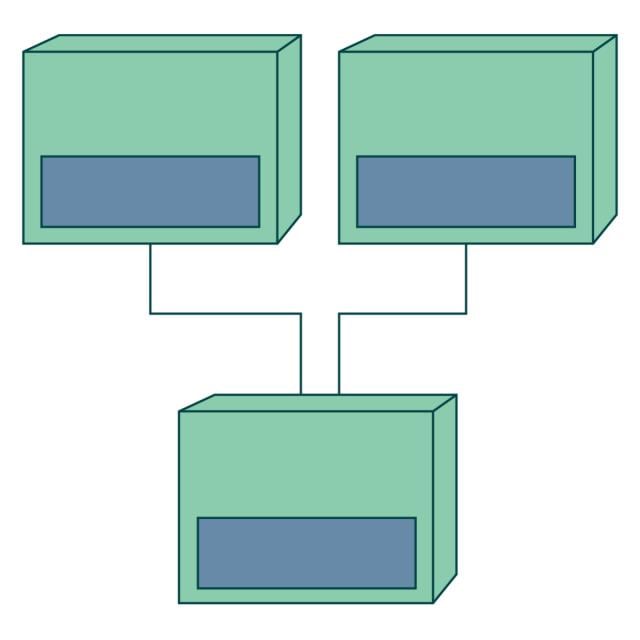
• Create UML ipackage, component, and deployment diagrams to express the architectural structure of a system.
• Explain the behaviour of a system using UML activity diagrams.
• Document a multi-application system with a layered architecture.

Course 3 of 4 in the Software Design and Architecture Specialization

Syllabus

WEEK 1
UML Architecture Diagrams
In this module you will learn about software architecture. You will learn why architecture is important, what perspectives need to be considered, and how to communicate architecture using UML.

WEEK 2
Architectural Styles
Software comes in all shapes and sizes. The architecture you choose will affect every part of your software, from its security and efficiency, to its modularity and maintainability. In this module we will examine the different architectures that you have to choose from to shape your software.

WEEK 3
Architecture in Practice
The architecture is the most fundamental aspect of software. You will learn how development teams describe architectures, plan successful architectures based on quality attributes, and evaluate the resulting architecture. You will also learn how architecture relates to organization structure and even product planning!

WEEK 4
Capstone Challenge
Now, in the final module of the course, you will evaluate the proposed architecture to extend the functionality of the example Android code base.

Go to Class
MOOC List is learner-supported. When you buy through links on our site, we may earn an affiliate commission.

Related Courses

Interfacing with the Raspberry Pi (Coursera) Coursera
University of California, Irvine

Interfacing with the Raspberry Pi (Coursera)

The Raspberry Pi uses a variety of input/output devices based on protocols such as HDMI, USB, and Ethernet to communicate with the outside world. In this class you will learn how to use these protocols with other external devices (sensors, motors, GPS, orientation, LCD screens etc.) to get your IoT device to interact with the real world.

Jul 20th 2026
4 Weeks
Software Architecture for the Internet of Things (Coursera) Coursera
EIT Digital

Software Architecture for the Internet of Things (Coursera)

This course will teach you how to design futureproof systems that meet the requirements of IoT systems: systems that are secure, interoperable, modifiable and scalable. Moreover, you'll learn to apply best-in-class software architecture methods to help you design complex IoT and other applications. Lastly, you'll come to understand the business impact of the technical decisions that you make as an IoT system architect.

Aug 3rd 2026
5-12 Weeks
TCP/IP and Advanced Topics (Coursera) Coursera
University of Colorado System

TCP/IP and Advanced Topics (Coursera)

In this course, we give an in-depth study of the TCP/IP protocols. We examine the details of how IP enables communications across a collection of networks. We pay particular attention to the hierarchical structure of IP addresses and explain their role in ensuring scalability of the Internet. The role of address prefixes and the uses of masks are explained in details. We review in details about TCP three-way handshake, flow control, and congestion control. Furthermore, we provide an introduction to some advanced topics, including Multicast, SDN and security

Jul 20th 2026
5-12 Weeks
Programación en Python (Coursera) Coursera
Universidad de los Andes

Programación en Python (Coursera)

¡Te damos la bienvenida al curso de Programación en Python de la Universidad de los Andes! El propósito de este curso es ofrecerte un ambiente interactivo para que desarrolles tus habilidades de pensamiento computacional, aprendas a programar en el lenguaje Python y te entrenes en la resolución de problemas utilizando un computador. La estrategia pedagógica empleada es el aprendizaje activo basado en casos.

Aug 3rd 2026
4 Weeks
Making Architecture (Coursera) Coursera
IE Business School,IE School of Architecture & Design

Making Architecture (Coursera)

Making architecture offers a unique insight into the mind and work of an Architect, starting with the basics of the profession and culminating with the production of a scaled site model. The course should act as ideal preparation for those interested in undertaking an undergraduate degree in Architecture, although its flexible, intriguing and enjoyable content makes it accessible for all those looking to increase their knowledge in the field.

Jul 20th 2026
4 Weeks
TDD - Desenvolvimento de Software Guiado por Testes (Coursera) Coursera
Instituto Tecnológico de Aeronáutica

TDD - Desenvolvimento de Software Guiado por Testes (Coursera)

Neste curso, assumimos que você já sabe projetar e desenvolver programas mais complexos em Java, com método e organização graças às boas práticas e princípios exercitados no curso anterior; mas você talvez não se sinta ainda confortável em projetar programas usando técnicas ágeis, como o desenvolvimento guiado por testes (TDD).

Jul 20th 2026
4 Weeks
System Validation (2): Model process behaviour (Coursera) Coursera
EIT Digital

System Validation (2): Model process behaviour (Coursera)

System Validation is the field that studies the fundamentals of system communication and information processing. It is the next logical step in computer science and improving software development in general. It allows automated analysis based on behavioural models of a system to see if a system works correctly. We want to guarantee that the systems does exactly what it is supposed to do.

Jul 20th 2026
3 Weeks
Client Needs and Software Requirements (Coursera) Coursera
University of Alberta

Client Needs and Software Requirements (Coursera)

This course covers practical techniques to elicit and express software requirements from client interactions. Upon successful completion of this course, you will be able to: Create clear requirements to drive effective software development; visualize client needs using low-fidelity prototypes; maximize the effectiveness of client interactions - adapt to changing product requirements.

Aug 3rd 2026
4 Weeks
Continuous Integration (Coursera) Coursera
University of California, Davis

Continuous Integration (Coursera)

In today's world, software development is highly complex and often has large teams of developers working on small pieces of a larger software project. This course will go over the basic principles of using a continuous integration system effectively to constantly improve software. We're going to describe the different stations of continuous test, build, integration and deploy processes required for DevOps practices and apply best practices for quality software management, and tooling to accomplish iterative software build & test processes.

Jul 27th 2026
4 Weeks
Agile Planning for Software Products (Coursera) Coursera
University of Alberta

Agile Planning for Software Products (Coursera)

This course covers the techniques required to break down and map requirements into plans that will ultimately drive software production. Upon successful completion of this course, you will be able to: create effective plans for software development; map user requirements to developer tasks; assess and plan for project risks; apply velocity-driven planning techniques; generate work estimates for software products.

Aug 3rd 2026
4 Weeks