Landscape Education for Transition (POK)

Offered by Politecnico di Milano,
Landscape Education for Transition (POK)

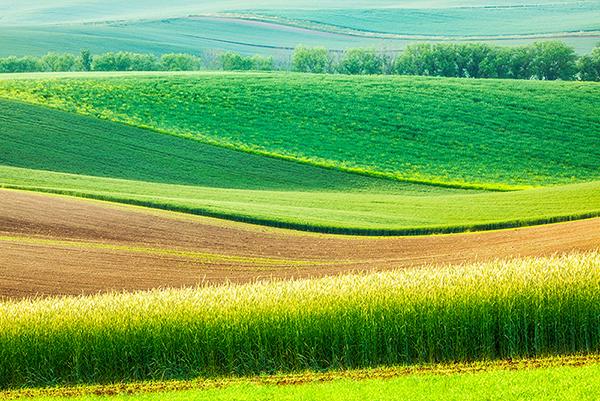
Take actions to identify, analyse and care the landscape around us! “Landscape Education for Transition” responds to a recommendation by the Council of the European Union, which encourages highlighting the significant role of education as a tool for achieving a green and sustainable transition. Furthermore, the MOOC proposes a landscape-oriented education, both for outstanding and ordinary landscapes. This approach underscores the undeniable connection between landscape and quality of life and emphasizes how institutions should incorporate landscape considerations into their policies.

Citizens have rights and responsibilities concerning the landscape, which is the result of both physical and cultural factors. Then, it becomes of vital importance to take actions aimed at the identification, assessment, protection, management, and planning of the landscape, ultimately resulting in genuine citizen participation.
Therefore, this MOOC is oriented to “(…) highlight the key role of schools, higher education and other education and training institutions in engaging with learners, parents, educators and the wider community on the changes needed for a successful, just and inclusive green transition. In its conclusions on ‘Biodiversity – the need for urgent action’, the Council stressed that investing in education, among other areas, is key in gathering the best data and finding the best solutions in this regard. The EU Youth Strategy identifies a sustainable green Europe as a goal and calls for all young people to be environmentally active and educated” (Council Recommendation of the European Union, 2022).

“Landscape Education for Transition” is structured to encompass various sections. Throughout these different segments, the overarching theme of "transition" serves as the common thread.
In this context, "transition" is defined as the educational focal point of the MOOC, with a specific emphasis on green transition and sustainable development. The program is designed to foster an understanding of the interconnected global challenges facing society, such as the climate crisis, environmental degradation, and biodiversity loss, among many others. These challenges are recognized for their multifaceted impact on environmental, social, economic, and cultural dimensions, as highlighted by the Council of the European Union.

“Landscape Education for Transition” is structured in 5 sections:

  • Food for thought. Key concepts
  • Landscape Visions. Transition and Education
  • Good Practices. Ideas and Experiences
  • MiniTools. Operational Tools
  • Your Learning Path. Planning and Sharing

Total workload of the course: 3 hours
This MOOC is provided by Politecnico di Milano, in collaboration with UNIVERSIDAD DE MURCIA (Spain), IES POETA JULIAN ANDUGAR (Spain), Cuatro Naranjos Murcia Active School. Murcia (Spain), Educación para el desarrollo sostenible InDirectFilm (Contemporary Audiovisual Practices) (Spain), ISTITUTO COMPRENSIVO LUIGI GALVANI (Italy), OIKODROM-FORUM NACHHALTIGE STADT - VEREIN FUER NEUE STAEDTEBAUKULTUR (Austria), MS Koppstraße 110 Schule 2 (Austria), UNIVERSITAET FUER ANGEWANDTE KUNST WIEN (Austria).

Intended Learning Outcomes
By actively participating in this MOOC, you will be able to:

  1. describe what is meant by landscape and cultural heritage, consistent with European guidelines.
  2. describe the different dimensions included in the concept of 'landscape';
  3. connect heritage education and landscape education, heritage education and active citizenship education;
  4. to design a a training path for you specific context based on the potential of heritage education for intercultural and intergenerational exchange, also in the context of ordinary or degraded landscapes;
  5. get motivated to action for the landscape (and consequently to exhort his/her students) and to promote the involvement of his/her students in the material care of a landscape;
  6. have the opportunity to explore different landscapes and understand the 'Edulands' methodology will be able to recognise the value and opportunities of each landscape.

Go to Class
MOOC List is learner-supported. When you buy through links on our site, we may earn an affiliate commission.

Related Courses

What future for education? (Coursera) Coursera
University of London,UCL Institute of Education

What future for education? (Coursera)

Through this course you will start to critically examine your own ideas about education, teaching and learning. The critique will be developed through engagement with theories and ideas developed through educational research. You will be encouraged to use these ideas to challenge or support your own ideas about education. Each week we will focus on one key question, using video lectures, key readings and challenges to explore some commonplace notions about education.

Oct 12th 2026
5-12 Weeks
Resilient Teaching Through Times of Crisis and Change (Coursera) Coursera
University of Michigan

Resilient Teaching Through Times of Crisis and Change (Coursera)

Resilient teaching is the ability to facilitate learning experiences that are designed to be adaptable to fluctuating conditions and disruptions. This teaching ability can be seen as an outcome of a design approach that attends to the relationship between learning goals and activities, and the environments they are situated in. Resilient teaching approaches take into account how a dynamic learning context may require new forms of interactions between teachers, students, content, and tools. Additionally, they necessitate the capacity to rethink the design of learning experiences based on a nuanced understanding of context.

Oct 12th 2026
4 Weeks
Progettare l'Innovazione Didattica (POK) Polimi OPEN KNOWLEDGE
Politecnico di Milano

Progettare l'Innovazione Didattica (POK)

La Cultura del progetto a servizio dell’Innovazione Didattica. Da dove cominciare per innovare la propria didattica? Ma, prima ancora, cosa significa fare innovazione in aula? Progettare l’innovazione didattica si propone di mettere la cultura del progetto a servizio dell’innovazione didattica, supportando chi non ha uno specifico background pedagogico e desidera appropriarsi degli strumenti di base della buona progettazione didattica per poi proseguire nell’esplorazione delle frontiere dell’innovazione.

Available
5-12 Weeks
Introduzione al Debate (POK) Polimi OPEN KNOWLEDGE
Politecnico di Milano

Introduzione al Debate (POK)

Cos’è il Debate e come praticarlo al meglio in classe? Quali sono le sue regole? Come valutarlo? In questo corso potrai trovare non solo valide risposte a questi interrogativi, ma anche pratiche raccomandazioni e suggerimenti da parte di docenti esperti.

Available
5-12 Weeks
Diventare tutor didattico! (POK) Polimi OPEN KNOWLEDGE
Politecnico di Milano

Diventare tutor didattico! (POK)

Strumenti pratici a supporto del tutor didattico in università. Qual è il compito di un tutor didattico in ambito universitario? Come si dovrebbe impostare il rapporto con gli studenti? Come si progetta un percorso che abbia tutte le potenzialità per supportare al meglio l’apprendimento degli studenti? “Diventare tutor didattico!” è utile per tutti coloro che dovranno svolgere, o stanno svolgendo, un’attività di tutorship e che sono alle prime armi nel mondo della didattica.

Available
2 Weeks
Training and Learning Programs for Volunteer Community Health Workers (Coursera) Coursera
Johns Hopkins University

Training and Learning Programs for Volunteer Community Health Workers (Coursera)

Volunteer community health workers (CHWs) are a major strategy for increasing access to and coverage of basic health interventions. Our village health worker training course reviews the process of training and continuing education of CHWs as an important component of involving communities in their own health service delivery. Participants will be guided through the steps of planning training and continuing education activities for village volunteers. The course draws on real-life examples from community-directed onchocerciasis control, village health worker programs, community case management efforts, peer educators programs and patent medicine vendor training programs, to name a few.

Oct 12th 2026
5-12 Weeks
Valutare e giudicare nel Debate (POK) Polimi OPEN KNOWLEDGE
Politecnico di Milano

Valutare e giudicare nel Debate (POK)

Sei un docente che usa la metodologia del Debate con i propri studenti, un professionista che sta pensando di applicarla in ambiti extra-scolastici o un giudice di Debate che vuole approfondire alcuni aspetti di questo non semplice ruolo? Hai finora dibattuto e adesso ti piacerebbe anche giudicare i dibattiti? Ti sei già accorto dell’importanza e della complessità della valutazione nel Debate, oltre che delle difficoltà ad essa connesse? Se sei incuriosito dalle potenzialità di questo aspetto centrale e fondamentale per il Debate, questo corso fa per te.

Available
5-12 Weeks
Disability Inclusion in Education: Building Systems of Support (Coursera) Coursera
University of Cape Town

Disability Inclusion in Education: Building Systems of Support (Coursera)

Worldwide millions of children are not able to fully participate in schooling, and this is especially a problem for children with disabilities. In this course, we explore the support that teachers need in order to meet the needs of children with severe to profound hearing, visual and intellectual disabilities. We consider how this can be done by talking with a range of experts (from teachers to activists) about inclusive education as well as sharing experiences of education.

Oct 12th 2026
5-12 Weeks
To Flip Or Not To Flip - Discover the flipped classroom methodology (POK) Polimi OPEN KNOWLEDGE
Politecnico di Milano

To Flip Or Not To Flip - Discover the flipped classroom methodology (POK)

To flip or not to flip? That is the question! Let’s walk together this path: how does flipped learning works? How to adopt this approach in teaching day life? What is flipped learning? According to the Flipped Learning Network, it is a “pedagogical approach in which direct instruction moves from the group learning space to the individual learning space, and the resulting group space is transformed into a dynamic, interactive learning environment where the educator guides students as they apply concepts and engage creatively in the subject matter.”

Available
5-12 Weeks
Introduction to Academic Writing (Coursera) Coursera
O.P. Jindal Global University

Introduction to Academic Writing (Coursera)

Welcome to the Introduction to Academic Writing course! By the end of this course, you will gain an in-depth understanding of reading and writing as essential skills to conduct robust and critical research. This course introduces you to critical reading and writing skills within the conventions of academic writing.

Oct 12th 2026
4 Weeks
Measuring the impact of the Energy Transition (POK) Polimi OPEN KNOWLEDGE
Politecnico di Milano

Measuring the impact of the Energy Transition (POK)

The Industrial Ecology approach for assessing the Sustainability of the Energy Transition. The aim of this MOOC is to provide a holistic but quantitative and multi-dimensional perspective on the energy transition underway today. Especially when dealing with cross sectoral linkages and circular economy, the instruments made available by the Industrial Ecology can represent a great support to researchers and practitioners and can be used to better inform policy makers.

Available
3 Weeks