Diventare tutor didattico! (POK)

Offered by Politecnico di Milano,
Diventare tutor didattico! (POK)

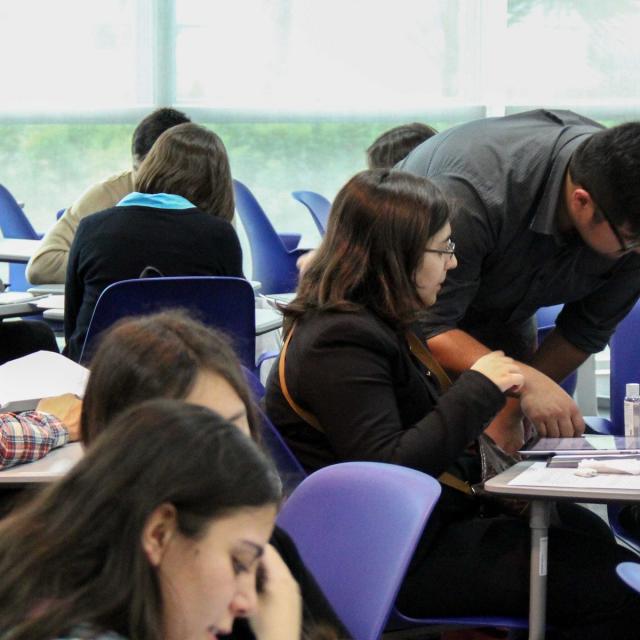
Strumenti pratici a supporto del tutor didattico in università. Qual è il compito di un tutor didattico in ambito universitario? Come si dovrebbe impostare il rapporto con gli studenti? Come si progetta un percorso che abbia tutte le potenzialità per supportare al meglio l’apprendimento degli studenti? “Diventare tutor didattico!” è utile per tutti coloro che dovranno svolgere, o stanno svolgendo, un’attività di tutorship e che sono alle prime armi nel mondo della didattica.

Il corso aiuta da una parte ad inquadrare il ruolo di tutor all’interno del contesto universitario e dall’altra fornisce gli strumenti logici e metodologici per progettare e gestire al meglio il percorso di insegnamento.
Per quanto riguarda i tutor che invece hanno già esperienza in ambito didattico, consigliamo il MOOC di POK “Progettare l’Innovazione Didattica” che fornisce gli strumenti di base per una buona progettazione didattica e spunti per impostare e gestire processi di apprendimento efficaci per poi proseguire nell’esplorazione delle frontiere dell’innovazione.

Il MOOC è composto da tre week.
Week 1 – Chi è il tutor?
Week 2 – Come imposto la mia attività di tutor?
Week 3 – Tutor e studenti internazionali
Nella prima week introdurremo il tema del ruolo del tutor all’interno del contesto universitario.
Attraverso una serie di quiz riflessivi ti aiuteremo ad inquadrare al meglio l’attività che andrai a svolgere e ad individuare i riferimenti organizzativi e gerarchici del tuo ateneo. In questa week metteremo in luce anche i vantaggi personali e lo sviluppo di competenze trasversali legati alle attività di tutorship didattica.
Nella seconda week affronteremo, invece, il tema della progettazione del percorso di tutorship, dedicando una riflessione specifica al primo incontro, spesso cruciale per l’impostazione dell’attività.
Scopriremo poi come il segreto di un bravo tutor sia mettere in campo processi di feedback costanti e supportivi. Vedremo quindi come fornire feedback efficaci sia sul piano del processo che delle performance. Proveremo poi a sciogliere alcuni dei dubbi che possono sorgere all’inizio o durante l’attività di tutorship.
Nella terza week approfondiremo, infine, il tema della multiculturalità legato all’attività di tutorship. In particolare vedremo alcune problematiche specifiche che gli studenti internazionali incontrano, e forniremo una serie di indicazioni pratiche su come gestire, all’interno del processo di tutorship, le difficoltà che gli studenti internazionali possono incontrare.


Go to Class
MOOC List is learner-supported. When you buy through links on our site, we may earn an affiliate commission.

Related Courses

Ubiquitous Learning and Instructional Technologies (Coursera) Coursera
University of Illinois at Urbana-Champaign

Ubiquitous Learning and Instructional Technologies (Coursera)

This course will analyze currently available technologies for learning. Areas addressed include: learning management systems, intelligent tutors, computer adaptive testing, gamification, simulations, learning in and through social media and peer interaction, universal design for learning, differentiated instruction systems, big data and learning analytics, attention monitoring, and affect-aware systems.

Nov 23rd 2026
4 Weeks
Disability Awareness and Support (Coursera) Coursera
University of Pittsburgh

Disability Awareness and Support (Coursera)

The goal of this course is to promote equal opportunity and the full participation of students with disabilities in higher education by helping participants advance their awareness of the meaning of accessibility in education. Participants will gain competence and confidence in working with students by focusing on legislation, universal design, and assistive technologies. Thank you to Abbas (Bobby) Husain Quamar, Graduate Student Researcher in the Department of Rehabilitation Science and Technology at the University of Pittsburgh, for his contributions to the course.

Nov 23rd 2026
4 Weeks
Valutare e giudicare nel Debate (POK) Polimi OPEN KNOWLEDGE
Politecnico di Milano

Valutare e giudicare nel Debate (POK)

Sei un docente che usa la metodologia del Debate con i propri studenti, un professionista che sta pensando di applicarla in ambiti extra-scolastici o un giudice di Debate che vuole approfondire alcuni aspetti di questo non semplice ruolo? Hai finora dibattuto e adesso ti piacerebbe anche giudicare i dibattiti? Ti sei già accorto dell’importanza e della complessità della valutazione nel Debate, oltre che delle difficoltà ad essa connesse? Se sei incuriosito dalle potenzialità di questo aspetto centrale e fondamentale per il Debate, questo corso fa per te.

Available
5-12 Weeks
Serious Gaming (Coursera) Coursera
Erasmus University Rotterdam

Serious Gaming (Coursera)

Have you ever wondered how playing games can help us to train people, deal with societal challenges or raise awareness of contemporary social issues? In this MOOC you will learn the ins and outs of games that are designed with exactly those purposes in mind: serious games. We will define serious games and discuss the different types that have been developed. We will explain why people like to play them and what impact they may have.

Nov 23rd 2026
5-12 Weeks
D-TRANSFORM: University Strategies in the Digital Age (POK) Polimi OPEN KNOWLEDGE
Politecnico di Milano

D-TRANSFORM: University Strategies in the Digital Age (POK)

In the 21st century a new learning ecosystem of students, educators, and resources developed: discover with us how digital resources can be a catalyst for change in university strategies. With society, universities and labour market becoming more and more reliant on technology, it is important for higher education leaders to leverage the power of digital resources in order to find a strategy for change.

Available
5-12 Weeks
New Learning: Principles and Patterns of Pedagogy (Coursera) Coursera
University of Illinois at Urbana-Champaign

New Learning: Principles and Patterns of Pedagogy (Coursera)

Education is in a state of flux – transitioning from traditional architectures and practices to new ecologies of teaching and learning influenced by the tremendous social and technological changes of our times. What changes are afoot today in workplaces, civic life and everyday community life? What are their implications for education? What are the possible impacts of contemporary social transformations on teaching and learning - including in the areas of technology, media, globalization, diversity, changing forms of work in the “knowledge society”, and, in these contexts, changing learner needs and sensibilities? This course explores three pedagogical paradigms: “didactic”, “authentic” and “transformative” learning.

Nov 23rd 2026
4 Weeks
Potenciando mi aprendizaje en el primer año de Universidad (Coursera) Coursera
Universidad de Chile

Potenciando mi aprendizaje en el primer año de Universidad (Coursera)

El propósito del curso es acompañar a los estudiantes de primer año a potenciar sus aprendizajes, con la finalidad de fomentar una buena experiencia en la universidad. Lo anterior se realiza a través de un auto- diagnóstico y de la familiarización con distintas estrategias de estudio, de gestión del tiempo y del abordaje de evaluaciones.

Nov 23rd 2026
5-12 Weeks
Advanced Instructional Strategies in the Virtual Classroom (Coursera) Coursera
University of California, Irvine

Advanced Instructional Strategies in the Virtual Classroom (Coursera)

Welcome to Advanced Instructional Strategies in the Virtual Classroom! This course will help you apply strategies to the critical areas of K-12 virtual instruction to significantly impact virtual education. We will examine the pitfalls beginning teachers run into and learn how to overcome them by focusing on the fundamentals that have the greatest impact on student learning in a blended or online environment. By the end of the course, you will be able to empower your students to be voracious learners who are ready to go out and make the world a better place to live.

Nov 23rd 2026
5-12 Weeks
Social Science Approaches to the Study of Chinese Society Part 1 (Coursera) Coursera
The Hong Kong University of Science and Technology - HKUST

Social Science Approaches to the Study of Chinese Society Part 1 (Coursera)

This course seeks to turn learners into informed consumers of social science research. It introduces concepts, standards, and principles of social science research to the interested non-expert. Learners who complete the course will be able to assess evidence and critically evaluate claims about important social phenomena. It reviews the origins and development of social science, describes the process of discovery in contemporary social science research, and explains how contemporary social science differs from apparently related fields. It describes the goals, basic paradigms, and methodologies of the major social science disciplines.

Nov 23rd 2026
5-12 Weeks
Social Norms, Social Change I (Coursera) Coursera
University of Pennsylvania

Social Norms, Social Change I (Coursera)

This is a course on social norms, the rules that glue societies together. It teaches how to diagnose social norms, and how to distinguish them from other social constructs, like customs or conventions. These distinctions are crucial for effective policy interventions aimed to create new, beneficial norms or eliminate harmful ones. The course teaches how to measure social norms and the expectations that support them, and how to decide whether they cause specific behaviors.

Nov 23rd 2026
4 Weeks