Designing Learning Innovation (POK)

Offered by Politecnico di Milano,
Designing Learning Innovation (POK)

The designing culture fertilizing Learning Innovation. Where to start to innovate your teaching? But before that, what does it mean to innovate in the classroom? Designing Learning Innovation aims to put the designing culture at the service of learning innovation, supporting those who do not have a specific pedagogical background and those who wish to learn the basic tools of a good teaching design then to continue exploring the frontiers of innovation.

A set of logical and methodological tools to innovate teaching, finding the most suitable approaches with one’s own vision of the teaching-learning experience.

The course is organized in 6 Weeks providing an exploration path of different topics related to the design of learning innovation.
Week 1 – Why Learning Innovation
Week 2 – The Intended Learning Outcomes
Week 3 – The Assessment
Week 4 – The Pedagogical Framework
Week 5 – The Learning Innovation Network: active classroom
Week 6 – The Learning Innovation Network: contents and useful connections
The Weeks have several lessons within them, consisting of videos, texts, infographics and individual self-reflection exercises. At the end of each Week there are assessed quizzes, necessary to obtain the final certificate.
Specifically, in Week 1 we will reflect on the concept of learning innovation, trying to find an answer to the question “why might we need to innovate our teaching?”.
In Week 2 we will explore the topic of Intended Learning Outcomes (ILOs) and their key role as a guide through learning innovation design processes. We will start with the Constructive Alignment concept and the analysis of the Dublin Descriptors and Bloom’s Taxonomies as useful cues for a richer design of the Intended Learning Outcomes.
In Week 3 we will analyze the role of Assessment in the learning process, trying to apply its key principles in the teaching design processes.
In Week 4 we will discuss together the Pedagogical Frameworks and their possible use in the design of learning innovation.
In Weeks 5 and 6 we will explore the Learning Innovation Network, a didactic design tool developed by METID – Politecnico di Milano, which focuses on the dynamics of interaction between the subjects that generate the teaching and learning experience and who benefit from it. We will see how this tool proves to be a useful support for the teacher-designer for the design of learning innovation.
In particular, in Week 5 we will focus on the use of the Learning Innovation Network starting from the identification and representation of the subjects of the teaching and learning experience and the definition and description of the teaching activities for the active classroom.
In Week 6, the focus will be on the design of content, on the communication channels and on the integration of strategies of the "outside world" to support teaching and learning activities, as well as the monitoring of innovative teaching and learning experiences.


Go to Class
MOOC List is learner-supported. When you buy through links on our site, we may earn an affiliate commission.

Related Courses

Serious Gaming (Coursera) Coursera
Erasmus University Rotterdam

Serious Gaming (Coursera)

Have you ever wondered how playing games can help us to train people, deal with societal challenges or raise awareness of contemporary social issues? In this MOOC you will learn the ins and outs of games that are designed with exactly those purposes in mind: serious games. We will define serious games and discuss the different types that have been developed. We will explain why people like to play them and what impact they may have.

Nov 23rd 2026
5-12 Weeks
Teaching EFL/ESL Reading: A Task Based Approach (Coursera) Coursera
University of London,UCL Institute of Education

Teaching EFL/ESL Reading: A Task Based Approach (Coursera)

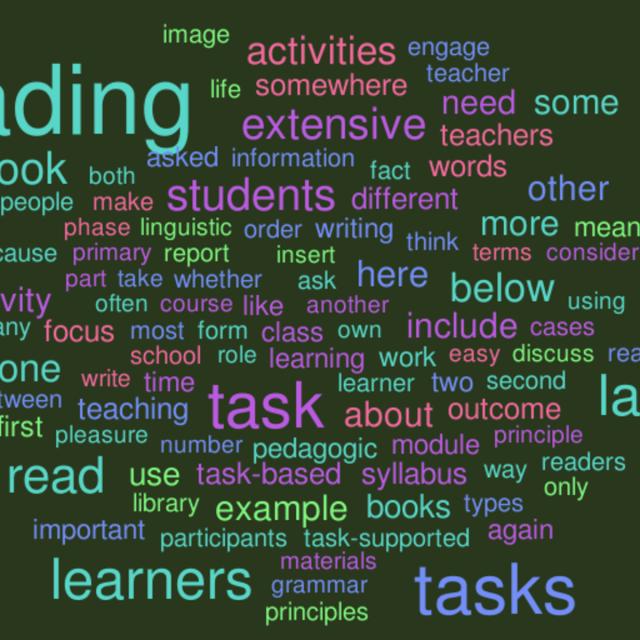
This course explores ways of teaching reading skills in English as Second and Foreign Language (ESL/EFL) using a task-based approach. You will be introduced to the concept of task and the key principles of task-based language teaching (TBLT) and learning. TBLT uses communicative tasks as the key unit for creating language learning activities. You will also examine the role of reading in real-life and in second and foreign language teaching and current thinking about the interface between TBLT and second language reading.

Nov 23rd 2026
5-12 Weeks
Potenciando mi aprendizaje en el primer año de Universidad (Coursera) Coursera
Universidad de Chile

Potenciando mi aprendizaje en el primer año de Universidad (Coursera)

El propósito del curso es acompañar a los estudiantes de primer año a potenciar sus aprendizajes, con la finalidad de fomentar una buena experiencia en la universidad. Lo anterior se realiza a través de un auto- diagnóstico y de la familiarización con distintas estrategias de estudio, de gestión del tiempo y del abordaje de evaluaciones.

Nov 23rd 2026
5-12 Weeks
To Flip Or Not To Flip - Discover the flipped classroom methodology (POK) Polimi OPEN KNOWLEDGE
Politecnico di Milano

To Flip Or Not To Flip - Discover the flipped classroom methodology (POK)

To flip or not to flip? That is the question! Let’s walk together this path: how does flipped learning works? How to adopt this approach in teaching day life? What is flipped learning? According to the Flipped Learning Network, it is a “pedagogical approach in which direct instruction moves from the group learning space to the individual learning space, and the resulting group space is transformed into a dynamic, interactive learning environment where the educator guides students as they apply concepts and engage creatively in the subject matter.”

Available
5-12 Weeks
Designing Learning Innovation (Coursera) Coursera
Politecnico di Milano

Designing Learning Innovation (Coursera)

Where to start to innovate your teaching? But before that, what does it mean to innovate in the classroom? Designing Learning Innovation aims to put the designing culture at the service of learning innovation, supporting those who do not have a specific pedagogical background and those who wish to learn the basic tools of a good teaching design then to continue exploring the frontiers of innovation. A set of logical and methodological tools to innovate teaching, finding the most suitable approaches with one’s own vision of the teaching-learning experience.

Nov 23rd 2026
5-12 Weeks
New Learning: Principles and Patterns of Pedagogy (Coursera) Coursera
University of Illinois at Urbana-Champaign

New Learning: Principles and Patterns of Pedagogy (Coursera)

Education is in a state of flux – transitioning from traditional architectures and practices to new ecologies of teaching and learning influenced by the tremendous social and technological changes of our times. What changes are afoot today in workplaces, civic life and everyday community life? What are their implications for education? What are the possible impacts of contemporary social transformations on teaching and learning - including in the areas of technology, media, globalization, diversity, changing forms of work in the “knowledge society”, and, in these contexts, changing learner needs and sensibilities? This course explores three pedagogical paradigms: “didactic”, “authentic” and “transformative” learning.

Nov 23rd 2026
4 Weeks
Understanding China, 1700-2000: A Data Analytic Approach, Part 1 (Coursera) Coursera
The Hong Kong University of Science and Technology - HKUST

Understanding China, 1700-2000: A Data Analytic Approach, Part 1 (Coursera)

The purpose of this course is to summarize new directions in Chinese history and social science produced by the creation and analysis of big historical datasets based on newly opened Chinese archival holdings, and to organize this knowledge in a framework that encourages learning about China in comparative perspective. Our course demonstrates how a new scholarship of discovery is redefining what is singular about modern China and modern Chinese history.

Nov 23rd 2026
5-12 Weeks
Valutare e giudicare nel Debate (POK) Polimi OPEN KNOWLEDGE
Politecnico di Milano

Valutare e giudicare nel Debate (POK)

Sei un docente che usa la metodologia del Debate con i propri studenti, un professionista che sta pensando di applicarla in ambiti extra-scolastici o un giudice di Debate che vuole approfondire alcuni aspetti di questo non semplice ruolo? Hai finora dibattuto e adesso ti piacerebbe anche giudicare i dibattiti? Ti sei già accorto dell’importanza e della complessità della valutazione nel Debate, oltre che delle difficoltà ad essa connesse? Se sei incuriosito dalle potenzialità di questo aspetto centrale e fondamentale per il Debate, questo corso fa per te.

Available
5-12 Weeks