EdX

Innovative Environmental Management Models: Case Studies and Applications (edX)

Innovative Environmental Management Models: Case Studies and Applications (edX)

Utilizing extensive case studies of various ecosystems, you will learn how to effectively utilize science-based management to mitigate anthropogenic impacts and ensure resiliency and sustainability in your community. Case studies are the best means to analyze real world problems and assess viability of proposed solutions. We will explore a variety of ecosystems and determine how effectively they are managed given the specific challenges of each locale.

Class Deals by MOOC List - Click here and see EdX's Active Discounts, Deals, and Promo Codes.

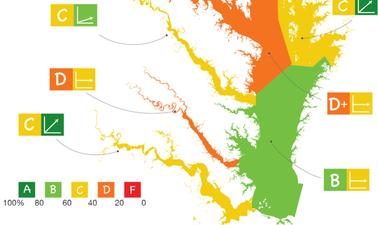
We will be analyzing how monitoring, modeling, research and resource management approaches are scaled across multiple dimensions such as size, population, complexity, and maturity gradients. For instance, Chesapeake Bay, located in the United States largely within the states of Maryland and Virginia, is the best-studied estuary in the world. Since European settlement, contravening forces (land use, eutrophication via phosphorus and nitrogen point and nonpoint sources, sediment runoff, and wetland degradation to name a few) have impacted the entire watershed of this highly productive ecosystem which falls under the jurisdiction of six different state governments and the local government of Washington DC. A comprehensive management approach involving the Environmental Protection Agency and other federal agencies working under the umbrella of the Chesapeake Bay Program headquartered in Annapolis, MD, has resulted in measurable improvements in water quality. Lessons learned from the restoration efforts of the Bay have applications well beyond fisheries, agriculture, and conservation. Other large complex systems that we will be discussing are the Great Barrier Reef in Australia, the implications of the 2010 Oil Spill in the Gulf of Mexico, and the transnational management of the Baltic Sea.

We will also explore innovative stakeholder-driven approaches, such as COAST Card (Coastal Ocean Assessment for Sustainability and Transformation) that integrates socio-environmental report cards, social network analysis, and system dynamic models. Its development in iconic locations (Chesapeake Bay (US), Manila Bay (Philippines), Tokyo Bay and Ishigaki Island (Japan) and the Goa Coast of India) present both shared and unique challenges for managing coupled human and natural systems. Addressing these linkages between human health and environmental quality and the required trade-offs a management team must make is a key component of best management practice for our natural resources.
Finally, we will discuss the implications of climate change science and how it can influence socio-environmental management. Each case study will present unique solutions to address ecosystem stress. Scalability of management approaches across a variety of ecosystems including those of differing population densities, areas, complexities, and maturities will be discussed.
Upon completion, you will have the practical tools to develop effective management solutions for a variety of ecosystem and sustainability challenges.
This course is part of the Environmental Management for Sustainability Professional Certificate.

What you'll learn

  • How to assess the scientific issues and management approaches of ecosystems varying in size, population, maturity and complexity.
  • How to determine the most effective use of science to impact management approaches across a range of environmental challenges.
  • Create a suite of practical approaches for managing diverse sustainability and resiliency issues.
Go to Class
MOOC List is learner-supported. When you buy through links on our site, we may earn an affiliate commission.

Related Courses

As above, so below: An introduction to soils, ecosystems and livelihoods in the Tropics (edX) EdX
KU Leuven University,KULeuvenX

As above, so below: An introduction to soils, ecosystems and livelihoods in the Tropics (edX)

The tropics are as beautiful and diverse below-ground as they are above-ground. Learn how to use knowledge about the natural variability in soil properties for the sustainable management of ecosystems and farms. Soils form the foundation of sustainable development. They grow our food, fiber and fuel, are a habitat for organisms, buffer and purify water and safeguard archaeological legacies.

Self Paced
Self-Paced
Value Co-Creation in Sport Management – A New Logic in a Changing Society (edX) EdX
University of Bayreuth,BayreuthX

Value Co-Creation in Sport Management – A New Logic in a Changing Society (edX)

Do you want to become a successful sport management expert? Learn the importance of value co-creation and gather new insights that will make you more competitive in the field of sport management. Are you a passionate sports lover interested in exploring a new innovative logic in sport management? Enroll in this online course.

Self Paced
Self-Paced
Water: Addressing the Global Crisis (edX) EdX
SDGAcademyX,SDG Academy

Water: Addressing the Global Crisis (edX)

We are living in a water stressed world. It is a global crisis and therefore we must act now! What can we do to save the planet and ensure availability of water for all by 2030? Water isthe source of all life. Without it, neither humans nor nature will survive. Yet lack of access to water is a rapidly growing problem and one of the world’s gravest risks. It is a global crisis.

Self Paced
Self-Paced
Minerals and Mining in a Sustainable World (edX) EdX
University of Queensland,UQx

Minerals and Mining in a Sustainable World (edX)

This course provides learners with an overview of the role of minerals in society, the history of the sustainable development agenda, and the emerging focus on the relationship between mineral development and the Sustainable Development Goals. What is the role of mining in a sustainable world? What challenges lie ahead, and how is the mining industry responding to meet our demand for minerals as well as our expectations of a sustainable future?

Self Paced
Self-Paced
Sustainable Packaging in a Circular Economy (edX) EdX
Delft University of Technology,DelftX

Sustainable Packaging in a Circular Economy (edX)

Learn how to apply the principles of the circular economy to sustainable packaging systems. It has become almost impossible to imagine what our lives would be like without the many benefits of packaging - just think about the different packaging and single-use items you use on a daily basis. Yet as our global population grows in size and affluence, both our collective demand for packaging materials and the waste we generate as a result will increasedramatically.

Self Paced
Self-Paced
Sustainability & Major Sport Events: Implementation (edX) EdX
Hamad Bin Khalifa University - HBKU,HBKUx

Sustainability & Major Sport Events: Implementation (edX)

Learn the best practices and tools you need to plan and implement a sustainable major sport event. When planning to host a major sport event you must take certain steps to ensure that the event is not only sustainable for the host city or region, but also leaves a lasting legacylong after the event has concluded. Thefirst course in theSustainability & Major Sport Events Professional Certificate program teaches the five pillars of sustainability and looks at how these pillars should be implemented during the planning and hosting phase.

Self Paced
Self-Paced
Industrial Biotechnology (edX) EdX
Delft University of Technology,DelftX

Industrial Biotechnology (edX)

Learn the basics of sustainable processing for biobased products to further understand their impact on global sustainability. As fossil-based fuels and raw materials contribute to climate change, the use of renewable materials and energy as an alternative is increasingly important and common. This transition is not a luxury, but rather a necessity.

Self Paced
Self-Paced
Transforming Our World: Achieving the Sustainable Development Goals (edX) EdX
SDGAcademyX,SDG Academy

Transforming Our World: Achieving the Sustainable Development Goals (edX)

What will it take to achieve the Sustainable Development Goals by 2030? In this course, learn all about the 17 Sustainable Development Goals (SDGs). In September 2015, the world’s leaders signed on to this new agenda, answering the call for a global vision of important social, economic and environmental needs to support the planet and its people in long-term prosperity and survival.

Self Paced
Self-Paced
Built environment sustainability assessment (edX) EdX
Universitat Politècnica de València,UPValenciaX

Built environment sustainability assessment (edX)

The course introduces the basic elements and trends for performing a through built environment assessment and develops the tools for urban sustainability policy impact analysis. The course introduces the basic elements and trends for performing a through built environment assessment and develops the tools for urban sustainability policy impact analysis.

Self Paced
Self-Paced
Sustainable Global Food Systems (edX) EdX
University of Edinburgh,EdinburghX

Sustainable Global Food Systems (edX)

How do we feed 11 billion people? Discover the importance of sustainable food systems on a global scale. We are currently facing one of the biggest challenges worldwide: how to feed a growing population without exhausting global resources. This course examines food security from a food systems perspective and illustrates the major global challenges present, from the environmental impact of food production to the public health impacts of current and future diets.

Self Paced
Self-Paced
Introduction to Lifestyle Medicine (edX) EdX
DoaneX,Doane University

Introduction to Lifestyle Medicine (edX)

Gain a basic understanding of the main components of lifestyle medicine as well as the importance of using the coach approach when counseling patients about behavior change. Lifestyle factors including poor nutrition and physical inactivity are critical determinants of health, causing a pandemic of chronic diseases, premature death and unsustainable healthcare costs. Currently, 50 percent of Americans live with one or more chronic illnesses in which diet, exercise and stress play a key role.

Self Paced
Self-Paced