EdX

Sustainable Aviation: The Route to Climate-Neutral Aviation (edX)

Sustainable Aviation: The Route to Climate-Neutral Aviation (edX)

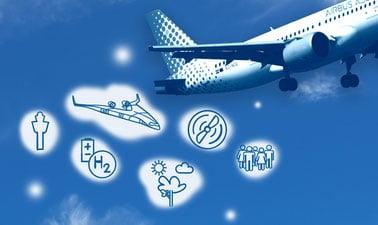
To reduce the environmental footprint of the aviation sector we need to start a clean sky revolution. Discover the latest developments in this field – from airplane design, energy carriers, operations – and learn how you can play a role. Sustainable aviation is a key area for climate action. In this course, we will introduce you to various aircraft technologies, and recent innovations and promising future developments in the field of aviation. All necessary mathematical and engineering concepts will explained.

Class Deals by MOOC List - Click here and see EdX's Active Discounts, Deals, and Promo Codes.

We will start from the basics of how aircraft fly and how they impact the environment. You will gain present-day knowledge of technical solutions and possibilities of modern engineering to make aviation more sustainable.
Next, we will discuss solutions. you will learn about alternative propulsion methods, energy carriers (batteries, fuel cells) and novel aircraft designs (including the Flying V project at TU Delft, a new design for a highly energy-efficient and long-distance commercial aircraft.) We will also bust some common myths about the topics along the way, like why it is a very unpractical thought to simply cover up the entire aircraft with solar cells.
But the solutions presented will not cover just the technical aspects. You will discover the importance of the ecosystem surrounding aviation for its sustainability: manufacturing, operations, and the role of the individual in our airborne society. The course will stimulate critical and creative thought about the future of aviation and how you can be part of those solutions.
With its long history of research of aircraft design, operations and climate effects, the world-class experts from the The Faculty of Aerospace Engineering at TU Delft will guide you through this journey to sustainable aviation. The course will also include guest lectures from industry professionals from leading aviation companies such as Airbus.
“We need climate-neutral aviation. The challenges are enormous, but solutions must and will be found. Through this MOOC we want to share what we know, so that all of you can be part of this ‘clean sky revolution’.” – Henri Werij, Dean Faculty of Aerospace Engineering at TU Delft

What you'll learn
After completing this course, you will be able to:

  • Recognize how the fundamentals of commercial air transport operations and the life cycle of aircraft impact the environment.
  • Explain the inherent challenges in making aviation sustainable, and how these challenges stem from the principles of flight, propulsion, production and operation (there are no easy solutions!)
  • Present the current technological possibilities for making aviation more sustainable, how these possibilities can be implemented, and what their limitations are.
  • Discuss solutions for reducing the environmental impact of aviation on both the personal and the larger scale.

Syllabus

Week 0: Welcome
In the Welcome section of this course we will explain how the course is set up, how the EdX platform works and we will give you an opportunity to introduce yourself and find out who else is following this course.

Week 1: Aviation and Climate Change
In the first week of the MOOC, we will kick things off by taking a birds-eye look at aviation and climate change.
How do aircraft impact the environment
Current situation

Week 2: How do Aircraft Fly?
To understand how we can decrease aviation’s impact on the environment, you will first learn exactly how an aircraft is able to fly.
The physics of flight: Lift and weight, thrust and drag
Aircraft performance
How to propel an aircraft

Week 3: Propulsion and Energy Carriers
In this week, we will take a more detailed look at the elements of a propulsion system and the energy sources that drive them.
Elements of propulsion systems
Engine efficiency
Aircraft energy carriers: options and limitations
Sustainable aviation fuels

Week 4: Production and End of Life
Of course, there is more to an aircraft than flying it. In week 4 of the MOOC, we will discuss the lifecycle of the aircraft.
Lifecycle Assessment
Production of aircraft
During lifetime
Aircraft end of life

Week 5: Novel Aircraft Design and Climate Effects
As we near the end of the MOOC, there are two topics we want to touch upon in more detail: firstly, concepts for the aircraft of the future, and secondly, the actual impact of aircraft on climate.
Novel aircraft designs
Aircraft emissions and their effect on the atmosphere
Aircraft noise

Week 6: Operations and Conclusion
Lastly, we will consider aircraft and airline operations.
Airline planning
Air traffic management
Airport operations

Week 7: Conclusion and Final Assignment
Go to Class
MOOC List is learner-supported. When you buy through links on our site, we may earn an affiliate commission.

Related Courses

Introduction to Energy Management Powered by RETScreen (edX) EdX
HECMontrealX,HEC Montréal

Introduction to Energy Management Powered by RETScreen (edX)

The objective of this MOOC is to help organizations combat climate change through effective energy management. It explains proven strategies to reduce greenhouse gases and encourage the transition to a low carbon economy. It also provides an introduction to RETScreen Expert – the world’s leading software to empower cleaner energy decisions.

Self Paced
Self-Paced
Gestión del agua para las ciudades del futuro (edX) EdX
Inter-American Development Bank - IDB,IDBx

Gestión del agua para las ciudades del futuro (edX)

Este MOOC brinda herramientas para mejorar la gestión de los recursos hídricos en las ciudades bajo una visión integral y sostenibilidad. ¿Sabes cuáles son los desafíos a los que se enfrentan las ciudades relativos al agua? ¿Sabes cuáles son las acciones que puedes realizar para el mejor gestión del agua en tu ciudad?

Self Paced
Self-Paced
Circular Economy: An Introduction (edX) EdX
Delft University of Technology,DelftX

Circular Economy: An Introduction (edX)

Ready to make a difference? Learn how to contribute to a sustainable economic system by implementing novel business and design approaches! Our global society is not sustainable. We all know about the challenges we’re facing: waste, climate change, resource scarcity, loss of biodiversity. At the same time, we want to sustain our economies and offer opportunities for a growing world population. This course is about providing solutions we really believe in: a Circular Economy.

Self Paced
Self-Paced
Sustainability & Major Sport Events: Principles (edX) EdX
Hamad Bin Khalifa University - HBKU,HBKUx

Sustainability & Major Sport Events: Principles (edX)

Learn the five pillars of sustainability and how to apply these when planning and hosting a major sport event. While any major sport event can pose great opportunities for the host city or region, there are also challenges associated with hosting these events. The environmental impact on the country's natural resources, the workforce, and infrastructure are just some of the considerations. It is essential to ensure that your major sport event is sustainable for your city throughout the event, but also after the event has been completed.

Self Paced
Self-Paced
Climate Change Science and Negotiations (edX) EdX
SDGAcademyX,SDG Academy

Climate Change Science and Negotiations (edX)

Humanity is up against a tight timeline to address climate change. Learn how we can deeply decarbonize the global energy systems, and put the world on a 2°C pathway. In this course, learn solutions to mitigate the effects of the global greenhouse gas emissions causing temperature rise, and how to apply these solutions in different national contexts improvements.

Self Paced
Self-Paced
Water Works: Activating Heritage for Sustainable Development (edX) EdX
Delft University of Technology,DelftX

Water Works: Activating Heritage for Sustainable Development (edX)

Address contemporary challenges from a socio-spatial and cultural perspective, and activate water heritage for decision-making in water management. Water has served and sustained societies throughout history. Understanding the complex and diverse water systems of the past is key to devising sustainable development for the future with regard to socioeconomic structures, policies, and cultures. Today, past systems form the framework for preservation and reuse as well as for new proposals.

Self Paced
Self-Paced
Minerals and Mining in a Sustainable World (edX) EdX
University of Queensland,UQx

Minerals and Mining in a Sustainable World (edX)

This course provides learners with an overview of the role of minerals in society, the history of the sustainable development agenda, and the emerging focus on the relationship between mineral development and the Sustainable Development Goals. What is the role of mining in a sustainable world? What challenges lie ahead, and how is the mining industry responding to meet our demand for minerals as well as our expectations of a sustainable future?

Self Paced
Self-Paced
Planetary Boundaries (edX) EdX
SDGAcademyX,SDG Academy

Planetary Boundaries (edX)

Can our planet continue to support the current scope of human activity? A thriving global society relies on the stability of the Earth and its resilience across oceans, forests, waterways, biodiversity, the atmosphere and more. So how do we shape sustainability at a global scale? The boundaries set by the planet’s natural resources, the resilience of those resources, and the human activities that impact sustainability all come into play.

Self Paced
Self-Paced
Climate Change: Carbon Capture and Storage (edX) EdX
University of Edinburgh,EdinburghX

Climate Change: Carbon Capture and Storage (edX)

Explore the technology that can provide a long-term solution to protect our atmosphere from an excess of carbon dioxide, in the context of global energy, our use of fossil fuels, and climate change. The atmosphere is a shared resource and the amount of greenhouse gases it can absorb is a finite resource. This introductory course to the technology of Carbon Capture and Storage is designed for a wider audience with an interest in energy, sustainability and climate change.

Self Paced
Self-Paced
Sustainable Global Food Systems (edX) EdX
University of Edinburgh,EdinburghX

Sustainable Global Food Systems (edX)

How do we feed 11 billion people? Discover the importance of sustainable food systems on a global scale. We are currently facing one of the biggest challenges worldwide: how to feed a growing population without exhausting global resources. This course examines food security from a food systems perspective and illustrates the major global challenges present, from the environmental impact of food production to the public health impacts of current and future diets.

Self Paced
Self-Paced
Climate Change Education (edX) EdX
Inter-American Development Bank - IDB,IDBx

Climate Change Education (edX)

Learn how to work with your students to help them explore climate change through the use of interactive and engaging activities. These activities are designed for students at the primary and secondary levels. Our climate is changing rapidly, and now more than ever we need to be ready to act and prepare the next generation to take care of our planet. This course explores the basic science behind climate change and presents the tools to teach it in a positive, engaging and participatory way. The course also introduces some of the ethical and social issues around climate change.

Self Paced
Self-Paced