EdX

Storytelling with Data using Socio-environmental Report Cards (edX)

Storytelling with Data using Socio-environmental Report Cards (edX)

Socio-environmental report cards have proven to be THE tool to effect positive change. Join us as we explore proven techniques to synthesize data, engage the local community, inform decision-making, and drive policy for any environmental or sustainability challenge.

Class Deals by MOOC List - Click here and see EdX's Active Discounts, Deals, and Promo Codes.

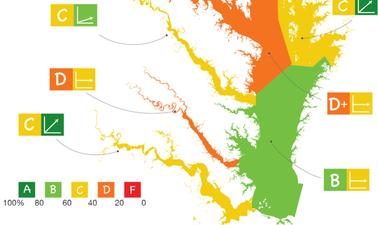
Imagine if you had the tools that would galvanize volunteers to protect their local river, inspire politicians to fund restoration activities, or stimulate engineers to devise ways to reduce pollution. Socio-environmental report cards synthesize data from scientists and volunteers and convert it into an image-rich format that is easily accessible to a wide stakeholder audience.
Report card grades also tap into a powerful human motivator: peer pressure. Civic leaders and community members can compare their grades with their neighbors, and we have learned that these comparisons lead to a desire for better environmental outcomes in their own backyard.
For nearly two decades, our team has worked with local river protection groups to develop comprehensive assessments of iconic ecosystems like the Chesapeake Bay (United States of America) and the Great Barrier Reef (Australia). These socio-environmental report cards have been used to catalyze improvements in ecosystem health, motive cooperative problem-solving, guide restoration efforts, and stimulate relevant research.
We can no longer be content to just study environmental or natural resource-related problems. The challenges and negative environmental impacts of climate change and other myriad environmental management issues are upon us. We need to use science to inspire real change. We’ll show you how.
This course is part of the Environmental Management for Sustainability Professional Certificate.

What you'll learn

  • How to compare and contrast different environmental approaches and socio-environmental report cards.
  • How to critique the different approaches used in environmental assessments and socio-environmental report cards.
  • How to create image-rich socio-environmental report cards that are accessible to a wide and diverse audience.
  • How to create a reporting framework for a case study to generate a socio-environmental report cards.

Go to Class
MOOC List is learner-supported. When you buy through links on our site, we may earn an affiliate commission.

Related Courses

The Psychology of Criminal Justice (edX) EdX
University of Queensland,UQx

The Psychology of Criminal Justice (edX)

Learn how behavioural science can improve our criminal justice system. This course systematically explores the effectiveness of the law and justice system from a psychological perspective. By experiencing a fictional case first hand, you will learn about the psychology of law and some of the misconceptions commonly held about criminal justice.

Self Paced
Self-Paced
Tsunamis and Storm Surges: Introduction to Coastal Disasters (edX) EdX
Waseda University,WasedaX

Tsunamis and Storm Surges: Introduction to Coastal Disasters (edX)

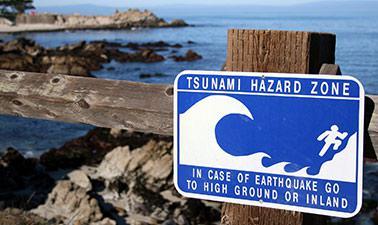
Learn about natural coastal disasters and how you can help improve global disaster management. In 2011, a magnitude 9.0 earthquake triggered a major tsunami that devastated northeast Japan, killing more than 15,000 people and crippling a nuclear power plant. Natural disasters like this one can be seen throughout our Earth’s history. They will continue to prey on all regions, bringing devastation when they strike. But are we so powerless? What if we could improve preparedness over the world and limit the devastation caused by coastal disasters?

Self Paced
Self-Paced
Intro to Analytic Thinking, Data Science, and Data Mining (Coursera) Coursera
University of California, Irvine

Intro to Analytic Thinking, Data Science, and Data Mining (Coursera)

Welcome to Introduction to Analytic Thinking, Data Science, and Data Mining. In this course, we will begin with an exploration of the field and profession of data science with a focus on the skills and ethical considerations required when working with data. We will review the types of business problems data science can solve and discuss the application of the CRISP-DM process to data mining efforts. A brief overview of Descriptive, Predictive, and Prescriptive Analytics will be provided, and we will conclude the course with an exploratory activity to learn more about the tools and resources you might find in a data science toolkit.

Sep 21st 2026
4 Weeks
Big Data and the Environment (FutureLearn) FutureLearn
University of Reading,Institute for Environmental Analytics - IEA

Big Data and the Environment (FutureLearn)

From sources such as satellites, sensors and social media, how can environmental data analytics benefit business and research? From weather fluctuations to the spread of an invasive species, what problems can scientists address by analysing these vast data collections? What are the potential benefits for business, research and our daily lives?

No sessions available
3 Weeks
Water and Wastewater Treatment Engineering: Biochemical Technology (edX) EdX
Tsinghua University,TsinghuaX

Water and Wastewater Treatment Engineering: Biochemical Technology (edX)

Learn the basic principles and characteristics of biochemical technology in water and wastewater treatment engineering. Biochemical technology in water and wastewater treatment engineering is essential in the field of water treatment. In this environmental studies course you will learn the basic principles and characteristics of biochemical technology.

Self Paced
Self-Paced
Water and Wastewater Treatment Engineering: Physicochemical Technology (edX) EdX
Tsinghua University,TsinghuaX

Water and Wastewater Treatment Engineering: Physicochemical Technology (edX)

Learn the basic principles and characteristics of physicochemical technology in water and wastewater treatment engineering. This course mainly talks about the basic principles, process composition, operation characteristics, process calculation methods and some engineering examples of the main physicochemical treatment methods in water and wastewater treatment.

Self Paced
Self-Paced
Visualizing Postwar Tokyo, Part 2 (edX) EdX
The University of Tokyo,UTokyoX

Visualizing Postwar Tokyo, Part 2 (edX)

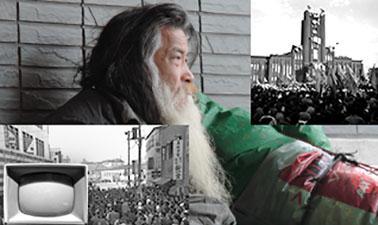
Identify the geopolitics historically involved in the practice of “visualizing postwar Tokyo.” The history of postwar Tokyo reveals an essential feature of the modern city, i.e., the city as a place of visualities. In postwar Tokyo, countless gazes fell upon others; gazes from and upon Americans and the Emperor, gazes going up skyscrapers or rushing aggressively through the cityscape, and gazes twining and wriggling among classes, genders, and ethnic groups in downtown Tokyo.

Self Paced
Self-Paced
Operations Management (edX) EdX
Indian Institute of Management, Bangalore,IIMBx

Operations Management (edX)

Understand key aspects of business operations and lean management including capacity, productivity, quality, and supply chain. Have you ever wondered about the right methods to improve productivity, configure your supply chain or address the demand on hand? In recent years, businesses have strived to improve productivity and quality, reduce costs and delivery times, and embrace flexibility and innovation. These strategies are part of the Operations Management (OM) activities that service and manufacturing organizations engage in.

Self Paced
Self-Paced
China and Communism (edX) EdX
HarvardX,Harvard University

China and Communism (edX)

Explore the Maoist period of China, from the Communist Party to the death of Mao and the reopening of China. How did the Communists conquer China? What role does culture play? What are the successes and failures of the Chinese Communist Party after seizing power in 1949? What constitutes liberation?

Self Paced
Self-Paced
Strategic Communication for Sustainability Leaders (edX) EdX
University System of Maryland - USM,USMx,University of Maryland Center for Environmental Science - UMCES,UMCES

Strategic Communication for Sustainability Leaders (edX)

Communicating science effectively is a critical skill for anyone involved in environmental policy or sustainability. Learn how to integrate effective visualizations into compelling narratives to clearly explain complex ecosystem processes.

Self Paced
Self-Paced
Contemporary China: The People's Republic, Taiwan, and Hong Kong (edX) EdX
HarvardX,Harvard University

Contemporary China: The People's Republic, Taiwan, and Hong Kong (edX)

Use the case study method to study China from the rise of Deng Xiaoping to the present. Using case studies from the Harvard Business School, this course will cover the contemporary Chinese scene by focusing on five main themes in China’s development: agriculture, entrepreneurship, education, environment, and literature.

Self Paced
Self-Paced