EdX

Introduction to Water and Climate (edX)

Introduction to Water and Climate (edX)

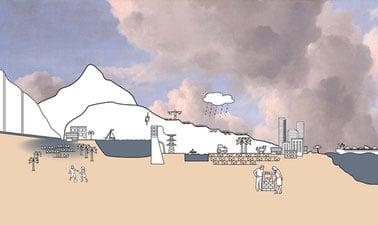
Water is a crucial element in climate and for society. Find out about the latest engineering interventions for water management in rivers, coasts and the urban environment. Water is essential for life on Earth and of crucial importance for society. Water also plays a major role in affecting climate. Its natural cycle, from ocean to atmosphere by evaporation, then by precipitation back to land returning via rivers and aquifers to the oceans, has a decisive impact on regional and global climate patterns.

Class Deals by MOOC List - Click here and see EdX's Active Discounts, Deals, and Promo Codes.

For students of engineering, climate science and environmental studies, this course offers a first introduction to the physics of water systems and their role in climate. In addition, we show you the state-of-the-art engineering interventions that can be applied to water systems. These can improve coastal safety and increase the availability of water supplies worldwide.

The course welcomes students from all over the globe, so we actively encourage discussion of water and climate issues you may experience in your location, now and in the coming decades.
After taking this course, you will be able to:

  • Understand the different processes at play in the global water cycle.
  • Identify and describe the flows of water and sand in different riverine, coastal and ocean systems.
  • Identify mechanisms of climate change and explain the interplay between climate change, sea level, clouds, rainfall and future weather.
  • Explain why, when and which engineering interventions are needed in rivers, coastal and urban environments.
  • Explain why water for food and water for cities are the main challenges in water management and propose solutions.
  • Explain and confront the challenges in better understanding and adapting to the impact of climate change on water over the coming 50 years.

The course consists of knowledge clips, movies, exercises, and exam assignments. There are opportunities to discuss course materials with your fellow students and the Course Team through our online forum. We also provide interactive feedback video sessions in which the lecturers discuss issues raised by students.
Delft University of Technology (TU Delft) has a unique reputation when it comes to water and climate, with faculty experts in the fields of climate research, water management and hydraulic engineering. The course introduces you to many aspects of water and climate: from the micro scale of raindrops to the macro scale of oceans, and from understanding the physics of the different water systems to practical engineering solutions that may help societies adapt to the present and future impacts of climate change on water.
This course is part of the Water Management XSeries Program.

What you'll learn

  • The different processes of the global water cycle
  • The challenges in better understanding and adapting to the impact of climate change on water for the coming 50 years
  • The flows of water and sand in different riverine, coastal and ocean systems
  • How to identify mechanisms of climate change and explain the interplay of climate change, sea level, clouds, rainfall and future weather
  • Why, when and which engineering interventions are needed in rivers, coasts and urban environments
  • Why water for food and water for cities are the main challenges in water management and what the possibilities and limitations of reservoirs and groundwater are to improve water availability
Go to Class
MOOC List is learner-supported. When you buy through links on our site, we may earn an affiliate commission.

Related Courses

A Hands-on Introduction to Engineering Simulations (edX) EdX
CornellX,Cornell University

A Hands-on Introduction to Engineering Simulations (edX)

Learn how to analyze real-world engineering problems using ANSYS simulation software and gain important professional skills sought by employers. In this hands-on course, you’ll learn how to perform engineering simulations using a powerful tool from ANSYS, Inc. This is a problem-based course where you’ll learn by doing. The focus will be on understanding what’s under the blackbox so as to move beyond garbage-in, garbage-out. You’ll practice using a common solution approach to problems involving different physics: structural mechanics, fluid dynamics and heat transfer.

Self Paced
Self-Paced
Modeling and Simulation of Multibody Systems - Part II (edX) EdX
LouvainX,Université Catholique de Louvain - UCL

Modeling and Simulation of Multibody Systems - Part II (edX)

90% of daily life multibody systems contain loops of bodies, e.g. vehicle or bike suspensions, parallel manipulators or robots, and musculoskeletal systems. They can also include joint constraints. In this second course about multibody systems, learn how to model them and how to deal with more advanced numerical analyses.

Self Paced
Self-Paced
Climate Solutions (edX) EdX
University of Edinburgh,EdinburghX

Climate Solutions (edX)

We are in a Climate Emergency. The actions we all choose to take over the next decade will decide whether we succeed or fail to meet the biggest challenge to our civilisation in the 21st century. Learn how you can help tackle climate change. The Climate Solutions course is designed and delivered by award-winning climate change experts and educators.

Self Paced
Self-Paced
Introduction to Discrete Choice Models (edX) EdX
École Polytechnique Fédérale de Lausanne,EPFLx

Introduction to Discrete Choice Models (edX)

The course introduces the theoretical foundations to choice modeling and describes the steps of operational modeling. Human behavior is complexand unpredictable. Or is it? The focus of this course is methods for predicting the behavior using mathematical models. More specifically, we'll explore choice modeling in order to obtain disaggregate demand models.

Self Paced
Self-Paced
Energy Within Environmental Constraints (edX) EdX
HarvardX,Harvard University

Energy Within Environmental Constraints (edX)

A quantitative introduction to the energy system and its environmental impacts. Humanity faces an immense challenge: providing abundant energy to everyone without wrecking the planet. If we want a high-energy future while protecting the natural world for our children, we must consider the environmental consequences of energy production and use. But money matters too: energy solutions that ignore economic costs are not realistic, particularly in a world where billions of people currently can’t afford access to basic energy services. How can we proceed?

Self Paced
Self-Paced
Water and Wastewater Treatment Engineering: Biochemical Technology (edX) EdX
Tsinghua University,TsinghuaX

Water and Wastewater Treatment Engineering: Biochemical Technology (edX)

Learn the basic principles and characteristics of biochemical technology in water and wastewater treatment engineering. Biochemical technology in water and wastewater treatment engineering is essential in the field of water treatment. In this environmental studies course you will learn the basic principles and characteristics of biochemical technology.

Self Paced
Self-Paced
Remote Sensing of Wildfires (edX) EdX
University of Alaska Fairbanks,AlaskaX

Remote Sensing of Wildfires (edX)

Learn how satellite imagery and the science of remote sensing allows us to detect wildfires, help manage their spread, and guide ecological restoration. Wildfires are a natural and essential part of our ecosystem, recycling soil nutrients and renewing healthy forests. In Alaska, around one million acres (4000 km2) burn every year, and record years have seen as many as six million acres burned. Most of these fires are allowed to spread naturally.

Self Paced
Self-Paced
A System View of Communications: From Signals to Packets (Part 1) (edX) EdX
The Hong Kong University of Science and Technology - HKUST,HKUSTx

A System View of Communications: From Signals to Packets (Part 1) (edX)

Explore the tradeoffs in designing communication systems like mobile phones, and the engineering tools to handle them. Have you ever wondered how information is transmitted using your mobile phone or a WiFi hotspot? This introductory course seeks to enable you to understand the basic engineering tools used and tradeoffs encountered in the design of these systems.

Self Paced
Self-Paced
水力学 | Hydraulics (edX) EdX
Tsinghua University,TsinghuaX

水力学 | Hydraulics (edX)

This Hydraulics course explores the science of hydraulics and focuses on hydrodynamic laws and their applications, which are indispensable and a critical factor in the development and utilization of water resources. 水,是人类生活不可或缺的资源。水力学是人类开发利用水资源的有力工具。本课教你认识和掌握水流静止和运动的力学规律,了解在相关领域的工程应用。

Self Paced
Self-Paced
Decision-Making for Autonomous Systems (edX) EdX
Chalmers University of Technology,ChalmersX

Decision-Making for Autonomous Systems (edX)

Learn effective tactics for making key decisions when working with autonomous, self-driving vehicles. In autonomous vehicles such as self-driving cars, we find a number of interesting and challenging decision-making problems. Starting from the autonomous driving of a single vehicle, to the coordination among multiple vehicles. This course will teach you the fundamental mathematical model for many of these real-world problems.

Self Paced
Self-Paced
Dynamics and Control (edX) EdX
Universitat Politècnica de València,UPValenciaX

Dynamics and Control (edX)

This is an interactive course about the basic concepts of Systems, Control and their impact in all the human activities. First, the basic concepts of systems, dynamics, structure and control are introduced. Then, looking at many examples in Nature and human made devices, we will realize that the dynamic behavior of most systems can be modified by adding a control system. Later we will see how knowing how to evaluate the dynamic behavior of a system and measure its performance will provide the tools to design new controlled systems fulfilling some requirements.

Self Paced
Self-Paced