EdX

Backyard Meteorology: The Science of Weather (edX)

Backyard Meteorology: The Science of Weather (edX)

Learn to forecast the weather just by looking out your window. The weather forecasts we see every day are based on an army of meteorological sensing networks and intensive computer modeling. Before the rise of these technologies, predictions were made by methods like discerning cloud formations and wind directions.

Class Deals by MOOC List - Click here and see EdX's Active Discounts, Deals, and Promo Codes.

This course will explore the science behind weather systems by teaching the observational skills needed to make a forecast without using instruments or computer models. We'll discuss the physical processes driving weather and the global forces that shape global climate systems. Finally, we will examine the limits of prediction in both human observations and computer models.
Can the flap of a butterfly's wings in Brazil set off a tornado in Texas? Take this course to find out!

What you'll learn

  • The role of air, water, and wind in weather systems
  • How to estimate local wind speed and direction
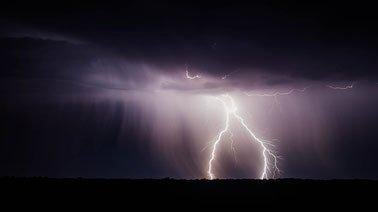
  • How to avoid being struck by lightning
  • How to identify cloud types and features
  • How to describe the attributes of thunderstorms and tornadoes
  • How to collect and interpret data and observations to predict the next day's weather
  • The benefits and drawbacks of weather prediction methods
  • The butterfly effect and its application to weather systems

Syllabus

  • Physical processes in weather systems
  • Winds, weather masses, clouds, fronts in the temperate zones
  • Other weather systems
  • Weather predictions: Linear and non-linear systems
Go to Class
MOOC List is learner-supported. When you buy through links on our site, we may earn an affiliate commission.

Related Courses

The Biology of Water and Health - Sustainable Interventions (edX) EdX
OECx,Open Education Consortium - OEC

The Biology of Water and Health - Sustainable Interventions (edX)

Tufts University presents how to promote safe water conservation and implement sustainable solutions in order to improve public health. This water sustainability course from Tufts University focuses on the engineering and public health components needed to achieve the conservation of safe water locally and globally. Together, we will explore how to create sustainable interventions geared towards improving population health.

No sessions available
4 Weeks
Environmental Engineering: Drinking Water Treatment (edX) EdX
Seoul National University,SNUx

Environmental Engineering: Drinking Water Treatment (edX)

Understand what makes water clean or dirty and what are being done at water treatment facilities to make water safe to drink. This course will cover fundamental science and engineering principles dealing with natural and water environmental systems. First, we focus on what influences water quality and what are sources, characteristics, and effects of water pollutants. Second, we will explore the basic chemical concepts needed to understand how pollutants may change their forms and influence water quality.

Self Paced
Self-Paced
That's So Meta(cognitive)! (edX) EdX
Smithsonian,SmithsonianX

That's So Meta(cognitive)! (edX)

That’s so Meta(cognitive)! — investigates how explicitly teaching students metacognitive strategies helps them become more effective learners, able to integrate knowledge rather than just memorize isolated science facts and definitions.

Self Paced
Self-Paced
Drawing Nature, Science and Culture: Natural History Illustration 101 (edX) EdX
The University of Newcastle, Australia,NewcastleX

Drawing Nature, Science and Culture: Natural History Illustration 101 (edX)

Learn how to see and draw nature like an illustrator. Build observational and visual interpretation skills in an interactive and enjoyable way. Whether an aspiring scientific or medical illustrator or someone who enjoys drawing nature’s wonders, this first-of-its-kind MOOC course is for you. The field of Natural History Illustration is about observing and illustrating subjects from nature, science and culture, with their linkages to the environment being central.

Feb 22nd 2023
5-12 Weeks
Making Sense of Climate Science Denial (edX) EdX
University of Queensland,UQx

Making Sense of Climate Science Denial (edX)

Climate change is real, so why the controversy and debate? Learn to make sense of the science and to respond to climate change denial. In public discussions, climate change is a highly controversial topic. However, in the scientific community, there is little controversy with 97% of climate scientists concluding humans are causing global warming.

Self Paced
Self-Paced
Science & Cooking: From Haute Cuisine to Soft Matter Science (physics) (edX) EdX
HarvardX,Harvard University

Science & Cooking: From Haute Cuisine to Soft Matter Science (physics) (edX)

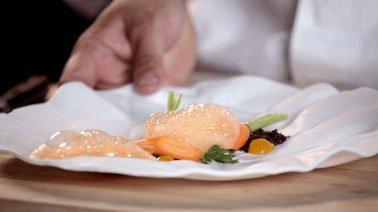
Top chefs and Harvard researchers explore how traditional and modernist cooking techniques can illuminate basic principles in chemistry, physics, and engineering. Learn about elasticity, viscosity, mayonnaise, baking, and more! In this course, which investigates physical transformations in food, we will be visited by world-famous chefs who use a number of different styles and techniques in their cooking. Each chef will demonstrate how he or she prepares delicious and interesting creations, and we will explore how fundamental scientific principles make them possible.

Self Paced
Self-Paced
Religious Symbols of the World (edX) EdX
Seoul National University,SNUx

Religious Symbols of the World (edX)

This course is the third and final course in the series following “Understanding Religious Symbolism” and “Myths, Rituals, and Cosmos.” Through the theories and patterns that you learned in these three courses, I hope that you will be able to interpret the various religious phenomena in different cultures, and through this gain a better understanding of culture and human beings.

Self Paced
Self-Paced
Science & Cooking: From Haute Cuisine to Soft Matter Science (chemistry) (edX) EdX
HarvardX,Harvard University

Science & Cooking: From Haute Cuisine to Soft Matter Science (chemistry) (edX)

Top chefs and Harvard researchers explore how everyday cooking and haute cuisine can illuminate basic principles in chemistry, physics, and engineering. Learn about food molecules and how chemical reactions can affect food texture and flavor. During each module of this course, chefs reveal the secrets behind some of their most famous culinary creations — often right in their own restaurants. Inspired by such cooking mastery, the Harvard team will then explain the science behind the recipe.

Self Paced
Self-Paced
Quantum Mechanics for Scientists and Engineers 2 (edX) EdX
StanfordOnline

Quantum Mechanics for Scientists and Engineers 2 (edX)

This course covers key topics in the use of quantum mechanics in many modern applications in science and technology, introduces core advanced concepts such as spin, identical particles, the quantum mechanics of light, the basics of quantum information, and the interpretation of quantum mechanics, and covers the major ways in which quantum mechanics is written and used in modern practice.

Self Paced
Self-Paced
Drinking Water Treatment (edX) EdX
Delft University of Technology,DelftX

Drinking Water Treatment (edX)

Learn about urban water services, focusing on conventional technologies for drinking water treatment. This course focuses on conventional technologies for drinking water treatment. Unit processes, involved in the treatment chain, are discussed as well as the physical, chemical and biological processes involved.

Self Paced
Self-Paced